


Pompeii Faun Bronze
These bronze faun bronze pieces bring the classical past into the home, capturing the spirited energy of the ancient Italian original.
Pompeii Faun Bronze
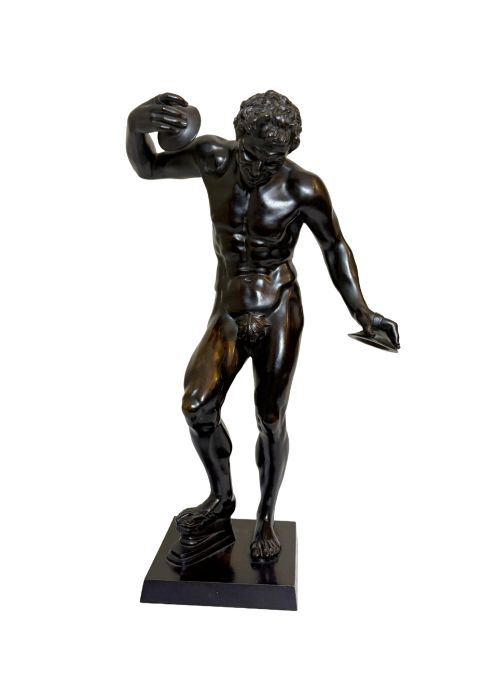
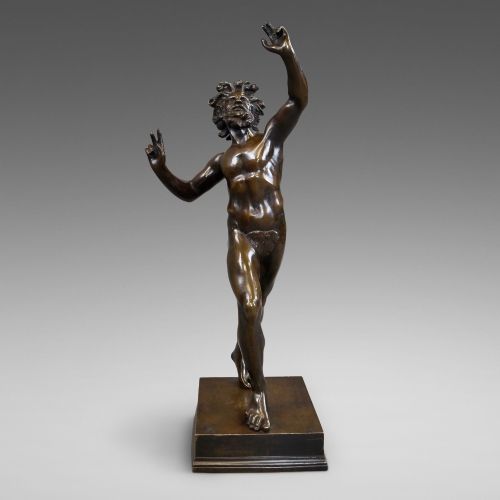
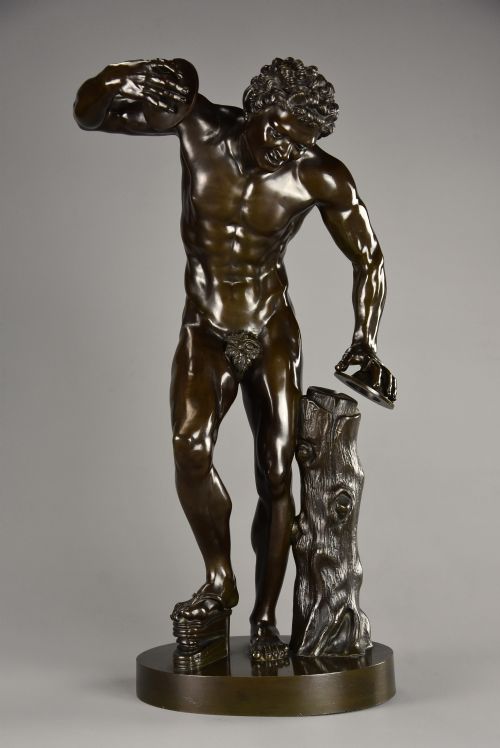
A pompeii faun bronze represents the classical mythological figure discovered in the House of the Faun in Italy, rendered as a small sculptural reduction for the collector market. These figures typically show the dancing or drunken faun with expressive movement, capturing the spirit of antiquity for nineteenth-century travellers.
The version most commonly met on this page is the nineteenth-century Grand Tour souvenir, cast in Italy or Britain during the Victorian era. These sculptural reductions draw directly from the antique marble and bronze originals housed in Neapolitan museums.
Works appear in various scales and patinations, ranging from small cabinet figures to larger decorative bronzes. Alongside bronze, collectors encounter occasional plaster interpretations from the same period.
Materials and technique
Foundry workers utilised the lost-wax casting method or sand casting to capture the fine musculature and dynamic poses of the antique originals. Molten metal poured into moulds formed the solid or hollow core of each sculpture.
Makers applied chemical patination to the surface of the metal to simulate the rich, aged tones of excavated antiquities. This bronze patina ranges from deep blackish-brown to warm green verdigris, often enhanced by hand-finishing with chisels.
Listings feature works in bronze, patinated bronze, and plaster, reflecting the diverse materials utilised by nineteenth-century souvenir workshops.
Assessing quality and craftsmanship
The sharpness of the cast distinguishes superior examples, where hair, fingers, and facial expressions remain crisp and well-defined. Lesser casts lose detail through worn moulds or hurried production for the souvenir trade.
The depth and subtlety of the patination reveal the care taken in the workshop, with finer pieces showing nuanced tonal shifts rather than flat, uniform colour. Heavier weight and stable mounting on marble bases often accompany superior sculptural reduction.
Duchemin
The Pompeii Faun Bronze Glossary
- Grand Tour
- A cultural journey undertaken by wealthy young Europeans in the eighteenth and nineteenth centuries to study classical art and architecture. Souvenirs purchased along the way included bronze reductions of famous antiquities.
- Reduction
- A scale copy of a larger sculpture, popular in the nineteenth century for domestic display. Foundries reduced monumental works like the Dancing Faun to cabinet size.
- Patina
- The surface coloration and texture developed through age or chemical treatment. In nineteenth-century bronzes, patinas were deliberately applied to mimic ancient excavation finds.
- Neoclassical
- A style spanning the eighteenth and nineteenth centuries inspired by the art and culture of classical Greece and Rome. This aesthetic informed the creation of souvenir bronzes after antique models.
Pompeii Faun Bronze: Frequently Asked Questions
What is a pompeii faun bronze?
A pompeii faun bronze is a nineteenth-century sculptural reduction cast after the ancient Roman original discovered in Pompeii. These figures depict a dancing or drunken mythological faun, traditionally collected as a souvenir during the Grand Tour.
Foundries produced these pieces in various sizes to satisfy Victorian collectors seeking classical elegance for their studies and drawing rooms.
How old are these bronze figures?
The pieces available here date primarily from the nineteenth century, aligning with the height of the Grand Tour era. Victorian travellers purchased them in Italy as motes of classical culture.
Cast from historical moulds, they reflect the revival aesthetics and foundry techniques of the 1800s rather than the ancient Roman period.
Where were these souvenirs made?
Italian workshops, particularly in Naples and Rome, cast the majority of these souvenir bronzes to supply travellers visiting the museums and archaeological sites. Foundries in other European centres also produced similar reductions after the antique.
Local artisans worked near the excavations, copying the newly uncovered statues for the international art market.
How do I care for a patinated bronze?
Dust the surface gently with a soft, dry cloth to prevent the accumulation of grit in the recesses of the casting. Avoid liquid cleaners or polishes, which can strip away the historical patination.
Keep the sculpture away from direct sunlight and areas of high humidity to protect the metal and any associated marble base.