


Polychrome Pottery Jug
A polychrome pottery jug brings together hand-painted colour and practical earthenware form, offering a tangible piece of centuries-old ceramic artistry for your home.
Polychrome Pottery Jug
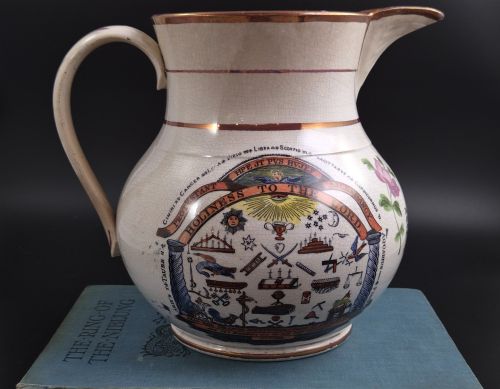
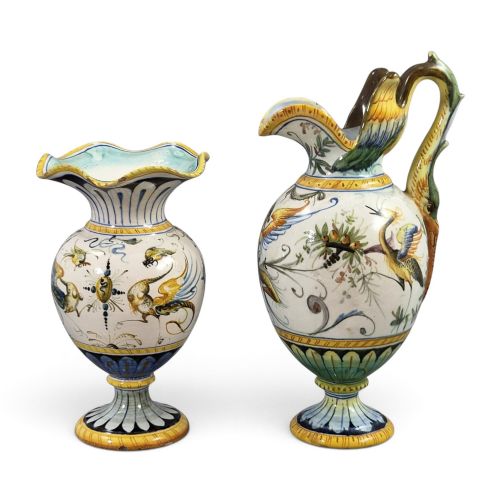
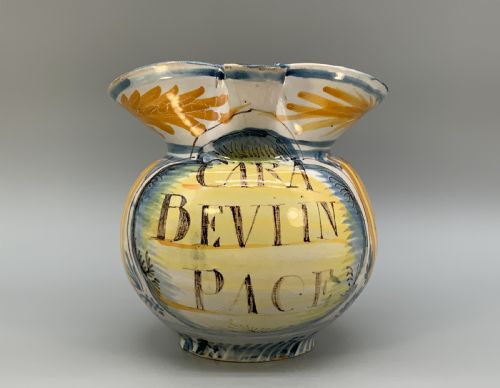
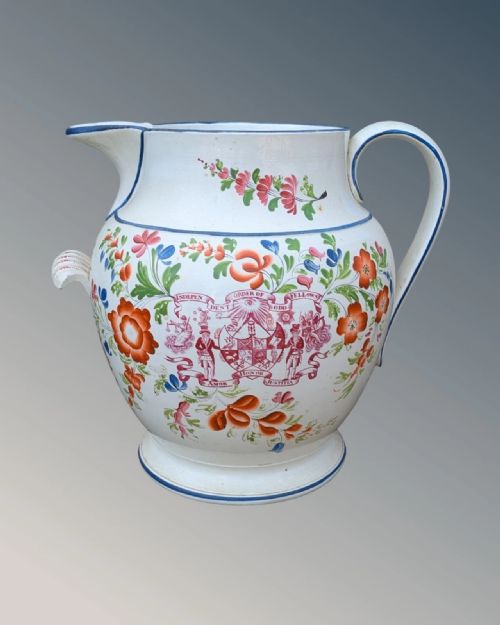
When you search for a polychrome pottery jug, you encounter diverse forms ranging from traditional pitchers and ewers to characterful Toby jugs and apothecary vessels. These items span periods from the eighteenth century through the Victorian era, capturing shifts in domestic and decorative pottery. The most common examples you meet on this page are Staffordshire earthenware pieces and Italian tin-glazed majolica wares.
Makers produced these vessels for both utilitarian kitchen use and commemorative display, leading to varied shapes such as faceted bodies, pilgrim flasks, and frog mugs. You find pieces influenced by Georgian restraint as well as exuberant Victorian and Renaissance Revival aesthetics. Each item demonstrates how potters utilised colourful glazes and enamel painting to animate everyday clay containers.
How they were made
Potters utilised earthenware and creamware bodies as the structural foundation for these vessels, shaping them by hand or moulding them into specific character forms. They applied tin glaze, enamel, and metallic lustre glazes over the clay base to create smooth, impermeable surfaces capable of holding liquids. Artisans then hand-painted intricate polychrome designs directly onto the glaze before firing the pieces in kilns to fix the vibrant colours.
The combination of opaque tin glazes with bright mineral pigments allowed workshops to achieve rich blues, yellows, manganese purples, and oranges. Potters managed kiln temperatures carefully to ensure the enamel pigments fused successfully with the underlying glaze without running or losing their distinct outlines.
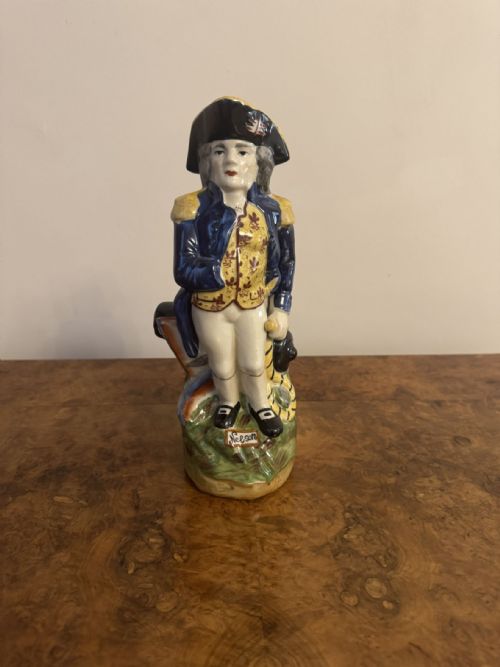
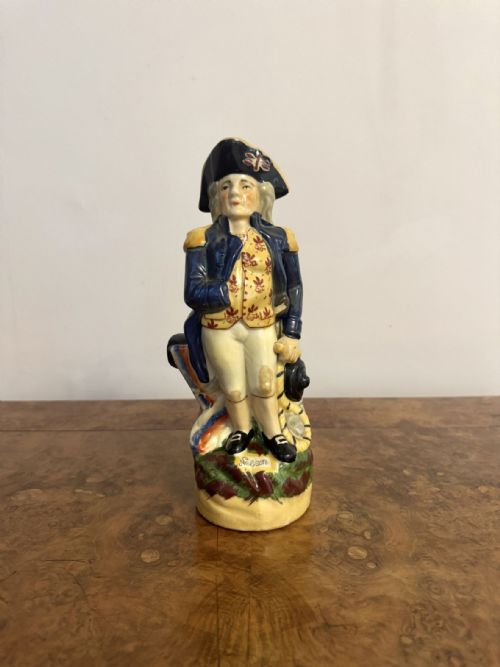
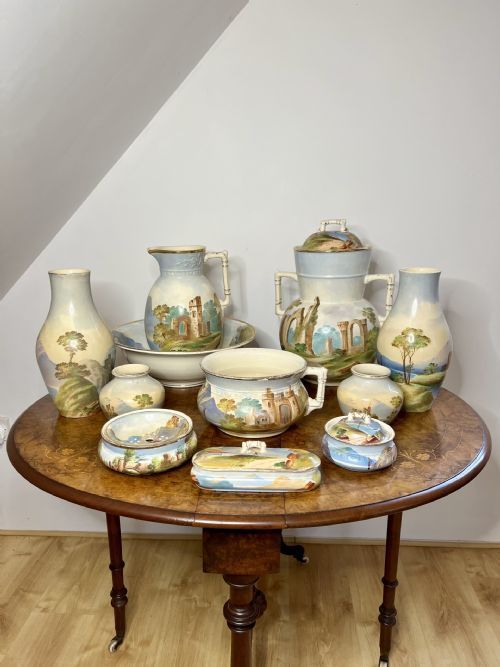
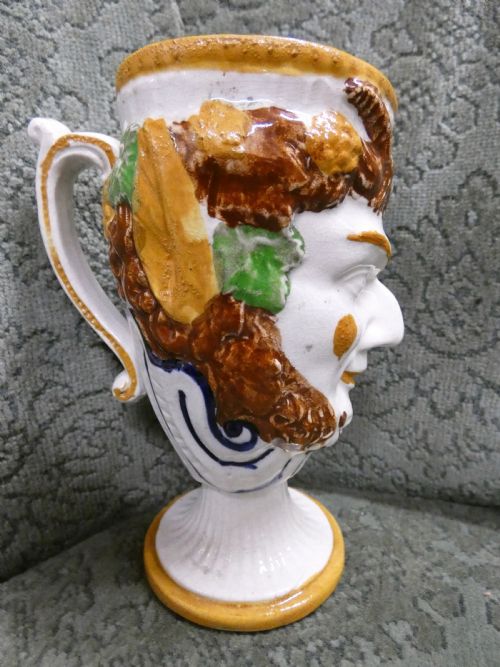
Object types on this page include apothecary vessels, pilgrim flasks, wash sets, and character figures such as Bacchus and Lord Nelson.
What varies in quality
The distinction between ordinary and superior pieces rests on the precision of the hand-painted brushwork and the clarity of the polychrome palette. Master decorators achieved finely delineated facial expressions on Toby jugs and crisp botanical or oriental scenes on Staffordshire and Italian wares, whereas lesser examples display hurried strokes and muddy glaze pooling.
Structural complexity also defines the upper range, where potters executed difficult forms like scallop-shell pilgrim flasks, multifaceted bodies, or intricate sculptural handles. The depth, gloss, and uniformity of the tin glaze or metallic lustre further separate standard utilitarian vessels from exceptional cabinet pieces.
Cantagalli Florence·Herculaneum
The Polychrome Pottery Jug Glossary
- Polychrome
- Decorated in multiple colours. This technique defines ceramics featuring a vibrant palette of hand-painted mineral glazes.
- Majolica
- Opaque tin-glazed pottery originating in Italy and later revived in the nineteenth century. It is known for its bright surface colours and decorative versatility.
- Creamware
- A refined earthenware developed in the eighteenth century with a pale yellowish straw-coloured glaze. It gained widespread popularity for domestic tableware.
- Toby jug
- A pottery jug modelled in the shape of a seated eighteenth-century person, usually holding a mug and a pipe. They are heavily associated with Staffordshire potteries.
- Tin glaze
- An opaque white glaze containing tin oxide, providing a smooth canvas for hand-painted enamel decoration. It became essential to European faience and majolica production.
Polychrome Pottery Jug: Frequently Asked Questions
What is a polychrome pottery jug?
A polychrome pottery jug is a ceramic vessel decorated with multiple hand-painted enamel or glaze colours. These pieces include utilitarian pitchers, apothecary jars, and characterful Toby jugs.
They reflect the domestic habits and decorative tastes of eighteenth and nineteenth-century households across Britain and Europe.
How do I identify a Victorian jug?
Victorian jugs often display heavy moulded details, bright Staffordshire glazes, or Renaissance Revival influences. They frequently take the form of specific characters, such as Lord Nelson or Mr Snuff.
Examining the base paste, glaze consistency, and colour palette helps distinguish these mid-to-late nineteenth-century pieces from earlier Georgian items.
Were these jugs used daily?
Many jugs served practical purposes in the kitchen, dairy, or bedroom wash set. Robust earthenware and creamware bodies handled daily liquid transfer and washing routines.
Other examples, such as commemorative pieces or majolica ewers, were intended primarily for display in cabinets and parlours.
What is a Toby jug?
A Toby jug is a ceramic pitcher moulded as a stout, jovial man wearing eighteenth-century attire, typically a tricorn hat and coat. Staffordshire potteries produced these figures extensively in various sizes and colour combinations.
They often incorporated functional elements like removable hats functioning as lids or incorporated pepperpot tops.
How should I clean my antique jug?
Antique pottery jugs require gentle maintenance using a soft, dry cloth to remove dust. You should avoid submerging older tin-glazed or enamelled earthenware in water, as moisture can penetrate hairline cracks in the glaze.
Keep them away from direct sunlight and sudden temperature changes to preserve the stability of the ceramic body and painted surface.