
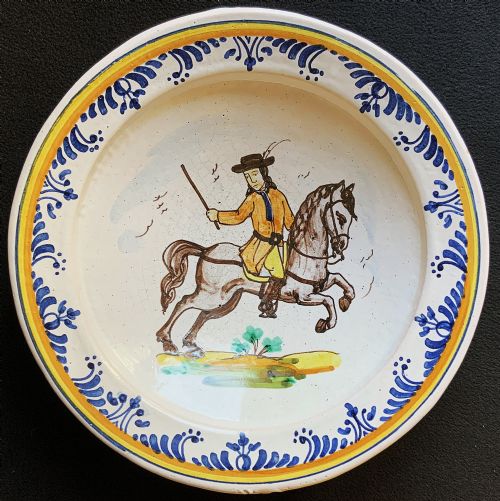


Polychrome Delftware Dish
A polychrome delftware dish brings vibrant tin-glazed earthenware into a room, offering collectors hand-painted floral, geometric, and Chinoiserie decoration.
Polychrome Delftware Dish
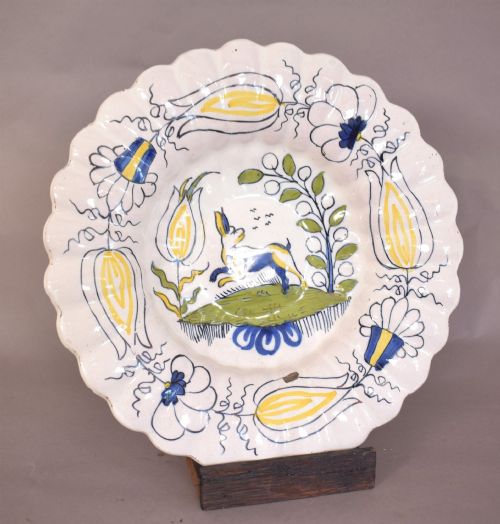
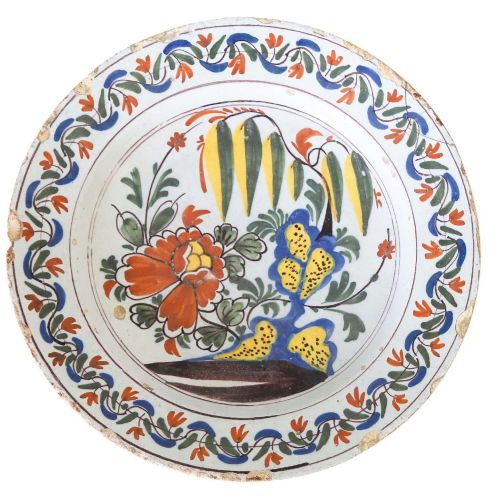
When you search for a polychrome delftware dish, you encounter tin-glazed earthenware vessels shaped as charger plates, lobed dishes, sweetmeat presentiers, and decorative plates. These pieces originate from seventeenth and eighteenth-century workshops in England, the Netherlands, and Spain.
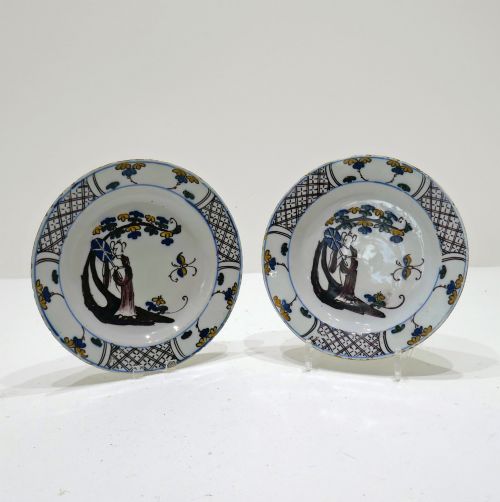
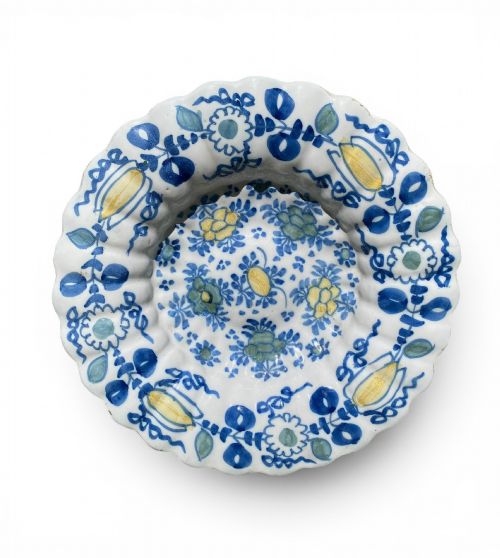
The English examples on this page date from the mid eighteenth century, featuring hand-painted floral motifs and Chinoiserie scenes from centres such as Bristol and Lambeth. Dutch pieces from the seventeenth and early eighteenth centuries often take the form of lobed dishes and large geometric floral chargers.
Spanish production is represented by eighteenth-century Catalana faience charger plates. The forms span deep serveware and large decorative chargers designed for display rather than heavy daily use.
Materials and construction
These objects are formed from clay bodies that are coated in an opaque white tin glaze, creating a smooth canvas for subsequent decoration. Pigments are applied directly to this absorbent unfired or partially fired glaze surface before the final kiln firing.
The polychrome palette relies on mineral pigments that tolerate high firing temperatures, yielding distinctive multi-coloured results. Potters shape the earthenware into chargers, lobed plates, and sweetmeat presentiers using traditional throwing and moulding techniques.
Object forms include chargers, sweetmeat presentiers, lobed dishes, and decorative plates featuring Georgian and Dutch Baroque styles.
Judging quality and execution
Quality in a polychrome delftware dish rests upon the clarity and control of the hand-painted brushwork. Finer examples display confident floral and geometric compositions executed with precise pigment saturation.
The stability of the tin glaze and the crispness of the earthenware moulding also distinguish finer items. Pieces showing balanced proportions and well-preserved polychrome pigments stand apart in any assemblage.
The Polychrome Delftware Dish Glossary
- Tin-Glazed Earthenware
- Pottery covered with a lead glaze made opaque by the addition of tin oxide. This technique provides the characteristic white surface found on delftware and faience.
- Charger
- A large ornamental plate typically used for display on a sideboard or wall rather than for dining. These wide vessels often showcase the most elaborate painted designs.
- Chinoiserie
- European artistic styles reflecting Chinese motifs and decorative patterns. This aesthetic appears frequently on eighteenth-century English delft plates.
- Sweetmeat Presentier
- A specialised serving dish divided into compartments or raised on a foot, used for confections and sweetmeats. The form requires skilled moulding in tin-glazed earthenware.
- Lobed Dish
- A vessel with a scalloped or indented rim creating distinct sections along the edge. Seventeenth-century Dutch potters frequently employed this configuration.
Polychrome Delftware Dish: Frequently Asked Questions
How do I display a charger safely?
Chargers are best supported by stable wall hangers designed for heavy ceramics or displayed upright on secure plate stands. Avoid placing them in areas subject to vibrations or direct, harsh sunlight.
Keep them away from damp environments to protect the porous earthenware body beneath the tin glaze.
Can I use these dishes for food?
These historical pieces are intended primarily for display and decorative use rather than modern dining. The historic tin glaze can be sensitive to acidic foods and frequent washing.
Hand-washing with mild agents is necessary if cleaning, but usage should remain strictly occasional.
How do English and Dutch pieces differ?
English pieces from centres like Bristol and Lambeth often feature softer floral and Chinoiserie painting styles. Dutch examples frequently present bolder geometric floral patterns or distinct lobed rims.
Spanish Catalana pieces show regional influences in their palette and tin-glaze composition.
What does polychrome mean here?
Polychrome indicates the use of multiple colours in the hand-painted decoration rather than a single blue pigment. These dishes incorporate various mineral pigments applied over the white tin glaze.
The resulting palette typically includes greens, yellows, oranges, and reds alongside blues.