



Polychrome Cherub Figures
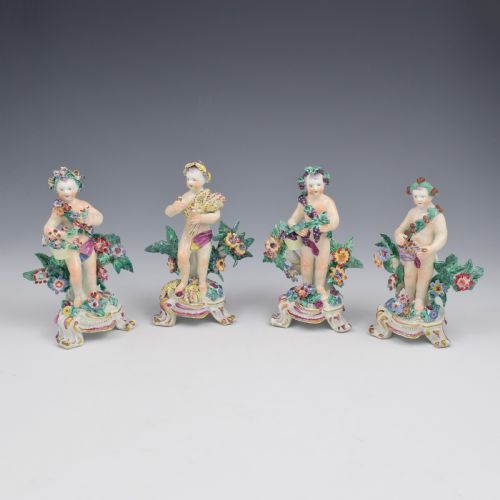
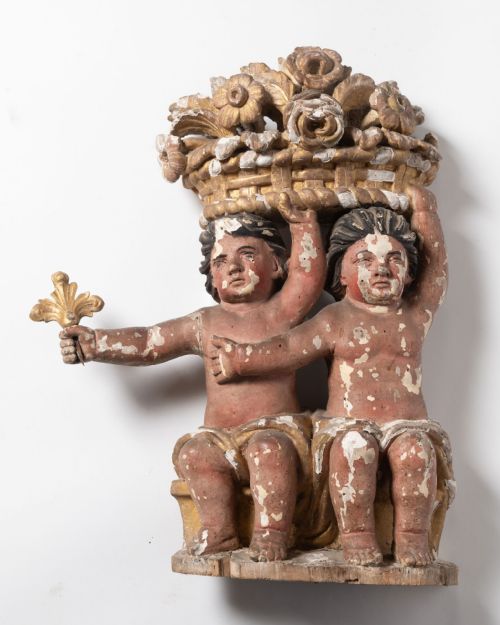
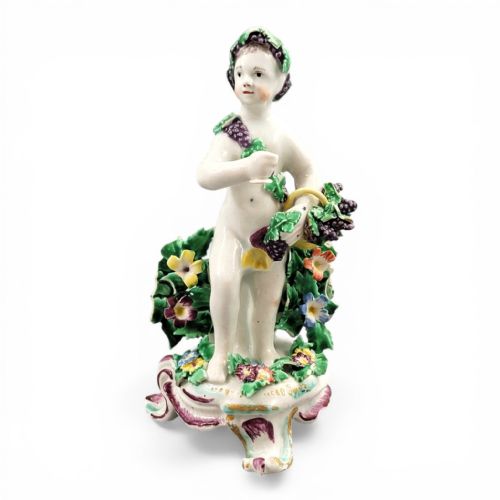
These polychrome cherub figures are decorative carved wood and hand-painted porcelain works representing winged putti and angels.
Polychrome Cherub Figures
When you search for polychrome cherub figures, you encounter sculptural works spanning the eighteenth and nineteenth centuries, alongside pieces from the early decades of the twentieth century. These objects include porcelain figurines, sweetmeat dishes, centrepiece vases, and carved wooden sculptures originating from English, German, and Italian workshops.
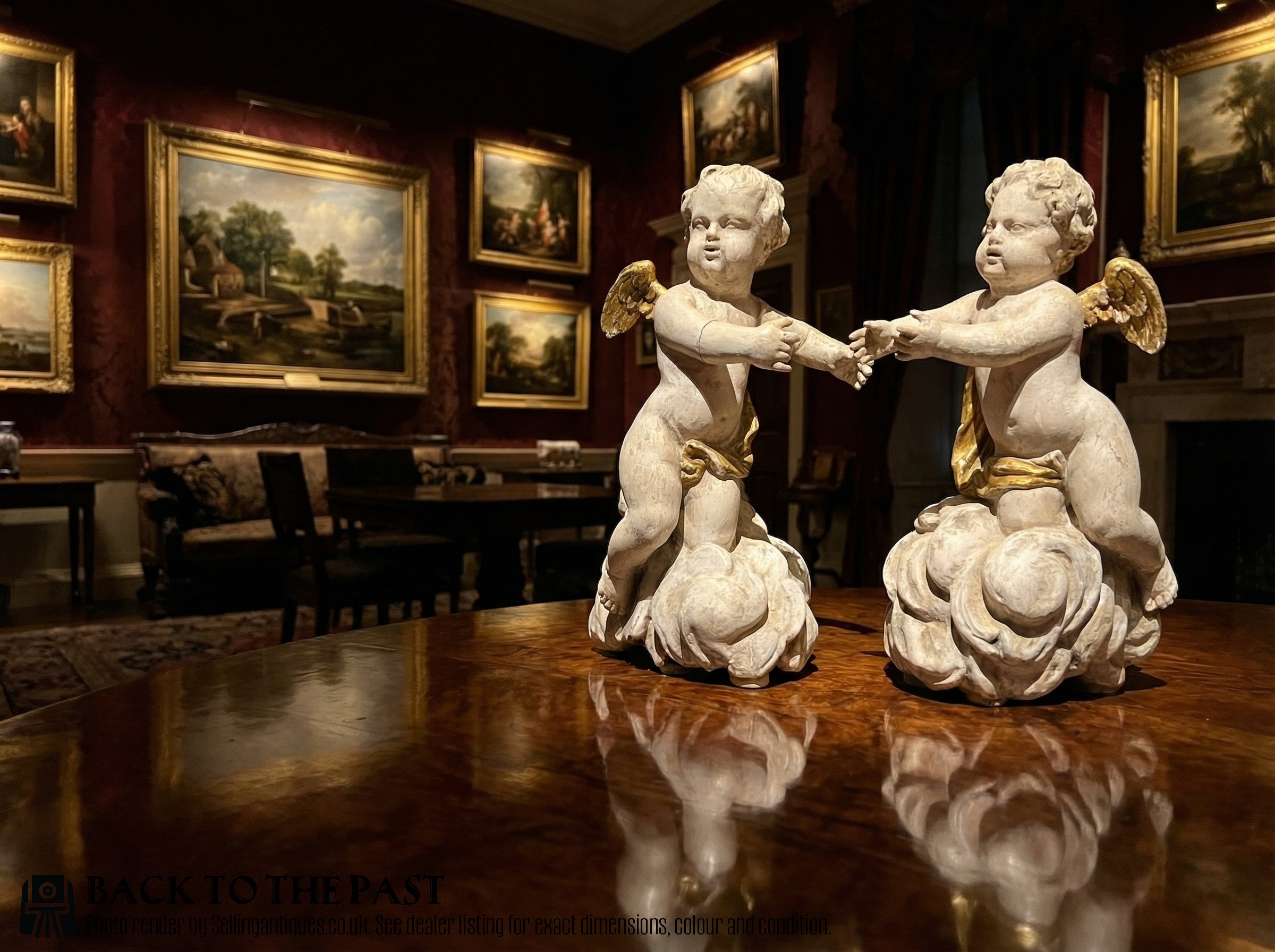
The most common examples on this page are porcelain figures and pairs of carved wooden putti, often depicted standing, dancing, or resting upon clouds. Stylistically, the selection draws heavily upon Baroque, Rococo, and Italian Renaissance traditions, featuring winged celestial figures rendered in vivid pigments and metallic leaf.
How they were made
The wooden examples rely on carved timber surfaces coated in gesso and finished with polychrome paint, gold leaf, and occasional silvering. Sculptors shaped the timber bodies to create dynamic postures before applying layers of coloured pigments to render drapery, flesh tones, and wings.
Several cherubs share shelf space with goats, sweetmeat dishes, and musical instruments, proving angels enjoy a varied social life.
What varies in quality
The handling of the polychrome surface and gilding distinguishes workshop output, where master modellers achieved subtle depth in flesh tones and drapery. Lesser examples often exhibit flat, uniform paint layers and simplified modelling that lacks the anatomical rhythm seen in superior work.
Bow Porcelain·Edme Samson·Meissen·Volkstedt·George Kemper
The Polychrome Cherub Figures Glossary
- Putto
- A plump, winged male infant figure frequently depicted in classical and religious art. They appear widely across Italian and Northern European sculpture and porcelain from the seventeenth century onward.
- Polychrome
- Painted, printed, or decorated in several colours. This term describes ceramic bodies and wooden carvings finished with multiple pigments.
- Gesso
- A white paint mixture consisting of a binder mixed with chalk, gypsum, or pigment. It served as a prepared base for gilding and painting on carved wooden surfaces.
- Soft-Paste Porcelain
- A ceramic material made from a mixture of clay and glass frit, fired at lower temperatures than hard-paste porcelain. It is characteristic of many eighteenth-century English factories such as Bow and Chelsea.
- Sweetmeat Dish
- An ornamental vessel designed to hold small sweet confections or nuts at a dining table. They are often incorporated into porcelain figural groups from the Georgian period.
Polychrome Cherub Figures: Frequently Asked Questions
Are these figures religious?
Many of these pieces stem from church or altar contexts, particularly the Italian carved wooden angels and figures associated with madonnas.
At the same time, numerous porcelain examples were created purely for domestic display or table decoration, reflecting secular taste and classical mythology.
How do I care for polychrome wood?
Carved wooden figures finished with gesso and paint require stable indoor humidity and protection from direct sunlight to prevent paint flaking.
Dust them gently with a dry, soft brush rather than using wet cloths or liquid cleaning products that can damage fragile pigments.
What is a sweetmeat figure?
Sweetmeat figures incorporate small dishes or bowls held by or seated beside ceramic putti.
Dining tables in the eighteenth and nineteenth centuries featured these arrangements to serve dry sweetmeats, sugar plums, and preserved fruits.
How do I distinguish wood from porcelain?
Wooden figures show carved grain beneath the gesso layer and feel lighter or warmer to the touch than ceramic bodies.
Porcelain pieces are heavier, colder, and display glossy glazed surfaces with hand-painted enamel details fused during high-temperature firing.