




Antique Baroque Putti Pair
These antique baroque putti pair selections bring winged figures from seventeenth-century Italian workshops and nineteenth-century revivals straight to your walls.
Antique Baroque Putti Pair
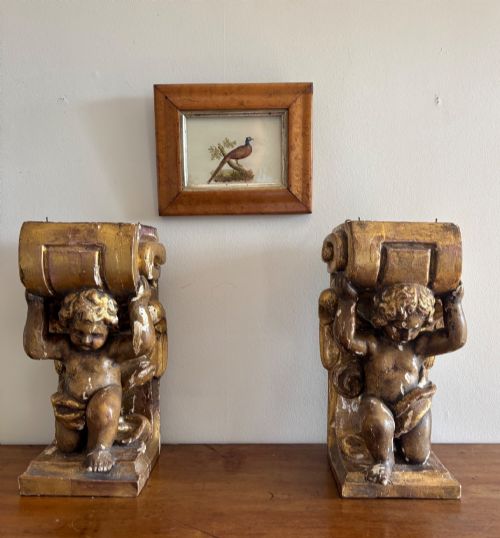
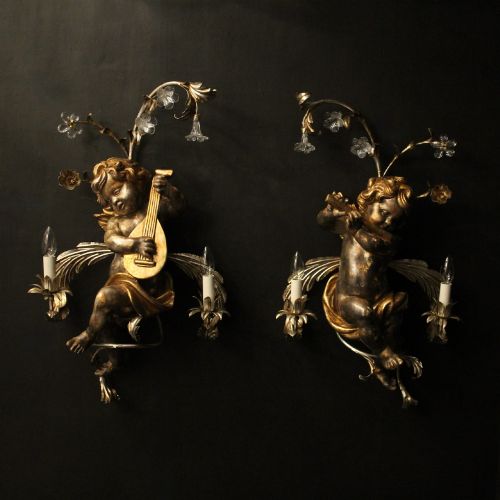
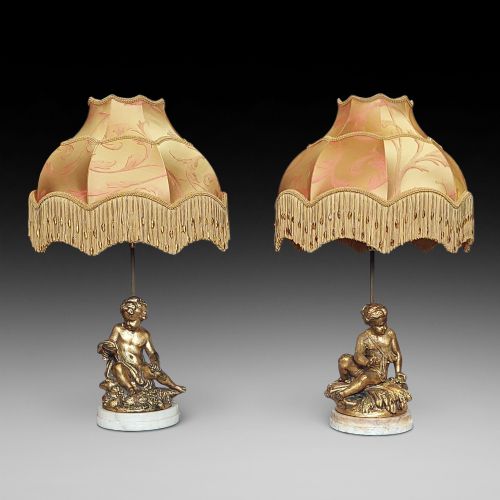
When you search for an antique baroque putti pair, you are looking at sculpted winged figures originating primarily from seventeenth to twentieth-century European traditions. The pieces on this page span wall brackets, sconces, fire dogs, and architectural panels.
Italian workshops and French revival periods dominate the selection, often taking the form of carved wood figures, giltwood brackets, and metal sconces. You will frequently encounter pairs designed to flank mirrors, support shelves, or mount directly onto walls as sculptural accents.
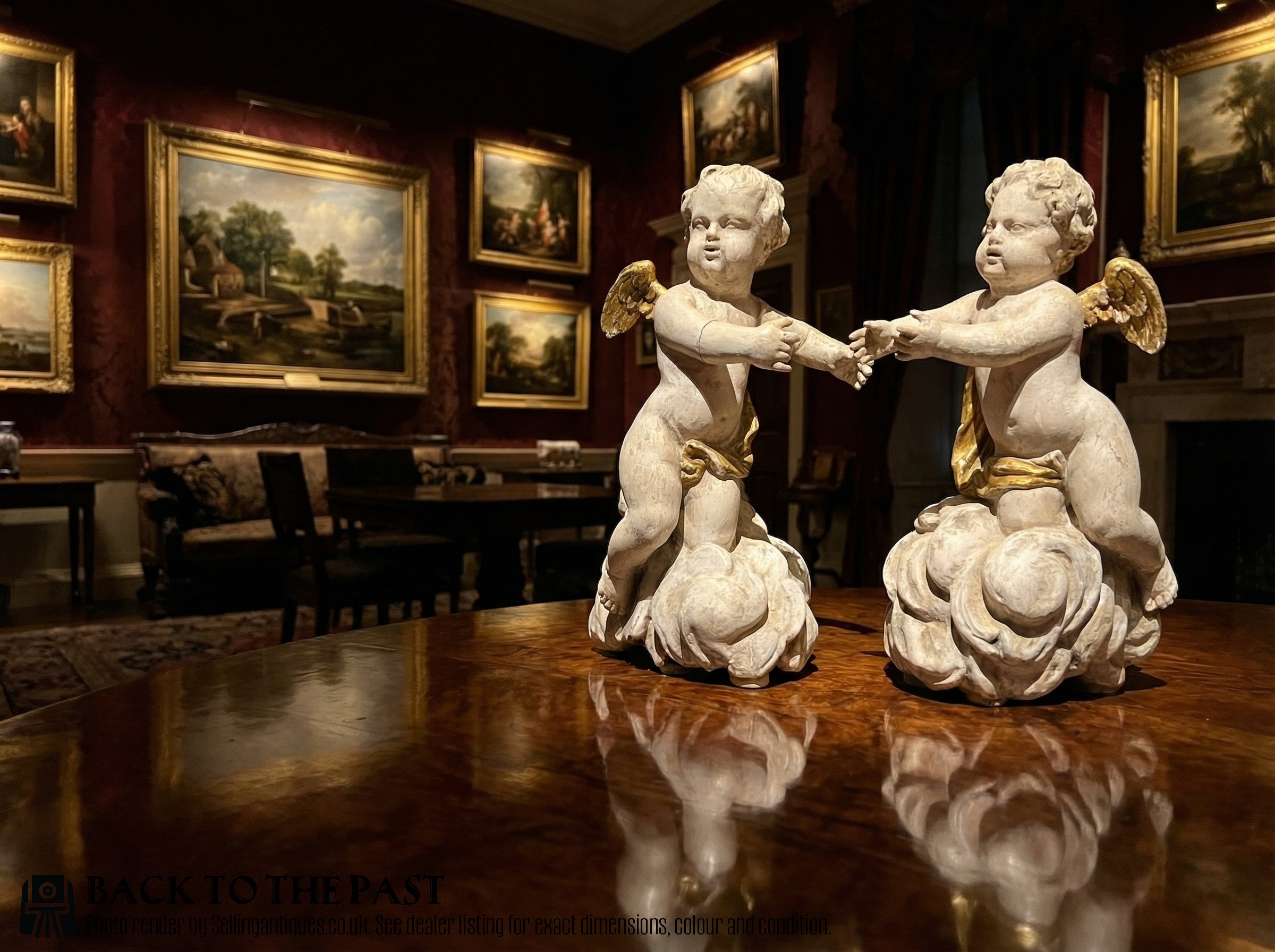
Earlier examples date back to the seventeenth century in limewood, while nineteenth-century pieces embrace Italian Baroque Revival and Louis XIV styles. These dual figures capture celestial or mythological motifs intended for dramatic interior display.
How these figures were constructed
Carvers shaped solid timbers such as limewood and general wood substrates before applying gesso layers to refine facial expressions and drapery folds. Artisans then finished many of these surfaces with gold leaf, giltwood, or polychrome paint.
Metal versions utilise bronze, brass, or gilt metal cast into figural wall sconces and chenets. These pieces rely on foundational metalwork combined with detailed chasing to define the contours of each cherub.
Some nineteenth-century Italian altars quietly repurposed chubby cherubs to watch over domestic living spaces instead.
What distinguishes superior examples
The depth and fluidity of the carving dictate the visual impact of wooden figures, separating mechanical execution from sensitive hand-tool work. Master carvers achieved anatomical conviction in limbs and wings, whereas simpler pieces remain stiff and formulaic.
Surface treatments also drive distinction, particularly the handling of original gilding, gesso preparation, and polychrome layers. Intact historical finishes retain subtle tonal shifts that newer or heavily restored surfaces lose entirely.
The Antique Baroque Putti Pair Glossary
- Putti
- Plural of putto, depicting plump, winged toddler figures derived from classical art and frequently seen in baroque sculpture. They appear across Italian and French decorative arts.
- Giltwood
- Timber coated with gold leaf or powder over a prepared gesso ground. This technique creates a luminous surface for wall brackets and frames.
- Chenets
- Metal fire dogs placed at the hearth to support logs. Paired figural examples often incorporate cherubs or putti.
- Gesso
- A plaster mixture applied to wood substrates to create a smooth surface for gilding and painting. It allows crisp detail in carved ornaments.
- Polychrome
- Decoration executed in multiple colours, often found on carved wood figures to imitate lifelike flesh tones and garments.
Antique Baroque Putti Pair: Frequently Asked Questions
Where were putti pairs placed?
These figures were designed to flank architectural elements, mirrors, or altars in grand domestic and ecclesiastical interiors. Wall brackets often supported candles or small decorative objects above eye level.
Fireplace accessories like chenets positioned the figures directly at the hearth, where they reflected the light of the fire across the room.
How do I mount wall brackets?
Most antique wall brackets feature integrated hanging loops or backplates designed for secure wall attachment. Professional installation ensures the weight of the carved wood and gesso is properly supported.
Wall sconces and lights require alignment with existing electrical wiring when functional, though many serve strictly as decorative architectural panels.
How do I tell periods apart?
Seventeenth-century pieces often utilise dense limewood with deep, unrestrained carving characteristic of early European workshops. Nineteenth-century revival pieces lean into symmetrical Louis XIV styles or heavier Italian Baroque Revival forms.
Material choices also signal the era, with solid carved timber and gesso giving way to cast brass and gilt metal in later production periods.
What is the difference between putti and cherubs?
Art historical terminology often uses putti and cherubs interchangeably to describe winged infant figures found in baroque design. Putti derive from classical mythology, while cherubs carry religious connotations in church interiors.
Both forms appear frequently in Italian alters, wall sculptures, and decorative brackets from the seventeenth century onward.