

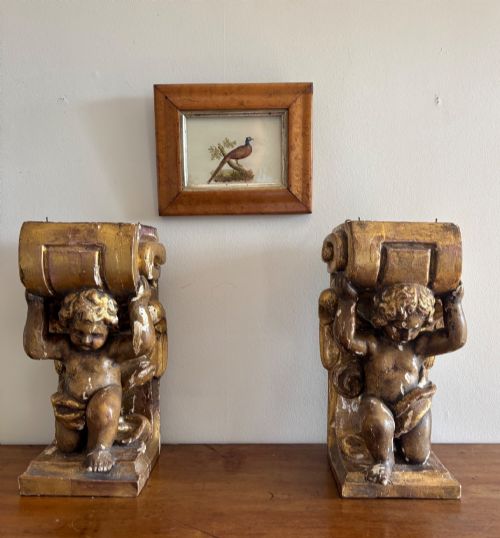
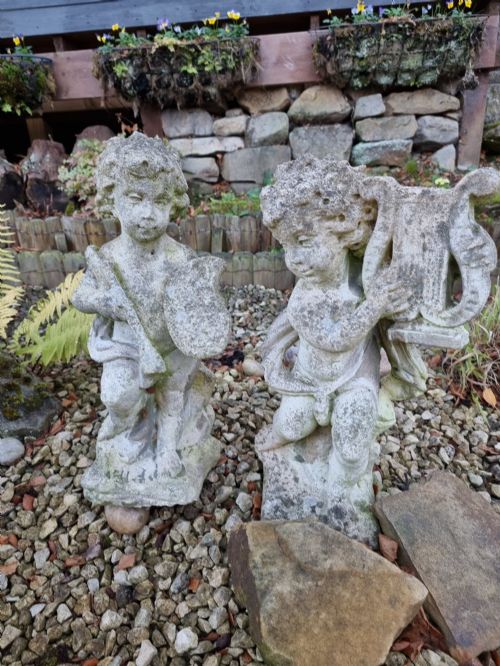
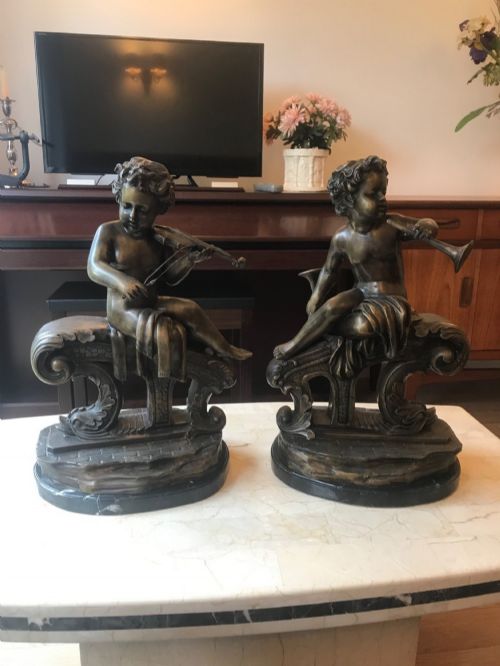
Pair of Cherubs
These decorative objects, known as a pair of cherubs, bring classical mythology and ornate domestic lighting into period interiors.
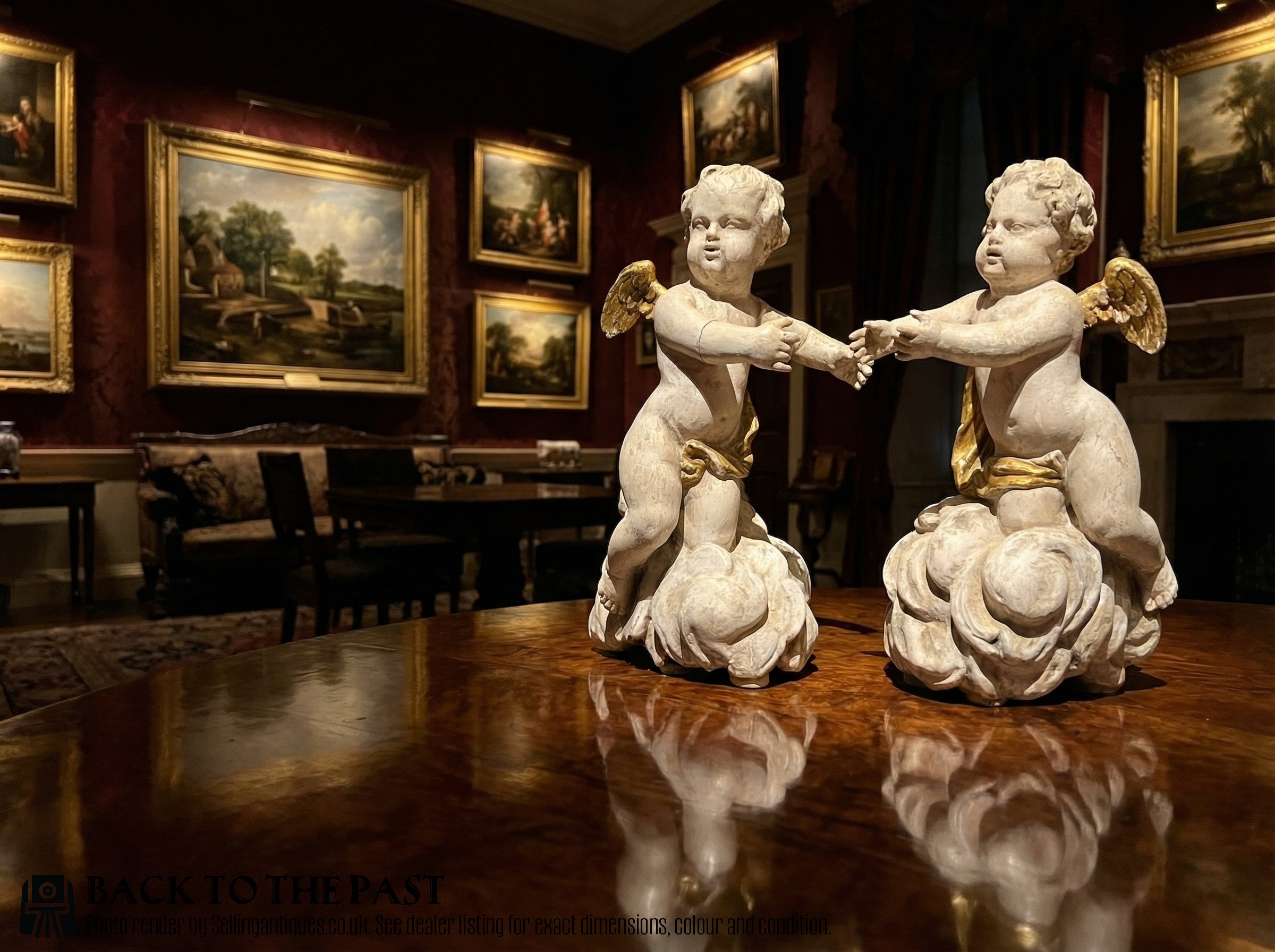
Pair of Cherubs
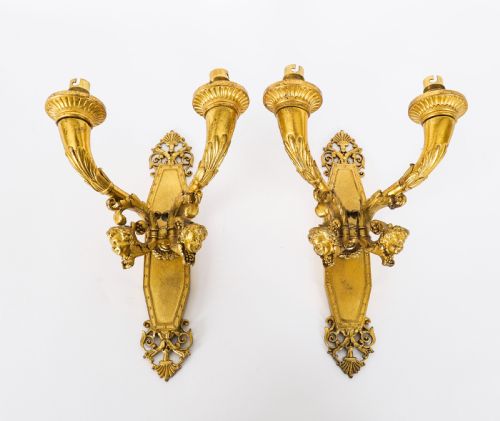
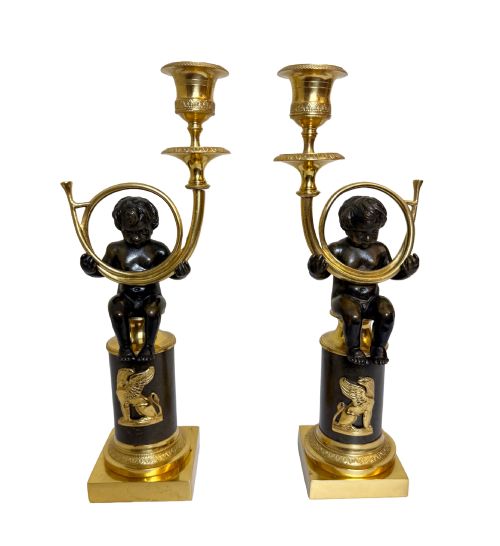
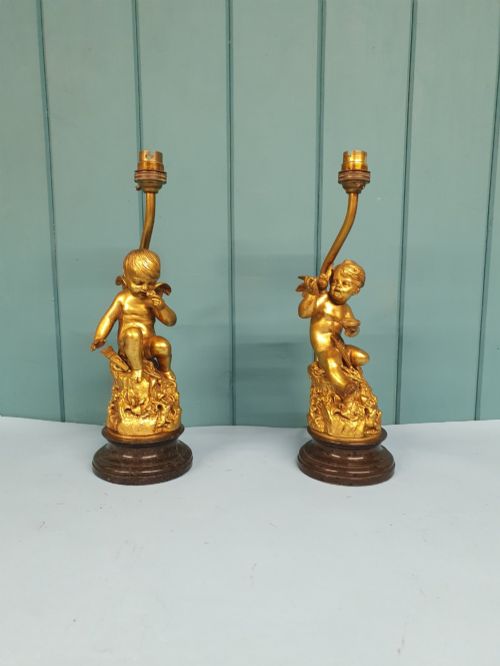
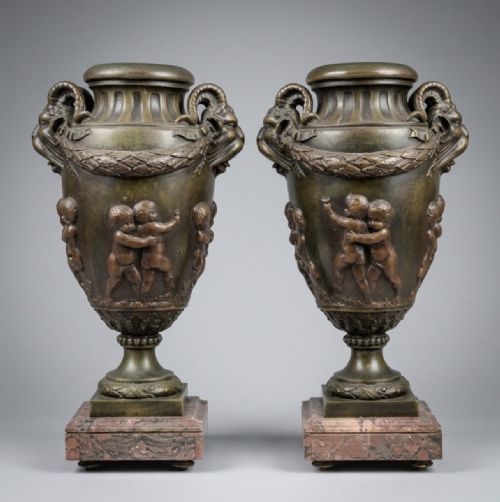
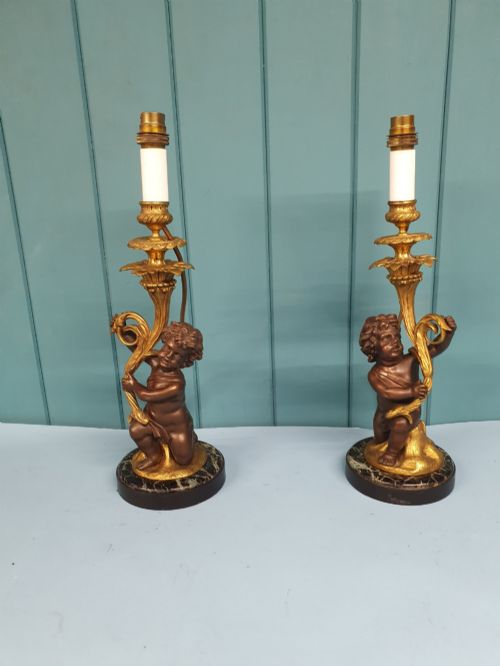
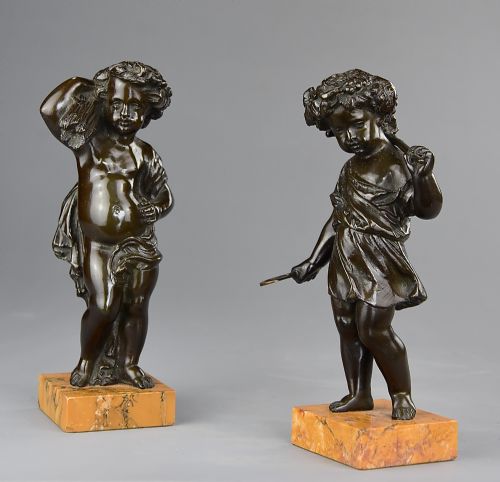
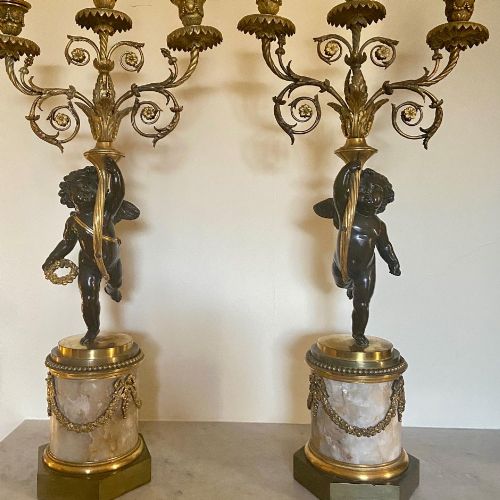
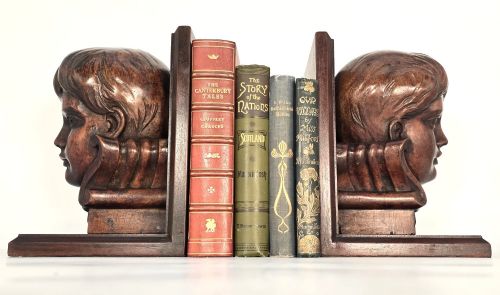
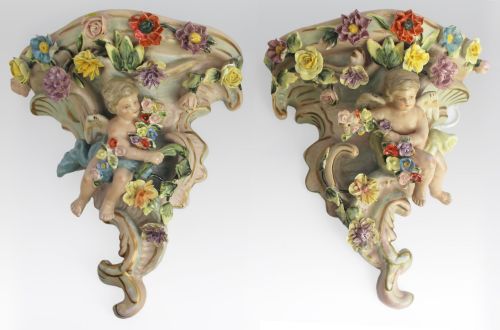
A pair of cherubs encompasses cast metal figures, carved wooden ornaments, and porcelain table lamps depicting winged infants derived from classical mythology and religious art.
The selections span lighting components such as candelabra, wall sconces, and candlesticks, alongside freestanding decorative sculptures and architectural brackets.
Examples frequently date from the eighteenth and nineteenth centuries, reflecting revivals of Rococo, Baroque, and Louis XIV styles popular across France, Italy, and Britain.
How They Were Made
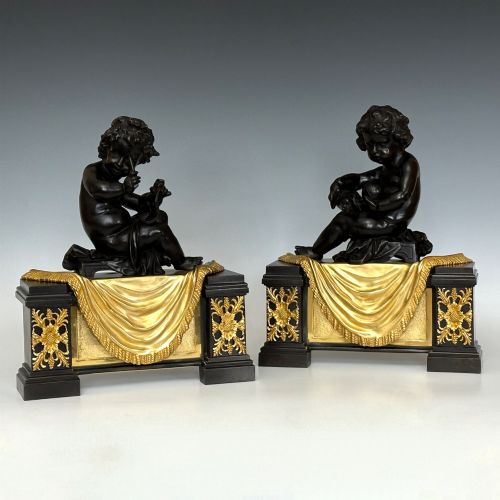
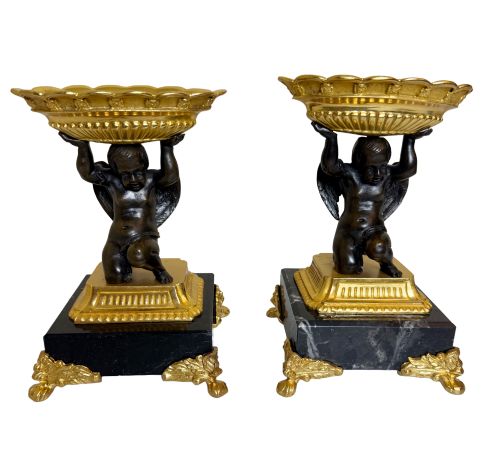
Foundry methods utilise bronze, ormolu, gilt brass, and cast iron, often combining patinated finishes with gilded highlights to emphasise anatomical details and drapery.
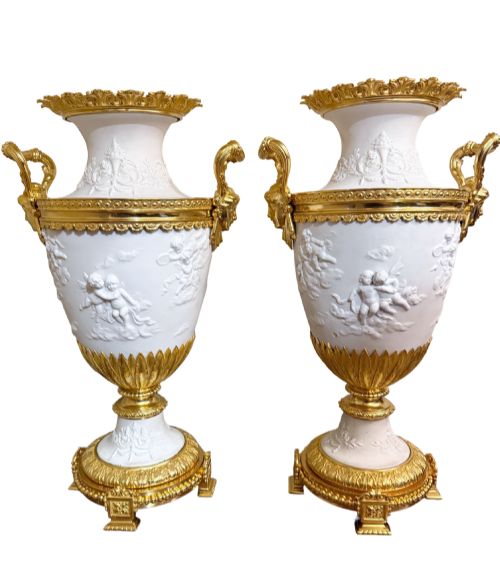
Ceramic editions employ hard-paste porcelain, majolica, and blanc de chine, shaped in moulds and hand-painted or glazed with delicate colours.
Wooden variants rely on carved oak, mahogany, or giltwood, sometimes paired with gesso or mounted on marble and alabaster plinths.
Certain nineteenth-century sculptors placed their cherub musicians astride unlikely animals, including crocodiles and farmyard poultry.
What Varies in Quality
The crispness of the chasing on metal figures and the depth of the carving in wooden examples distinguish superior items from routine commercial production.
The integration of materials determines visual balance, particularly where bronze figures meet marble bases or where porcelain incorporates elaborate ormolu mounts.
Claude Michael Clodion·Francois Redmond·Jean Gille·H Schubert
The Pair of Cherubs Glossary
- Ormolu
- A technique of applying finely ground high-carat gold to an amalgamated bronze object through heat, creating a rich golden surface.
- Putti
- Plural of putto, referring to plump, winged infant figures commonly depicted in classical and Renaissance art.
- Candelabra
- Branched lighting fixtures designed to hold multiple candles or bulbs simultaneously.
- Chenets
- Ornamental metal guards placed at the front of a fireplace to support logs, frequently incorporating sculptural figures.
- Tazza
- A shallow saucer-like dish mounted on a stem and foot, often utilised as a decorative centrepiece.
Pair of Cherubs: Frequently Asked Questions
How were cherub candelabra used?
These pieces served both practical illumination and decorative display within formal reception rooms, dining tables, and mantelpieces during the evening hours.
Craftsmen designed them to catch and reflect candlelight through polished bronze surfaces and gilt mounts.
What is the difference between cherubs and putti?
Art historical conventions often distinguish religious cherubim from secular putti, though decorative arts commonly use the terms interchangeably for winged infants.
Both forms draw upon classical iconography adapted through Renaissance and later revival movements.
How should I clean antique ormolu?
Preserving the delicate gold surface requires only gentle dusting with a soft dry cloth to prevent abrasion of the original finish.
Moisture and chemical cleaning agents can damage vulnerable gilding and patinated bronze layers over time.
Where should I place wall sconces?
Pairs of wall lights function effectively flanking mirrors, fireplaces, or architectural doorways within a period interior scheme.
Secure mounting is essential due to the combined weight of cast metal and stone components.