


Pollard Oak Cabinet
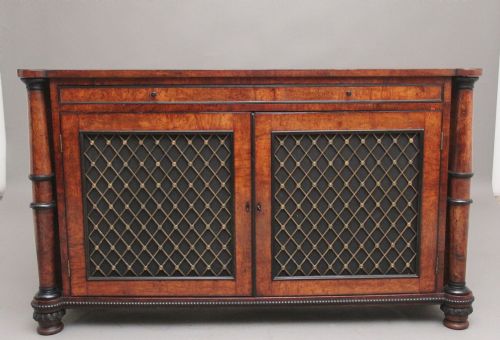
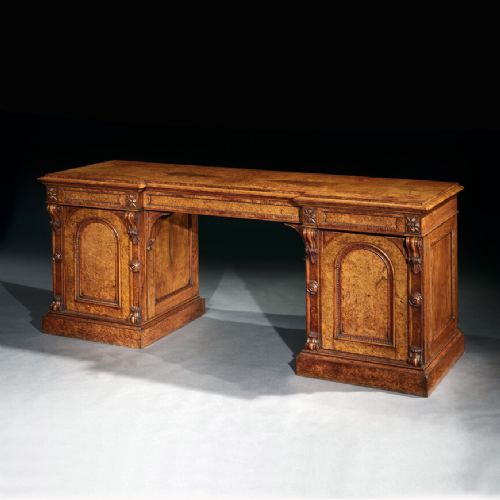
A pollard oak cabinet brings rich, knotty timber grain into a room through Victorian and Regency forms.
Pollard Oak Cabinet
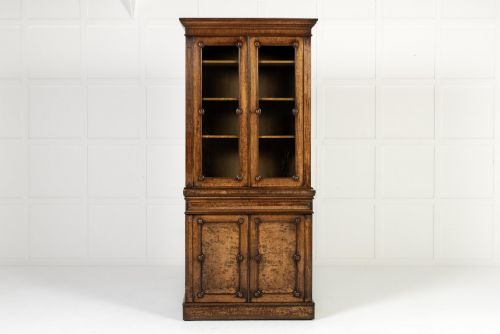
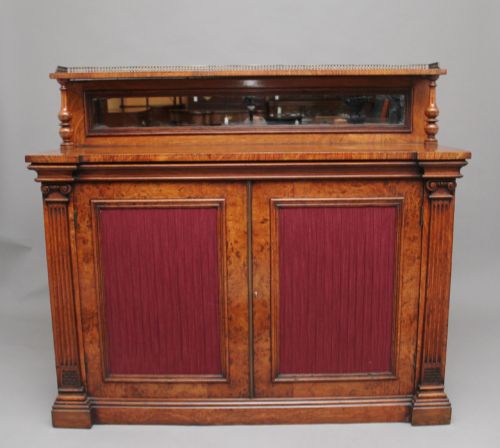
When you search for a pollard oak cabinet, you encounter storage furniture surfaced in a distinctive speckled timber derived from pollarded trees. The pieces span bookcases, sideboards, credenzas, and smaller bedside or wall-mounted cupboards.
The material appears most frequently across nineteenth-century and Victorian items, alongside Regency and Georgian examples. These functional forms range from large library bookcases to compact collector chests and cellarettes.
How they were made
Cabinet makers utilised pollard oak veneers applied over solid timber carcases to display the characteristic clustered knot growth. Workshops frequently combined this striking wood with contrasting materials such as ebony, brass, glass, and leather.
Joinery techniques supported large library bookcases, cellarettes, and intricate secretaire desks featuring drop fronts. Carved detailing and specimen wood inlay frequently complemented the figured grain across Victorian and Regency pieces.
Pollard Oak Cabinet Retail Price Guide 2026
Typical asking prices for pollard oak cabinet among the pieces listed under this phrase on Sellingantiques today, from the lower quarter to the upper quarter. They describe what is for sale here now, not the wider market.
Some nineteenth-century makers packed their pollard oak cabinets with crystal decanters to create portable dry bars and humidors.
What varies in quality
The visual impact of the timber veneer dictates much of the distinction across these pieces. Examples with dense, well-matched pollard growth across the entire surface command greater attention than those with plain secondary woods.
Construction standards differentiate utilitarian cupboards from cabinetmaker output featuring fitted interiors, bronze or brass hardware, and secondary inlays of satinwood or ebony. The precision of the carcass joinery and the survival of original glass or crystal components further define the tier of a piece.
A Blain And Son·William Trotter
The Pollard Oak Cabinet Glossary
- Pollard oak
- Timber harvested from trees that were cut back close to the trunk to encourage dense, knotty branch growth. This pruning method produces a highly figured surface veneer filled with small dark circles.
- Secretaire
- A cabinet or desk incorporating a pull-down writing flap that conceals small drawers and pigeonholes. It often takes the form of a bookcase with a fitted writing drawer.
- Cellarette
- A lockable storage container designed to hold bottles of wine or spirits. These vessels sit near dining tables or inside sideboards.
- Purdonium
- A specialised household cabinet designed to store coal near a fireplace. It typically includes a sloping front and an internal metal scuttle.
- Crossbanding
- A narrow strip of veneer laid around the border of a panel so that the grain runs at right angles to the central wood. This technique frames the figured pollard oak surface.
Pollard Oak Cabinet: Frequently Asked Questions
What periods do these cabinets come from?
The pieces span the Georgian, Regency, and Victorian eras, with the majority originating in the nineteenth century. Records also include sixteenth-century and Edwardian examples.
Craftsmen utilised the distinctive timber heavily during the nineteenth century for large library bookcases, sideboards, and smaller bedside cabinets.
How do I care for pollard oak furniture?
Keep the timber away from direct heat sources and strong sunlight to prevent the veneer from drying out or splitting. Maintain the wood using gentle beeswax polishes rather than modern silicone sprays.
Dust the surface regularly with a soft cloth to protect the intricate grain patterns and inlaid elements.
What rooms suit a pollard oak sideboard?
These large storage items work effectively in dining rooms or entrance halls where their heavy timber presence provides a focal point. Mirror-backed versions bounce light around reception spaces.
Smaller side cabinets and credenzas function well in studies or living rooms to house books and collections.
How do I identify Regency pieces?
Regency items typically display classical restraint combined with dramatic veneers like pollard and burr oak. Look for architectural proportions and restrained use of brass or ebony stringing.
These pieces often pre-date the heavier ornamentation found on later Victorian Gothic Revival furniture.