
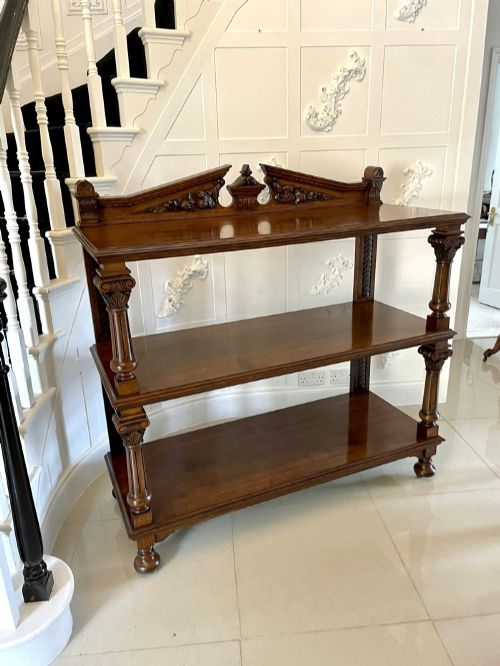
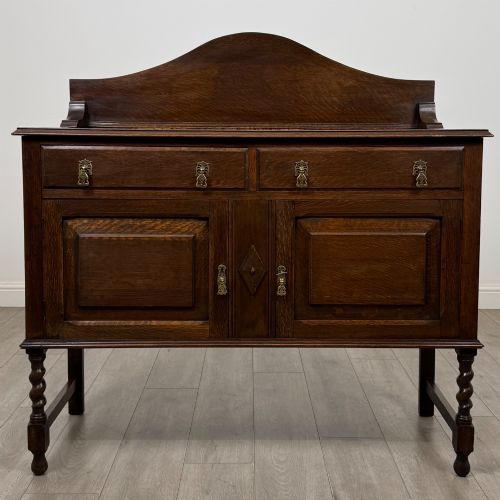
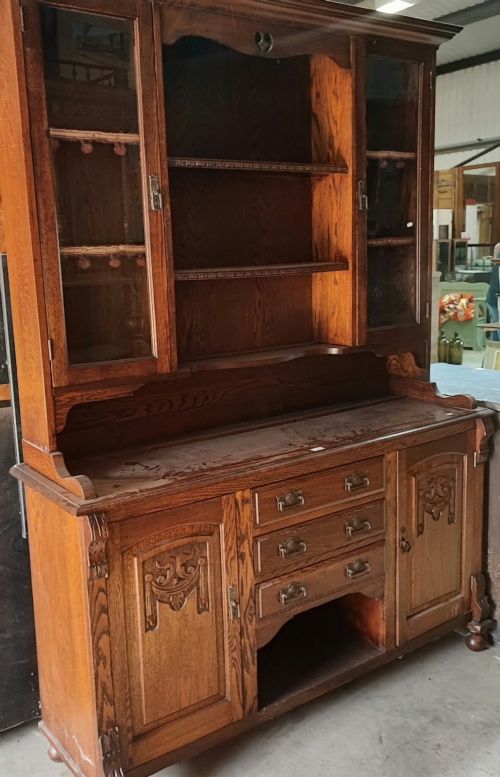
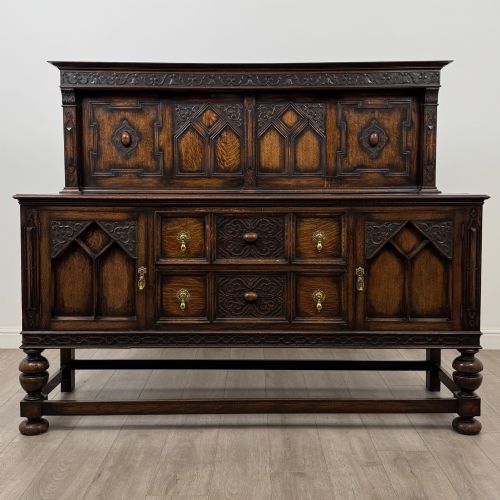
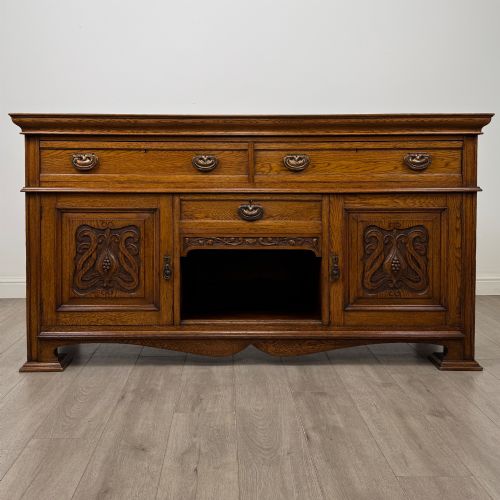
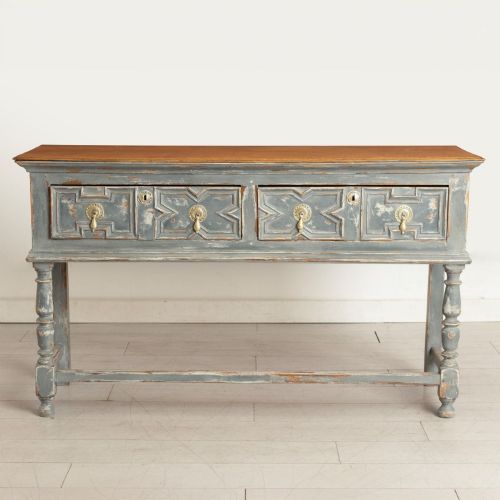
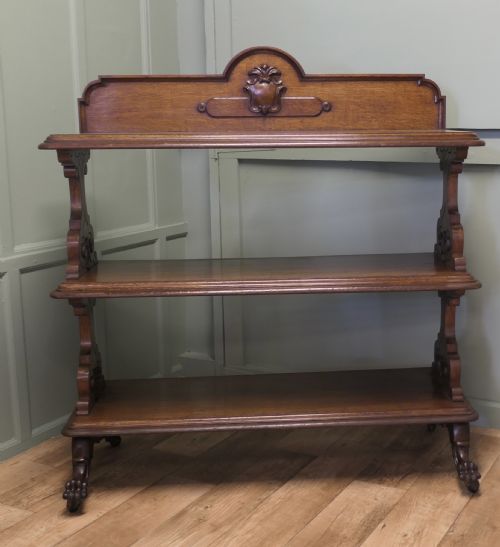
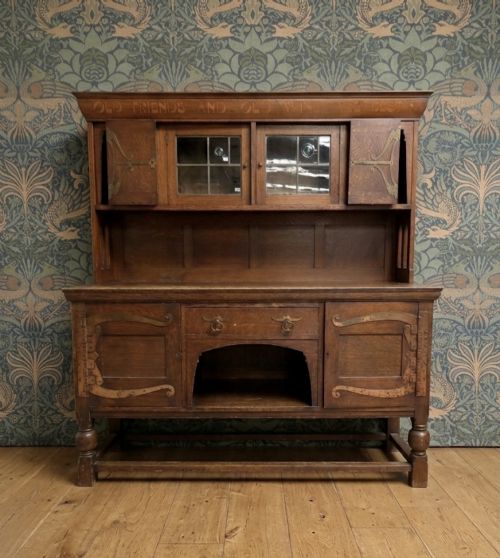
Edwardian Oak Buffet
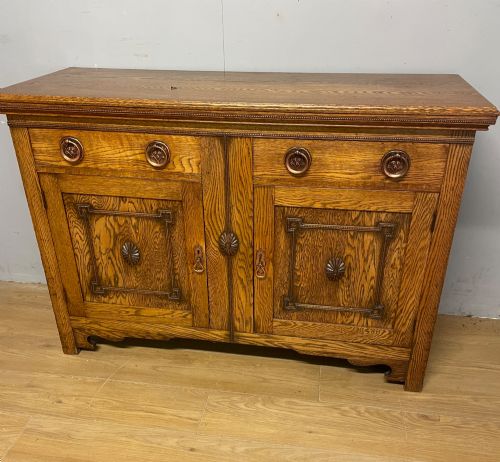
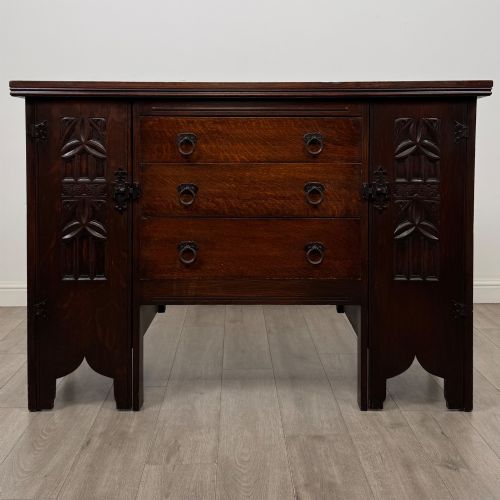
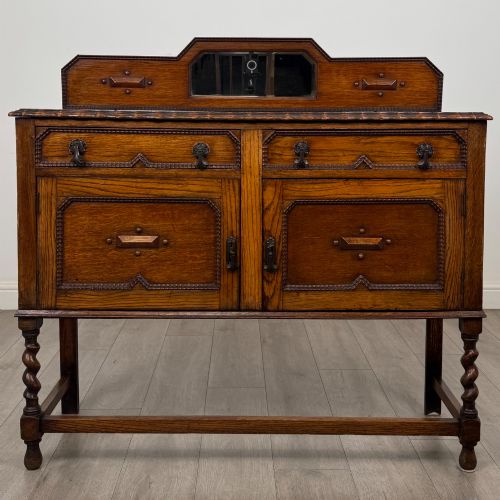
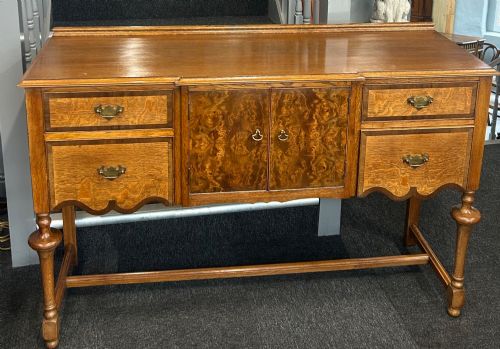
These edwardian oak buffet pieces combine robust utility with period craftsmanship, offering generous storage for any dining room.
Edwardian Oak Buffet
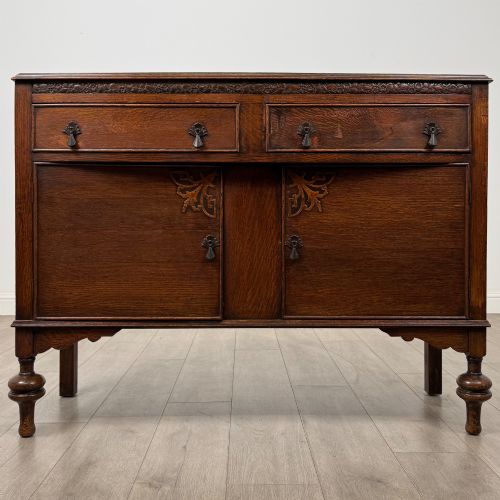
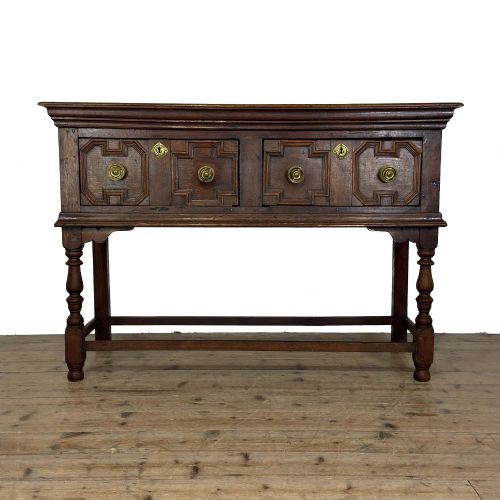
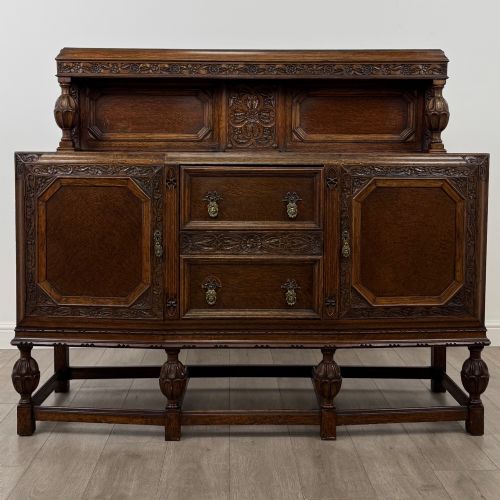
An edwardian oak buffet represents a sturdy category of dining furniture designed for serving food and storing tableware. Buyers seeking an edwardian oak buffet will encounter forms that range from low serving tables and trolley stands to substantial sideboards and dresser bases.
The pieces appearing on this page span the Edwardian period alongside late Victorian and early twentieth-century examples. Many reflect revival movements or straightforward utility, often incorporating cupboards, drawers, and open pot boards.
Makers and designers of the period utilised solid timbers to construct heavy, functional furniture for domestic interiors. The resulting forms serve today as practical storage units with distinct period character.
What determines quality
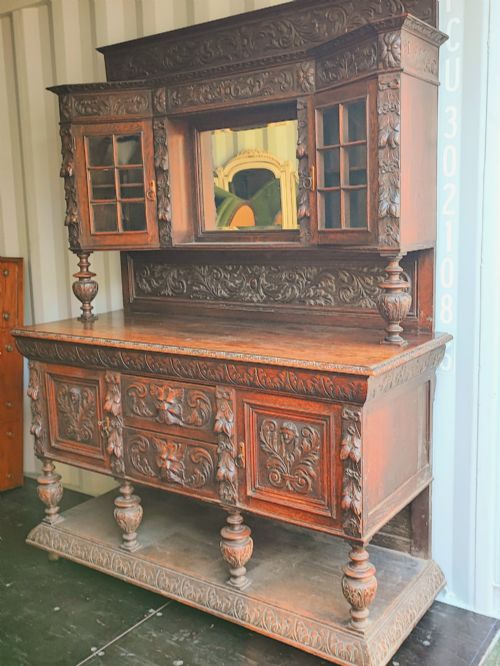
Quality rests upon the selection of timber figures, such as pollard or golden oak, and the crispness of hand-carved details like Green Man motifs. Heavier construction and the integration of specialised hardware distinguish finer workshops from standard production.
Design attribution to notable retail houses or specific craftsmen elevates certain examples above standard domestic furniture. Proportion, structural integrity, and the preservation of original surfaces dictate the standing of individual pieces.
Materials span standard oak alongside golden oak, pollard oak, burr walnut, and leaded glass.
Ambrose Heal for Heal & Son·Leonard Wyburd·Shapland and Petter·Liberty & Co.
The Edwardian Oak Buffet Glossary
- Buffet
- A sideboard or serving table used for food and tableware. These pieces often feature lower shelves or cupboards for storage.
- Pot Board
- An open lower shelf on a dresser base or buffet. Historically, this shelf held pots and heavy kitchen utensils.
- Barley Twist
- A spiral-turned wooden column used for legs and supports. This decorative turning method appears frequently on furniture from the period.
- Leaded Glass
- Glass panes held together by strips of lead within a window or cabinet door. This technique forms geometric or floral patterns in arts and crafts pieces.
- Pollard Oak
- Timber taken from trees that were cut back to the trunk to promote dense branching. The resulting wood displays a highly figured, clustered grain.
Edwardian Oak Buffet: Frequently Asked Questions
What is an edwardian oak buffet used for?
An edwardian oak buffet serves as a practical dining room console for holding dishes, serving food, and displaying decorative items. Cupboards and drawers provide enclosed storage for tableware and linens.
The lower shelves and top surfaces offer additional space for everyday hosting needs. These items function well in modern dining spaces requiring traditional storage solutions.
How do I identify an Edwardian piece?
Edwardian furniture typically displays lighter oak tones, simplified revival styles, and subtle Arts and Crafts influences. Construction methods from this era often combine machine precision with hand finishing.
Hardware choices such as hammered copper or simple brass handles help distinguish the Edwardian era from heavier Victorian designs. Proportions tend to feel less sombre than late nineteenth-century equivalents.
What is the difference between a sideboard and a buffet?
Buffets and sideboards share overlapping functions in dining room service and storage. A buffet traditionally emphasises serving surfaces and lower shelves, while a sideboard often incorporates larger cupboards and cutlery drawers.
In period listings, makers and retailers frequently used these terms interchangeably for similar case furniture. Both forms address dining room organisation with timber construction.
How do I care for antique oak furniture?
Maintain antique oak by keeping pieces away from direct heat sources and strong sunlight. Regular dusting with a soft cloth prevents surface buildup.
Occasional application of appropriate wax preserves the moisture and finish of the timber. Avoid liquid cleaners that might damage historical polish.