
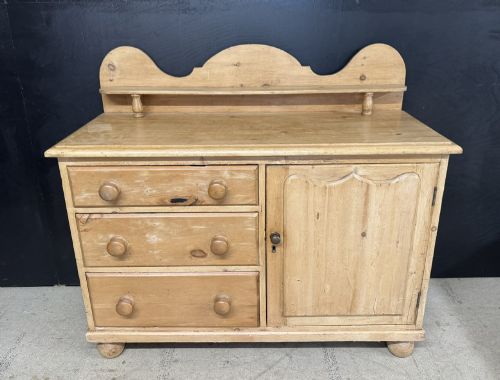
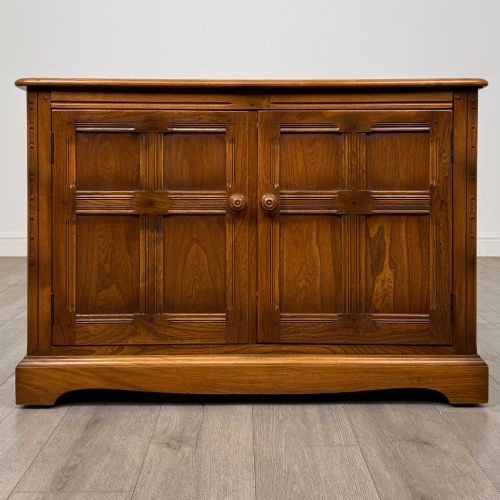
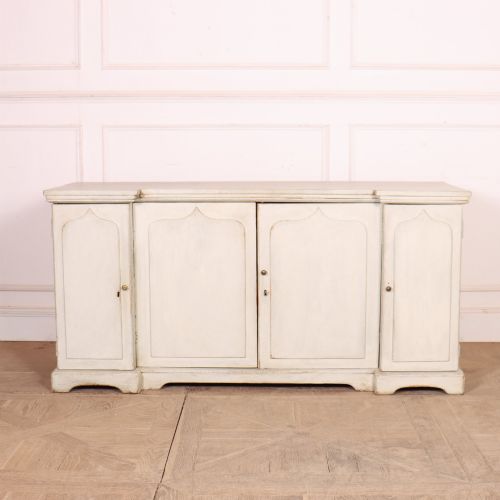
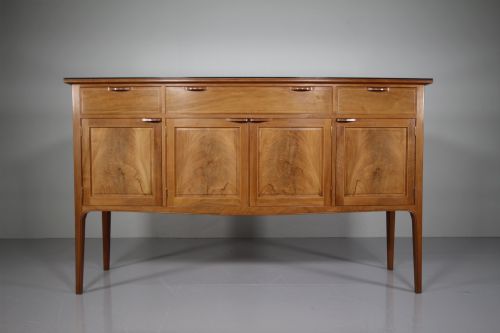

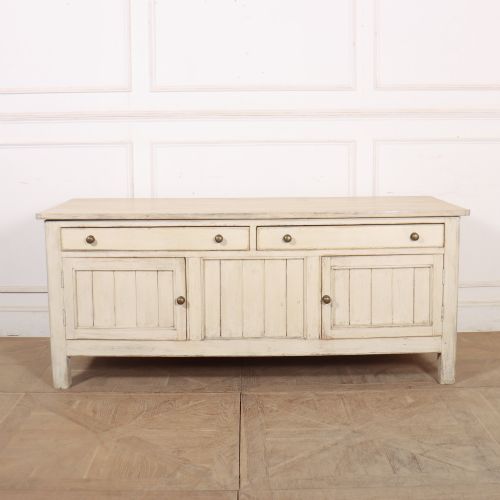


Antique English Buffet Cabinet
An antique english buffet cabinet brings centuries of functional craftsmanship into a room, offering generous storage alongside commanding presence.
Antique English Buffet Cabinet
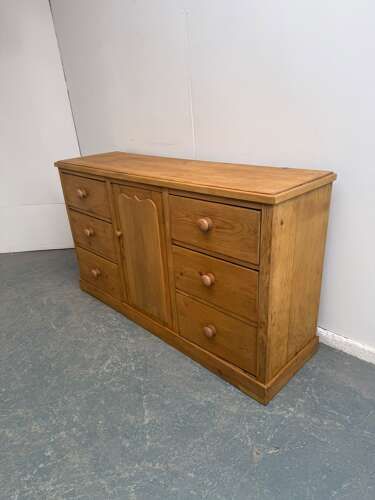
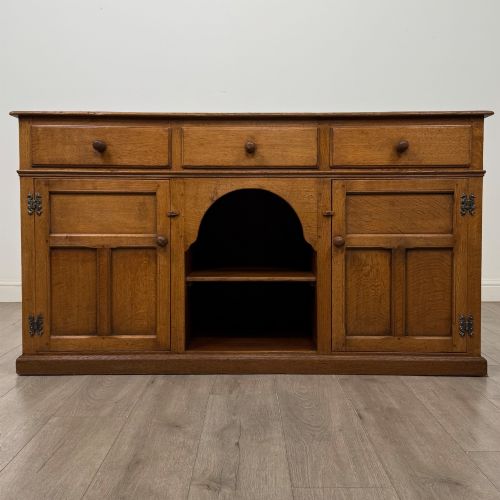
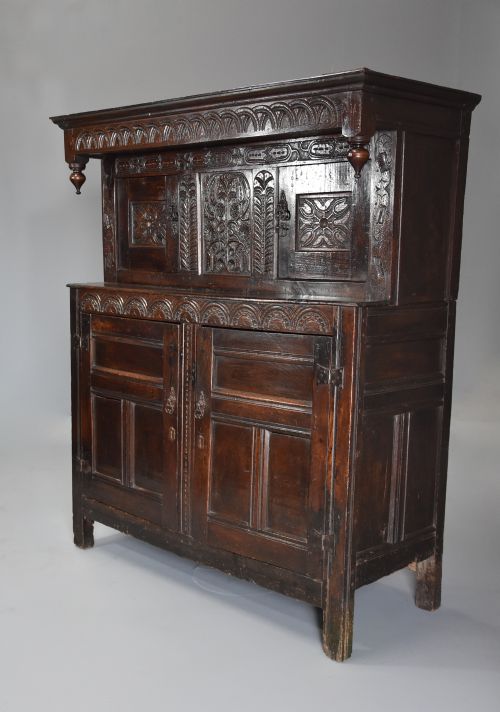
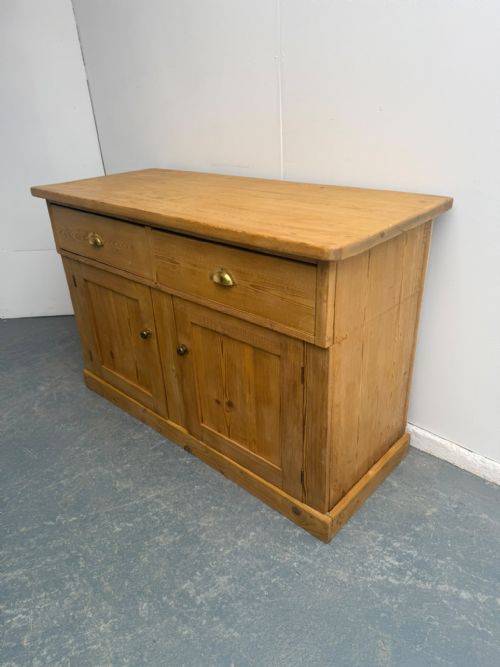
The antique english buffet cabinet encompasses a rich variety of serving pieces, dressers, and sideboards spanning from the seventeenth century through the Victorian era. Buyers searching this phrase most frequently encounter nineteenth-century walnut, mahogany, and pine examples alongside sturdy oak pieces originating from earlier centuries.
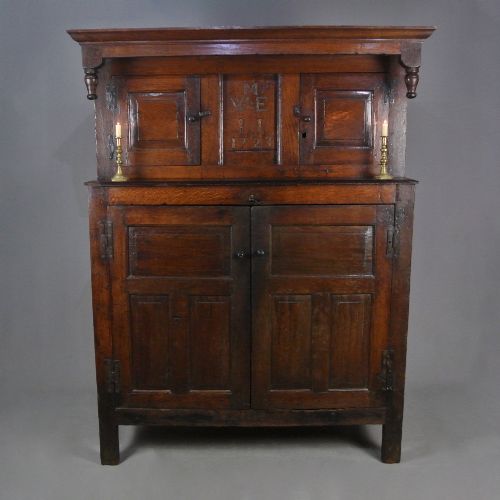
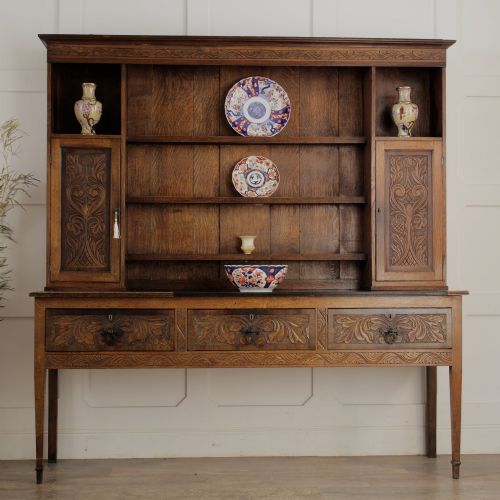
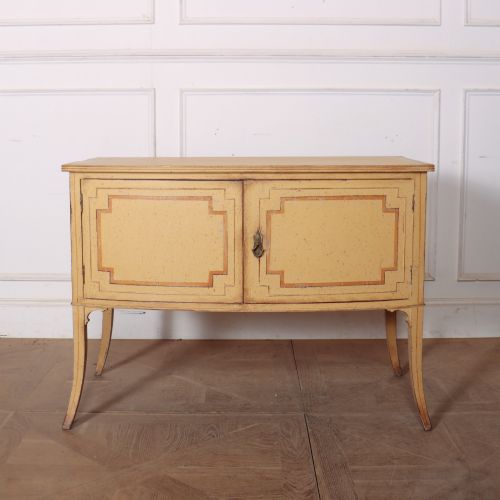
The selection ranges from grand breakfront bases and carved court cupboards to neat chiffoniers and painted side cabinets. Regional variations such as West Country dressers sit alongside formal Regency pedestal pieces and ornate Victorian server units.
Materials and construction
Cabinet makers relied heavily on timber selections like oak, mahogany, walnut, and pine, often enhancing grain patterns through flame veneers and marquetry inlay. Brass hardware, iron fixtures, glass panels, and occasional marble tops complete the structural assembly of these heavy storage units.
Joinery methods range from pegged framing seen in seventeenth-century court cupboards to refined dovetailing on later nineteenth-century drawers. Waxed finishes, original paint, and carved detailing preserve the integrity of the timber over generations.
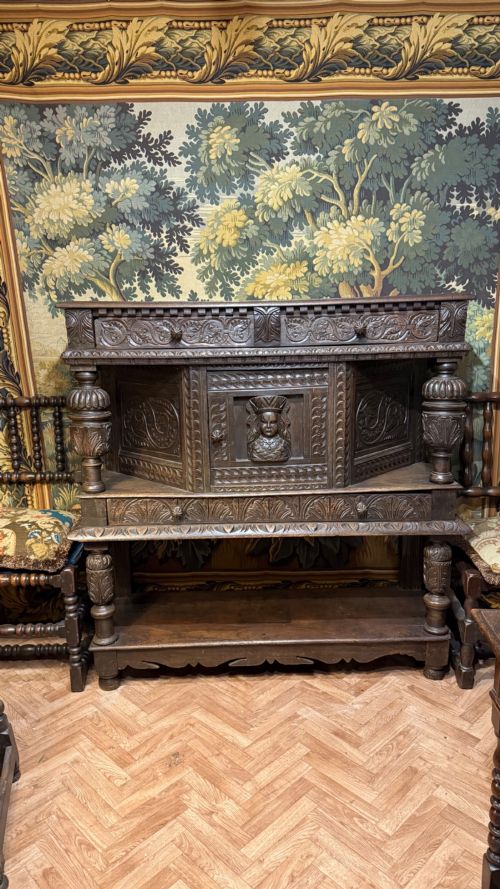
Carved green man faces peer out from Victorian server units, keeping a watchful wooden eye over generations of family dining rooms.
Assessing craftsmanship
Quality reveals itself in the choice of timber and the depth of carved ornament, distinguishing formal architectural pieces from utilitarian country furniture. Finer examples display carefully matched veneers, crisp carving around panels, and untouched original patination.
Structural harmony and proportion separate standard utility pieces from high-status works associated with notable cabinet makers. The survival of original surface finishes and authentic hardware elevates a piece above those altered or stripped in later eras.
Gillows
The Antique English Buffet Cabinet Glossary
- Buffet cabinet
- A low storage and serving piece designed for dining rooms and halls. It often incorporates cupboards or drawers beneath a flat top surface.
- Chiffonier
- A compact nineteenth-century side cabinet equipped with enclosed lower cupboards. These pieces frequently feature a small shelf or mirror superstructure.
- Breakfront
- A cabinet formation where the central section projects forward from the flanking wings. This architectural arrangement creates depth and visual rhythm across the facade.
- Marquetry
- The art of applying decorative veneer pieces to a structural surface to create pictorial or geometric designs. It is commonly found on refined walnut and mahogany furniture.
Antique English Buffet Cabinet: Frequently Asked Questions
Where were antique buffet cabinets used?
These pieces served primarily in dining rooms, kitchens, and grand halls as functional storage for tableware, linen, and food service. Their robust construction allowed them to handle heavy daily use in domestic settings.
Over time, many transitioned into principal display furniture within reception rooms, holding decorative objects alongside everyday dining essentials.
How do I care for an oak buffet cabinet?
Maintain the timber by applying traditional beeswax sparingly to nourish the dry wood and preserve the surface sheen. Avoid placing wooden cabinets in direct sunlight or near heat sources to prevent timber splitting.
Dust regularly with a soft, dry cloth and clean up spills immediately to protect the historic finish from water marks.
How do I tell a seventeenth-century piece from a Victorian copy?
Early pieces from the seventeen-hundreds feature pegged joints, hand-riven oak panels, and deep patination developed through centuries of handling. Tool marks left by hand saws and adzes are distinct to this period.
Victorian interpretations often utilise machine-sawn timbers, different secondary woods inside drawers, and applied rather than integral decorative mouldings.
What is the difference between a sideboard and a buffet?
Sideboards generally offer longer, lower profiles designed specifically for serving food and storing dining room accompaniments. They often incorporate pedestals or multiple drawers along a linear base.
Buffets frequently include enclosed upper cupboard sections or display shelving, leaning closer to storage cabinets than simple serving tables.