


Three Door Oak Credenza
A three door oak credenza offers substantial storage with enduring timber character, bringing practical utility and traditional presence to a dining room.
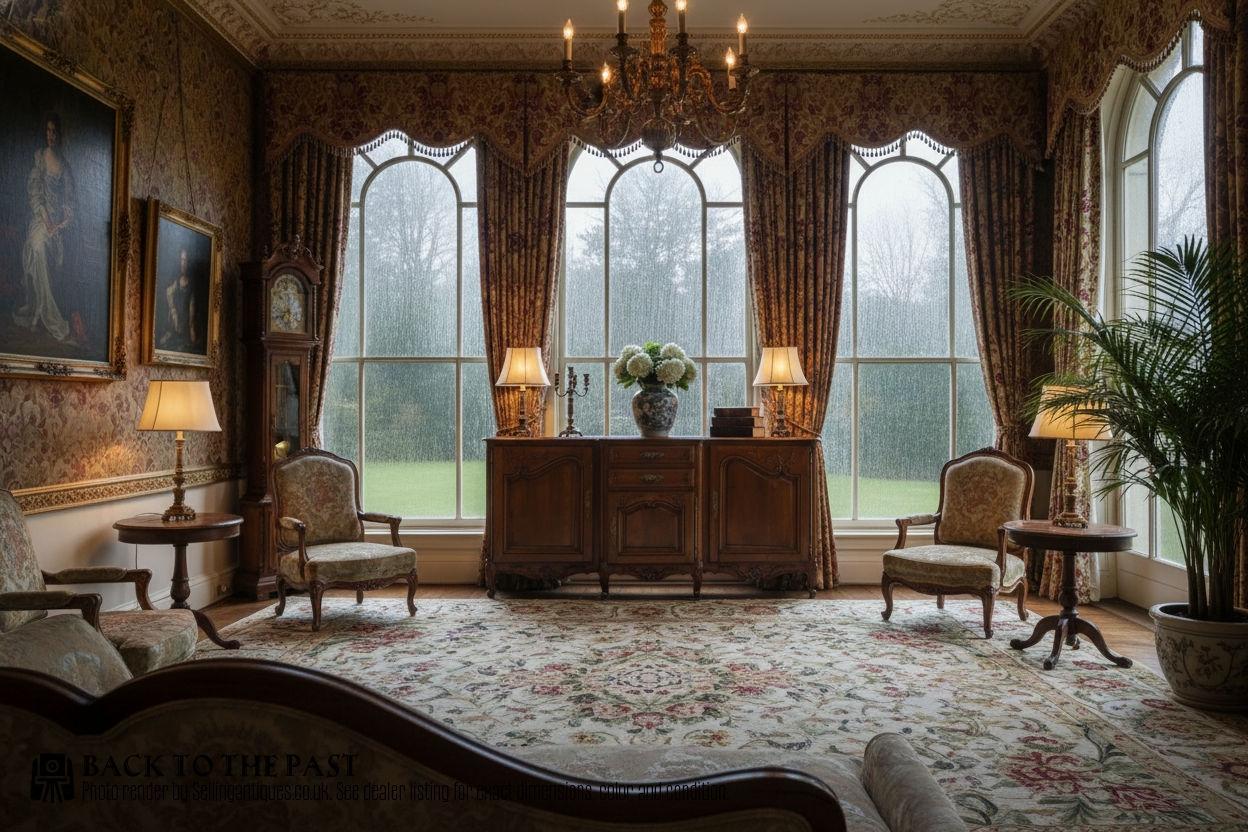
Three Door Oak Credenza
When you search for a three door oak credenza, you are looking at substantial timber storage units designed to anchor a dining room or hallway. The pieces available span several eras, from mid-eighteenth-century country house examples to twentieth-century utility items.
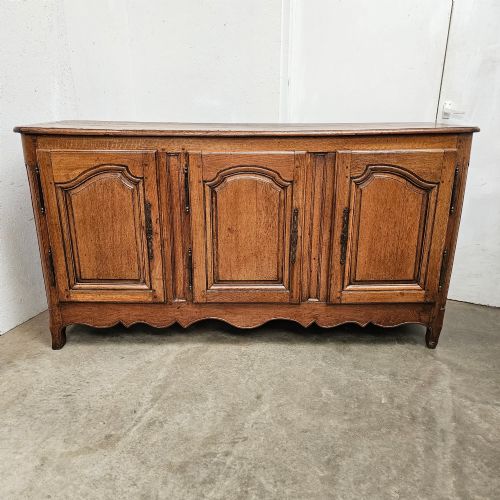
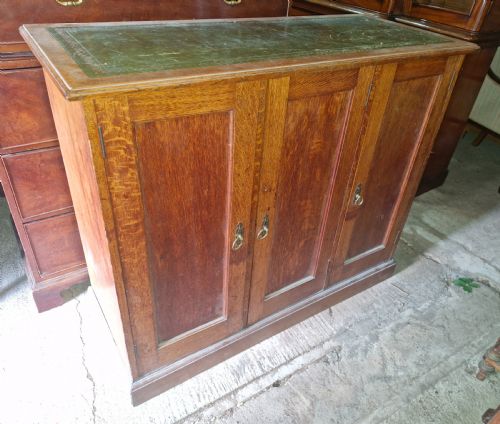
You are most likely to meet Victorian and Edwardian variations on this page, alongside twentieth-century golden oak pieces and French provincial enfilades. Formats range from low side cabinets and cupboards to buffet sideboards complete with top shelves and marble surfaces.
How they were made
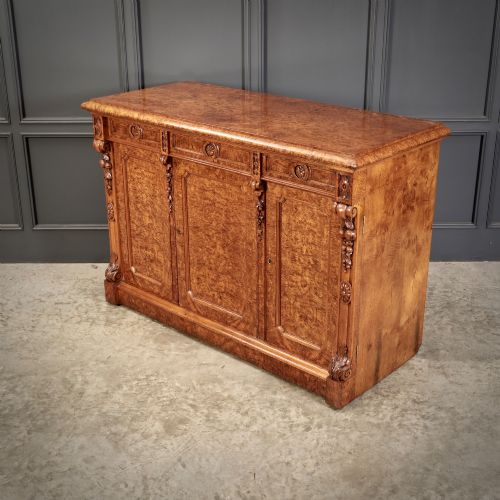
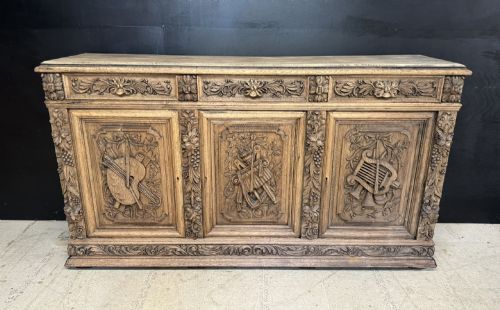
Construction relies heavily on solid oak and pollard oak, shaped into robust frames and panelled doors. Carved details and parquetry tops demonstrate traditional joinery techniques used across French and English workshops.
Hardware elements such as brass, iron, and wrought iron provide functional hinges and handles that secure the triple-door layout. Leather accents occasionally appear in specific period interiors.
What varies in quality
The distinction between ordinary and superior items lies in the selection of timber grain and the depth of hand-carved ornamentation. Golden oak and figured pollard oak display natural variations that elevate the visual weight of the cabinet.
Construction integrity separates utilitarian cupboards from refined revival pieces, particularly in the alignment of three doors and the execution of parquetry or marble tops. Period hardware integration also marks the difference between standard production and finer craftsmanship.
The Three Door Oak Credenza Glossary
- Enfilade
- A long sideboard or buffet featuring a continuous line of multiple doors, commonly three or more. This French storage form provides extended surface space and large internal capacity.
- Parquetry
- Geometric wood inlay work arranged in patterns across the top surface of a cabinet. It displays the skill of the maker through precise timber alignment.
- Pollard oak
- Timber taken from trees that have been pollarded, producing a dense grain with distinctive circular clusters. This decorative wood was favoured for high-status Victorian furniture.
- Buffet sideboard
- A low storage unit combining the serving function of a buffet with the enclosed shelving of a sideboard. It often incorporates upper tiers or plate racks.
- Jacobean Revival
- A nineteenth-century style imitating seventeenth-century English furniture, characterised by dark finishes and deep geometric mouldings.
Three Door Oak Credenza: Frequently Asked Questions
Where should I place a three door oak credenza?
These long timber units suit large dining rooms, spacious hallways, or expansive living areas where their three-door span can balance the proportions of the wall. Ensure you measure the clearance needed for the doors to swing open fully.
Because they provide substantial interior storage, they also serve well in large kitchens for storing tableware and linens out of sight.
How do I care for oak furniture surfaces?
Oak benefits from occasional treatment with appropriate natural waxes to nourish the grain and maintain a gentle sheen. Avoid placing timber pieces in direct sunlight or close to heat sources to prevent the wood from drying out.
Use coasters and felt pads under objects placed on the top surface to protect the finish from moisture and scratching.
What is the difference between an enfilade and a sideboard?
An enfilade is a traditional French term for a long cabinet with a row of multiple matching doors, designed to stand flat against a dining room wall. Sideboards can encompass a wider variety of domestic serving tables with drawers and cupboards combined.
Both forms offer generous storage, but French enfilades often present a lower, more linear profile.
How can I tell a Victorian oak piece from an Edwardian one?
Victorian oak furniture tends to feature heavier carvings, darker finishes, and influences from Gothic or Jacobean revivals. These pieces often present a robust and substantial physical presence.
Edwardian items generally lean towards lighter golden oak tones and simpler lines, reflecting a shift towards brighter domestic interiors at the start of the twentieth century.