


Polished Steel Fire Fender
A polished steel fire fender frames a hearth with the bright, hard gleam of metal, keeping stray embers off the floor while anchoring the fireplace room.
Polished Steel Fire Fender
A polished steel fire fender sits on the hearth to contain ashes and sparks, taking forms that range from simple curbs to serpentine fronts. When you search for a polished steel fire fender, you encounter heavy metal guards produced across the Georgian, Victorian, and Edwardian eras.
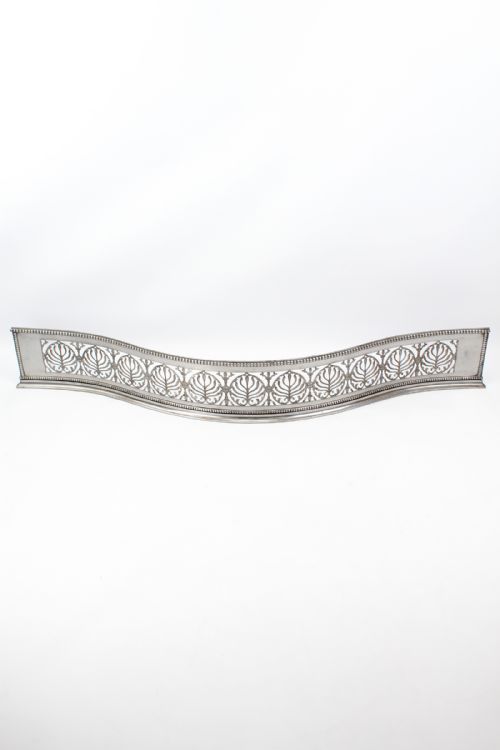
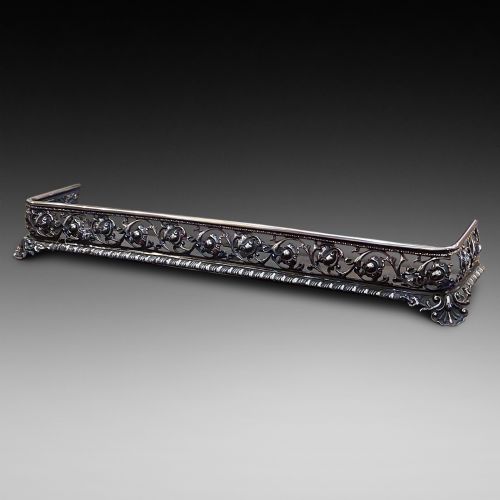
The versions most commonly met on this page date from the Georgian period through the nineteenth century, often combining steel with brass, copper, or iron details. These pieces vary from austere linear curbs to elaborately pierced or engraved serpentine shapes designed to fit specific fireplace openings.
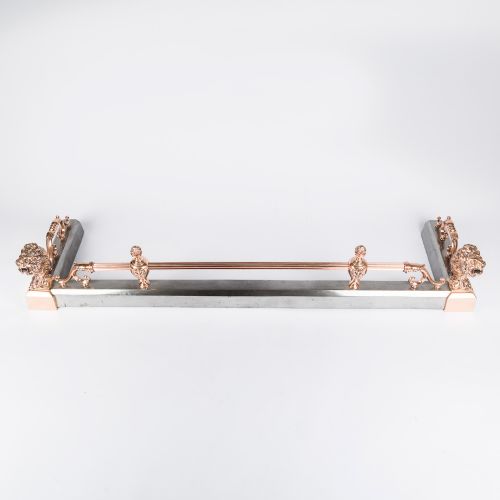
Makers and designers from the past utilised contrasting metals, mounting brass lions, gilt bronze, or flower and dragon motifs onto the steel body. This mix of materials creates a structured boundary for the hearth that reflects the shifting decorative tastes of the eighteenth and nineteenth centuries.
Construction and materials
The primary material, polished steel, requires intensive grinding and burnishing to achieve its characteristic reflective finish, often paired with cast iron elements for structural weight. Artisans shaped these metals using techniques like piercing, engraving, and cutting to produce decorative friezes along the fender front.
Some nineteenth-century steel fenders feature unexpected dragon and flower motifs, proving that even heavy hearth guards could indulge in a bit of theatre.
Assessing quality and execution
Quality in a polished steel fire fender shows in the crispness of the hand-engraving and the precision of any pierced work, where clean, sharp edges indicate skilled metalworking. Fenders that maintain symmetry in serpentine outlines and feature securely fitted applied mounts demonstrate superior workshop standards.
The depth and uniformity of the metal polish across complex contours reveal the amount of labour invested by the original maker. Substantial gauge steel and robust construction ensure the fender retains its structural integrity through decades of hearth use.
The Polished Steel Fire Fender Glossary
- Serpentine outline
- A curving shape featuring a convex centre flanked by concave curves, frequently seen on eighteenth-century hearth furniture. This profile softens the rigid geometry of the fireplace.
- Pierced decoration
- Metalwork perforated with decorative patterns or repeating geometric motifs. It lightens the visual weight of the steel fender.
- Curb fender
- A low metal barrier placed directly on the floor around the hearth. It serves to stop rolling embers from reaching flammable floor coverings.
- Gilt bronze
- Bronze treated with a fine layer of gold to produce a rich, durable golden surface. It provides contrast against polished steel.
Polished Steel Fire Fender: Frequently Asked Questions
How do I clean a polished steel fire fender?
Maintenance requires dry dusting and careful use of fine steel wool or specialised metal polishes to remove surface tarnish without scratching the original finish.
Keeping the metal dry prevents rust from forming in the microscopic pores of the steel, preserving the bright reflection characteristic of these hearth accessories.
What periods do these fenders come from?
The pieces span the Georgian, Victorian, and Edwardian eras, with notable examples dating back to the mid-eighteenth century.
Stylistic shifts move from the restrained neoclassical lines of the seventeen-hundreds to more ornate nineteenth-century designs incorporating mixed metals.
Are these fenders safe to use with modern fires?
These historical guards function effectively around open hearths or gas log fires by creating a physical barrier against rolling embers.
Their heavy iron and steel construction provides the necessary stability and heat resistance required for daily fireplace use.
Why are some fenders mixed with brass?
Combining polished steel with brass, copper, or bronze creates visual contrast and matches other decorative hardware in the room.
This mixed-metal technique was popular across the nineteenth century, allowing makers to incorporate lions, floral details, and cast mounts onto a steel base.