

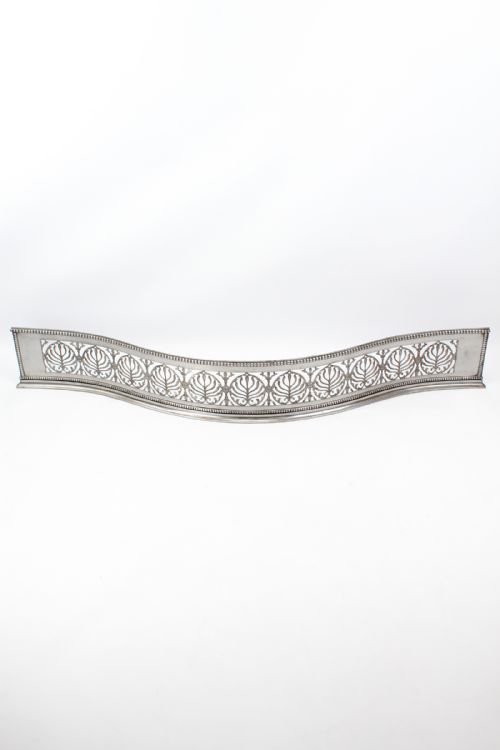


Georgian Steel Hearth Fender
A georgian steel hearth fender anchors a fireplace with clean metalwork and period line.
Georgian Steel Hearth Fender
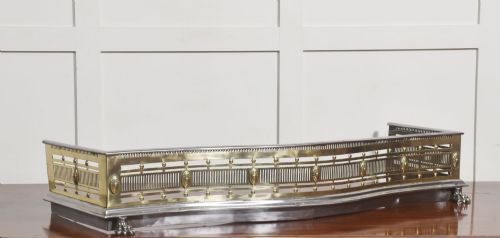
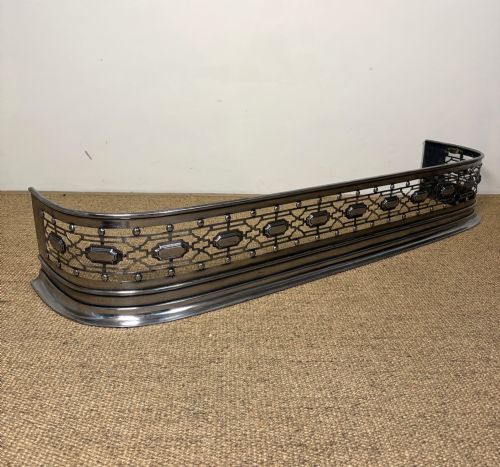
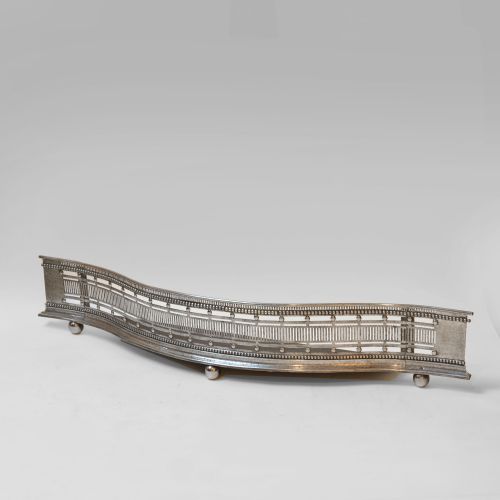
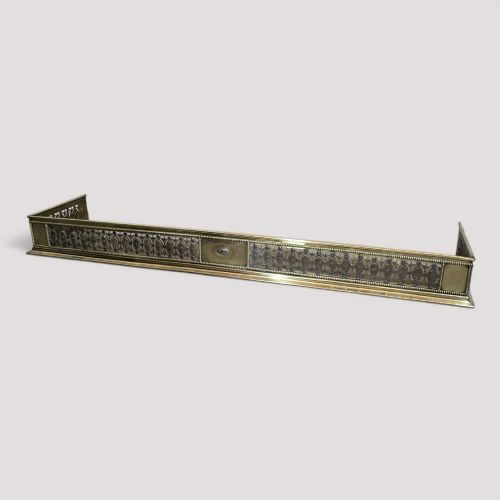
A georgian steel hearth fender protects the room from stray embers while framing the open fireplace grate. These fireplace accessories emerge primarily from the Georgian and Regency periods, alongside mid-nineteenth century examples.
You will most frequently meet serpentine and bowfront forms on this page, often spanning wider dimensions such as four feet six inches. Makers shaped the metal into decorative curbs designed to sit directly on the floor before the hearth.
The objects combine functional metal barriers with refined aesthetic touches, reflecting the domestic priorities of their eras. Each piece coordinates with matching fire irons and grates of the same date.
How they were made
Blacksmiths and metalworkers shaped robust steel into curved profiles, employing techniques like piercing and engraving to create intricate patterns along the front bar. Polished steel provided a bright reflective surface that caught the light of the fire.
Brass elements frequently complement the steel body, appearing as cast mounts, beads, or feet that contrast with the grey metal. Cut steel studs and ornaments were riveted individually into place to add texture and sparkle.
Georgian Steel Hearth Fender Retail Price Guide 2026
Typical asking prices for georgian steel hearth fender among the pieces listed under this phrase on Sellingantiques today, from the lower quarter to the upper quarter. They describe what is for sale here now, not the wider market.
Listings on this site span the Georgian period, the Regency style, and mid-nineteenth century manufacturing dates.
What varies in quality
The finesse of the hand-pierced decoration and the sharpness of the engraved lines separate standard curbs from finer examples. Heavier gauge steel and precise bowfront or serpentine shaping indicate superior workshop production.
The integration of brass details and cut steel embellishments demonstrates the original maker's skill and ambition. Pieces that retain their original proportions and structural integrity without excessive pitting command greater appreciation.
The Georgian Steel Hearth Fender Glossary
- Serpentine
- A gentle undulating curve shaped like a snake, frequently seen on the front profile of eighteenth-century hearth furniture. This curved outline allows the metal to project outward in the centre before sweeping back toward the fireplace jambs.
- Cut steel
- Small pieces of steel faceted and polished individually, then riveted to a backing plate to resemble diamonds or gemstones. This technique creates a brilliant sparkle under candlelight or firelight.
- Bowfront
- A convex curved shape curving outward uniformly across the front width of the fender. It provides a softer line than a rigid rectangle.
- Pierced
- Metal perforated with patterns of slots, circles, or geometric shapes to let air flow and light through. Artisans cut these openings by hand using chisels and saws.
Georgian Steel Hearth Fender: Frequently Asked Questions
What is a georgian steel hearth fender?
A georgian steel hearth fender is a protective metal barrier placed on the floor in front of an open fireplace to keep embers from rolling onto the room's floorboards. These items date primarily from the eighteenth and nineteenth centuries.
Craftsmen formed them from steel, often adding brass details, pierced patterns, and polished surfaces to match the formal interiors of the period.
How do I measure for a fender?
Measure the width of your fireplace opening and the hearth stone space available to ensure the curb fits comfortably between the walls or jambs. Take note of the depth so the metal sits at the correct distance from the hearth edge.
Consider the projection of your fire grate when checking dimensions to ensure the fender clears the front bars properly.
How do I clean polished steel?
Clean polished steel gently with a dry microfiber cloth to remove dust and prevent moisture accumulation. Avoid harsh abrasive compounds that can scratch the historic surface or remove remaining polish.
Specialist metal restorers sometimes use fine non-scratch pads for active oxidation, but gentle maintenance preserves the metal best.
Did brass and steel appear together?
Makers frequently combined steel bodies with brass feet, rails, and mountings during the Georgian and Regency eras. This bimetallic construction offered a decorative contrast between the dark grey steel and the warm golden brass.
Such combinations are characteristic of finer fireplace accessories from the period.