

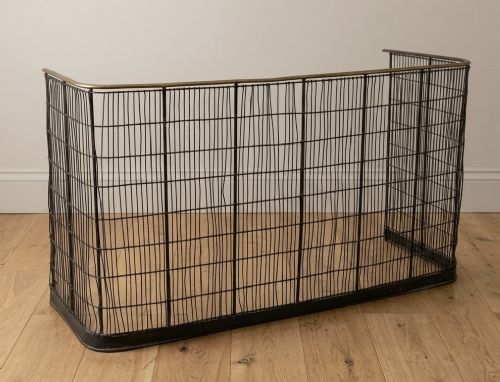


19th Century Hearth Fender
These 19th century hearth fender options range from simple brass rails to leather-topped club seats designed to keep rooms warm and contained.
19th Century Hearth Fender
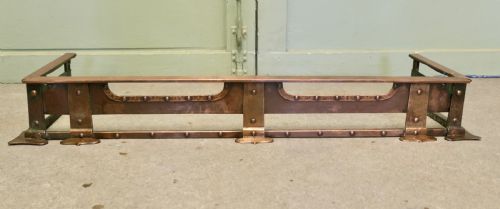
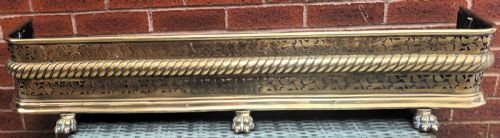
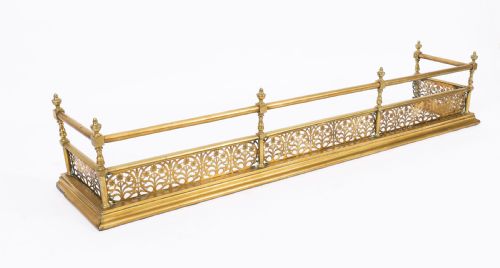
A 19th century hearth fender sits directly on the floor around a fireplace opening to contain ash, sparks, and rolling embers. The versions most commonly met here span simple Victorian brass rails to steel club designs topped with leather or mahogany.
Makers produced these guards in various forms, including nursery fences for child safety and adjustable structures to fit changing hearth sizes. Examples range from plain iron frames to elaborate French gilt-brass and rococo ormolu arrangements.
Period variations show up across styles such as Arts and Crafts, Regency, and Neoclassical or Adam designs. Many pieces incorporate specific details like wire mesh, bronze garlands, or flower and dragon motifs.
What varies in quality
The substance of the metal gauge separates standard hearth accessories from substantial country house examples. Heavier brass and thick cast steel plates provide a sturdiness that lighter stamped metal components lack.
Refinement in surface detail, such as hand-finished flower and dragon motifs, crisp pierced brass, or properly fitted leather upholstery, elevates the character of a piece. Adjustability mechanisms that function smoothly also indicate superior original workmanship.
Listings incorporate diverse materials including brass, iron, steel, leather, copper, and wire mesh across the nineteenth century.
The 19th Century Hearth Fender Glossary
- Club fender
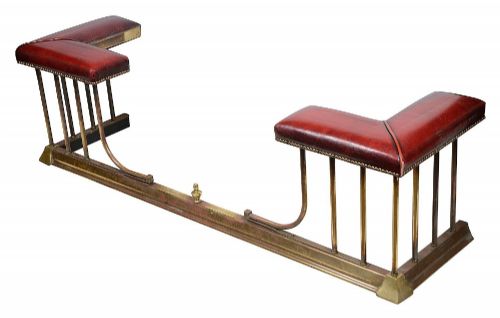
- A low, U-shaped guard featuring upholstered seats on either side of the hearth. This form originated in gentlemen's clubs to provide fireside seating close to the warmth.
- Nursery fender
- A tall, enclosed metal guard designed to keep children at a safe distance from open flames. These typically feature high wire mesh or iron bar barriers.
- Kerb fender
- A low frame defining the perimeter of the hearth to stop embers from rolling onto the carpet. They sit directly on the floor and often use heavy brass or iron.
- Ormolu
- Finely chased and gilt bronze applied as decorative mounts on furniture and metalwork. The technique gives a rich gold appearance to bronze details.
- Chenets
- Andirons or firedogs placed inside the hearth to support logs. They occasionally appear paired with adjustable fender forms.
19th Century Hearth Fender: Frequently Asked Questions
What is a club fender?
A club fender is a low fireplace guard featuring built-in upholstered seats on either side of the hearth. These seats allow people to sit close to the fire while containing embers.
Most examples combine a steel or brass base with leather, mahogany, or oak seating surfaces. They appeared frequently in country houses and gentlemen's clubs during the period.
How do I measure for a fender?
Measure the width and depth of your fireplace opening, along with the hearthstone itself, to ensure proper clearance. Account for any protruding hearth tiles or surrounds before selecting a size.
Many period pieces include adjustable frames to help fit specific hearth dimensions. Fixed models require exact measurements to sit correctly against the masonry.
What metals were used?
Workshops primarily utilised brass, cast iron, wrought iron, and polished steel for structural frames. Copper, bronze, and gilt-brass also appear in decorative applications.
Heavier gauge metals provided durability and safety against rolling logs and intense heat. Some examples combine steel frames with brass top rails and decorative mounts.
Are these guards adjustable?
Many examples feature extending mechanisms that allow the metal frame to widen or narrow. This adjustability accommodated different hearth widths in period homes.
Non-adjustable variants were made to fixed dimensions for specific rooms. Check the construction details to see if the central rail slides within the corner sections.