



Regency Hearth Guard
These regency hearth guard items protect rooms from sparks while anchoring period grates.
Regency Hearth Guard
A regency hearth guard encompasses brass fenders, wirework screens, and adjustable pole or pull-out panels designed for coal fireplaces. Buyers searching for a regency hearth guard encounter items spanning the Georgian, Regency, William IV, and Victorian eras.
The selection on this page centres on brass and steel fenders alongside mahogany and rosewood firescreens. Most pieces originate from the nineteenth century, including specific items dated around eighteen-fifty and eighteen-thirty-five.
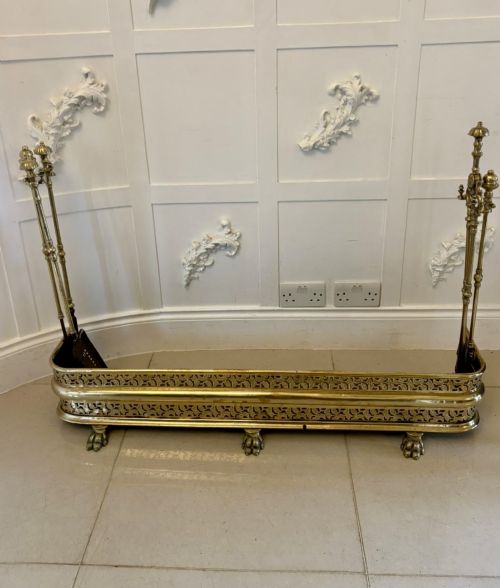
Fender forms include curved designs and models incorporating lions or brass garlands. Firescreens feature needlework, tapestry, embroidery, and poker work panels.
Materials and construction
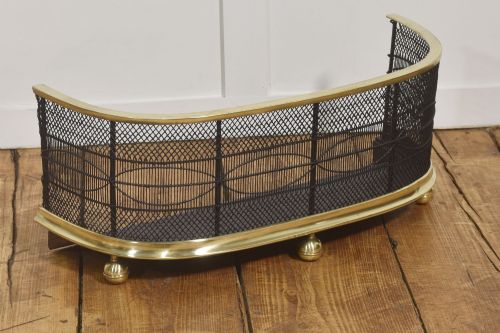
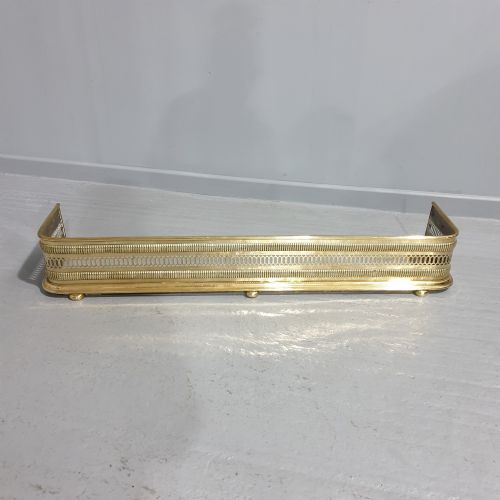
Metalwork items utilise cast brass, polished brass, iron, steel, and woven iron wire. Makers combined these metals to form curb fenders and protective wire guards.
Wooden screens employ mahogany, rosewood, and palisander timbers. These frames house adjustable textile panels worked in tapestry, embroidery, and needlework.
Several fenders arrive with their original fire irons still waiting by the brass garlands.
Assessing quality in hearth guards
Quality rests upon the weight of the metal and the precision of decorative cast details such as lions and garlands. Substantial brass work and integrated original fire irons elevate a piece above standard utility items.
In firescreens, the sophistication of the adjustable mechanism and the execution of the needlework or poker work panel determine distinction. Timbers like rosewood and palisander indicate finer cabinetmaking than simpler woods.
The Regency Hearth Guard Glossary
- Fender
- A low metal guard placed around the hearth to contain rolling embers and protect the floor. These pieces are typically fashioned from brass or steel.
- Firescreen
- A moveable panel placed before a fireplace to shield occupants from radiant heat when the fire is unlit. Many examples feature adjustable needlework or tapestry panels.
- Kerb fender
- An alternative spelling for curb fender, denoting a low barrier enclosing the hearth perimeter. These items often follow curved architectural lines.
- Pole screen
- A type of firescreen featuring a vertical wooden pole supporting an adjustable sliding panel. The panel could be raised or lowered to deflect heat from the face.
- Wirework
- Metal formed into a mesh or lattice pattern utilised for spark guards. This technique permitted heat to circulate while blocking stray coals.
Regency Hearth Guard: Frequently Asked Questions
What is a regency hearth guard used for?
These pieces serve to contain hot embers within the hearth and protect the surrounding floor from damage. They also act as physical barriers against open flames in period rooms.
Firescreens additionally serve to shield occupants from excessive heat radiating from the grate when the fire dies down.
How do I date a brass fender?
Dating relies upon examining manufacturing techniques, metal alloys, and stylistic motifs like Neoclassical garlands or lion mounts. Heavy cast brass and specific assembly methods distinguish nineteenth-century examples from later reproductions.
Context is provided by associated materials and documented regional cabinetmaker styles.
Are firescreens adjustable?
Many period firescreens incorporate sliding mechanisms that allow the textile panel to move vertically along a wooden pole or within a frame. This adjustability permitted the user to control the amount of heat deflected.
Examples on this page include pull-out leaves and adjustable poker work or embroidered panels.
What woods were used in screens?
Cabinetmakers utilised dense hardwoods including mahogany, rosewood, and palisander for screen frames and supporting poles. These timbers provided the necessary stability for holding heavy textile panels.
Finer specimens often display turned supports and polished finishes appropriate for formal reception rooms.