

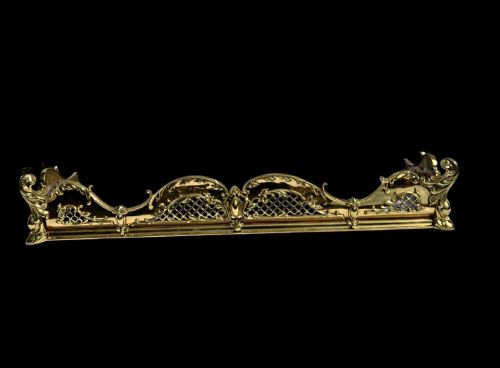


Pierced Brass Fireplace Curb
A pierced brass fireplace curb frames the hearth with openwork metalwork that catches the firelight while keeping stray embers safely contained.
Pierced Brass Fireplace Curb
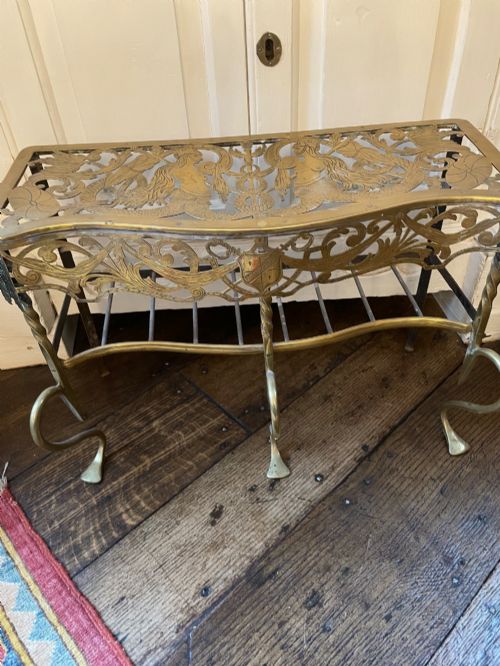
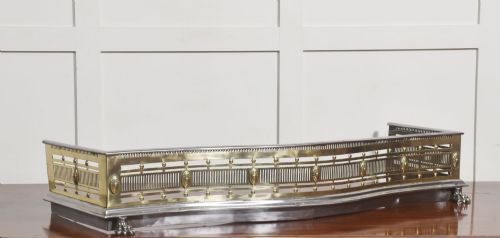
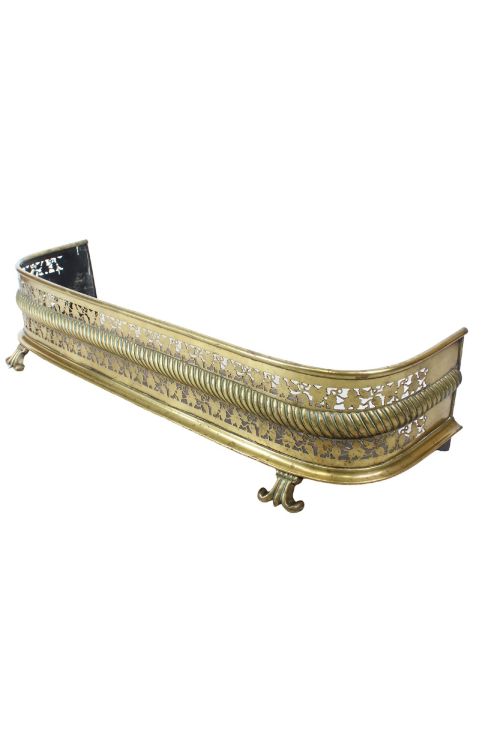
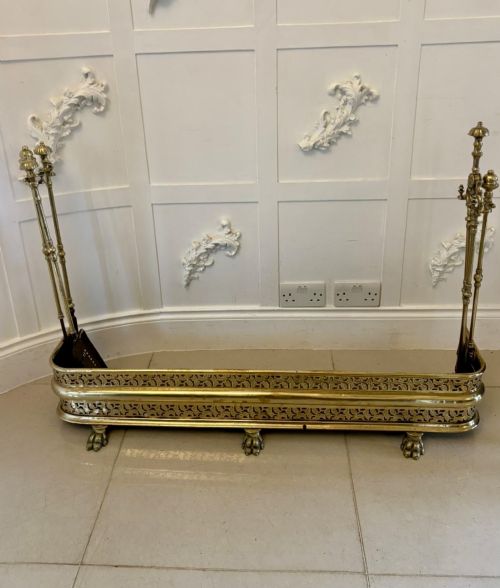
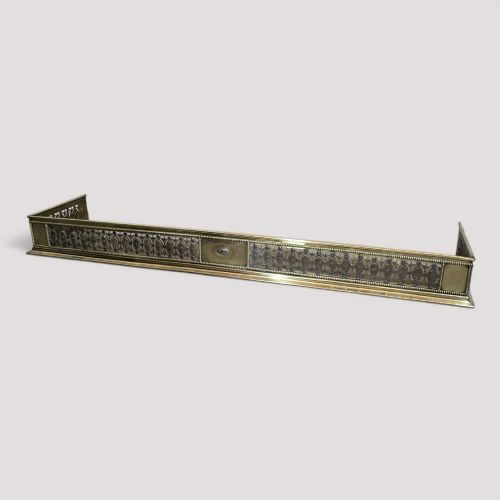
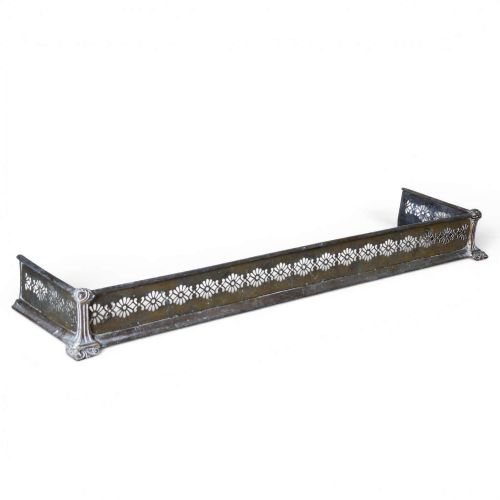
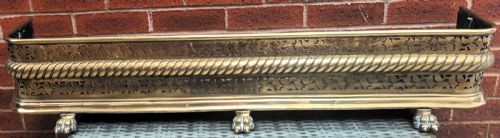
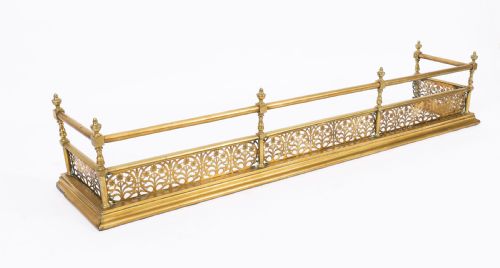
A pierced brass fireplace curb sits directly on the floor in front of a hearth, designed primarily to contain coal sparks and wood embers while framing the fireplace opening. These hearth barriers appear in forms dating from the Georgian, Regency, and William IV periods through to the late Victorian era.
The objects seen here span multiple nineteenth-century styles, including distinct Regency, Victorian, and Art Nouveau designs. Most examples combine a low metal gallery with intricate pierced or cutwork patterns along the front fender rail.
How they were made
Maker workshops utilised sheet brass and cast brass, frequently pairing the yellow metal with contrasting iron or polished steel components to form the structural body and decorative mounts. Metalworkers punched, pierced, or pierced and chased the sheet brass panels by hand to create floral, geometric, or abstract ventilation motifs.
Many heavy curbs incorporate cast iron or steel internal frames to provide rigidity and weight, ensuring the fender remains stable against the heat and daily knocks of the hearth.
Pierced Brass Fireplace Curb Retail Price Guide 2026
Typical asking prices for pierced brass fireplace curb among the pieces listed under this phrase on Sellingantiques today, from the lower quarter to the upper quarter. They describe what is for sale here now, not the wider market.
Object forms on this page include fireplace fenders, curbs, and associated fire tools.
What varies in quality
The distinction between ordinary and superior pieces rests upon the crispness of the piercing work and the thickness of the gauge of brass employed in the construction. Heavier metal gauge prevents warping under hearth heat and supports finer, deeper tool-cutting in the surface decoration.
The Pierced Brass Fireplace Curb Glossary
- Pierced brass
- Sheet metal perforated with decorative holes or patterns. This technique allows light from the hearth to pass through the metal gallery.
- Kerb fender
- An alternative spelling and term for a fireplace curb. It denotes a low metal barrier surrounding the hearth perimeter.
- Cut steel
- Small faceted steel studs riveted onto a backing plate. These sparkle brightly under candle or firelight.
- Regency
- A design period spanning the early nineteenth century. Pieces from this era often feature classical restraint and clean geometric lines.
Pierced Brass Fireplace Curb: Frequently Asked Questions
How do I clean a brass curb?
Use a soft cloth and mild soapy water to remove surface soot and dust. Avoid harsh chemical polishes that strip away the aged patina.
Dry the metal thoroughly after cleaning to prevent spotting or tarnishing across the pierced surface.
Will a vintage fender fit my modern hearth?
Measure the width and depth of your hearth floor carefully before selecting a piece. Nineteenth-century curbs come in various lengths to suit different fireplace openings.
Keep in mind that many pieces can be positioned slightly forward to accommodate hearth size discrepancies.
How do I date a brass fender?
Examine the fastening methods, such as hand-cut screws, dovetail joints, or cast iron backing plates. Stylistic motifs like Regency curves or Art Nouveau whiplash lines offer further chronological clues.
Material combinations, such as polished steel paired with brass, often point toward specific mid-nineteenth-century manufacturing trends.