



Regency Brass Fire Kerb
These regency brass fire kerb pieces are solid metal hearth barriers that tidy the grate and protect your rug from stray coals, built to anchor a period fireplace.
Regency Brass Fire Kerb
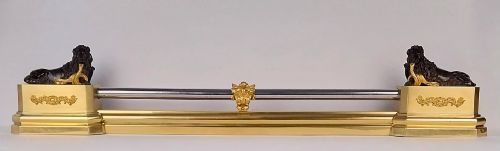
When you search for a regency brass fire kerb, you are looking at substantial hearth furniture designed to frame an open fire. These guards range from straightforward 19th Century forms to elaborate William IV designs featuring lions and brass garlands.
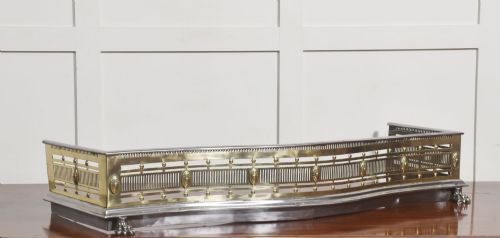
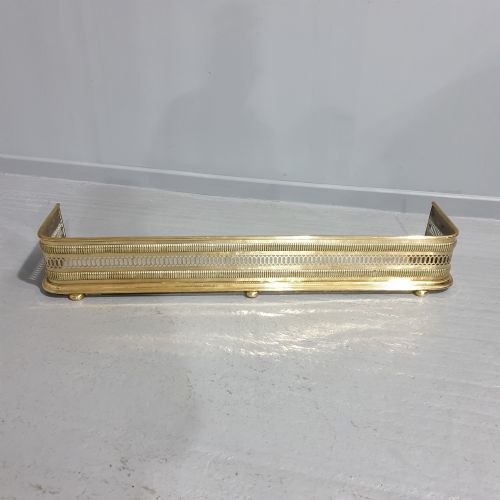
You are most likely to meet pieces dated to the 19th Century alongside items from the Regency and Georgian periods. Many examples combine brass with steel, iron, or bronze to create a sturdy barrier against sparks.
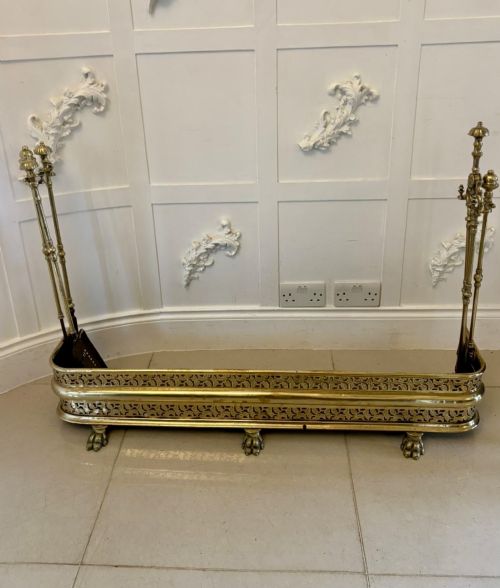
The objects appear primarily as fireplace fenders or fire guards, often shaped with curved profiles to fit neatly around the hearth. Some listings even incorporate original fire irons or decorative motifs influenced by designers such as George Bullock.
Materials and construction
The makers of these kerbs relied heavily on combinations of brass, cast brass, and polished steel to build durable hearth furniture. Iron and cast iron provided heavy internal structures, while bronze and gilt bronze added finer decorative contrast.
Construction techniques balanced utilitarian strength with neoclassical styling, uniting heavy metal frames with applied brass garlands and cast details. Surfaces were frequently polished to a bright finish or left with the warmer patina of aged bronze and brass.
Regency Brass Fire Kerb Retail Price Guide 2026
Typical asking prices for regency brass fire kerb among the pieces listed under this phrase on Sellingantiques today, from the lower quarter to the upper quarter. They describe what is for sale here now, not the wider market.
Listings span the 19th Century, Regency, Georgian, and William IV periods, utilising brass, steel, iron, bronze, and gilt bronze.
Judging quality and craftsmanship
The distinction between ordinary utility pieces and the top of the range rests on the crispness of the casting and the weight of the metal. Heavier brass and well-defined decorative elements such as lions or cast garlands signal superior workshop production.
Integration of original components, such as matching fire irons or complementary steel and brass assemblies, separates standard survivals from exceptional collector pieces. Proportion, curvature, and the skillful handling of mixed metals ultimately define the better examples.
The Regency Brass Fire Kerb Glossary
- Kerb fender
- A low metal barrier placed around the hearth to keep burning coals and ash contained within the fireplace. It sits directly on the floor in front of the grate.
- Fire guard
- A protective screen or low barrier designed to prevent sparks from escaping the fire into the room. These often incorporate mesh or solid metal panels.
- Gilt bronze
- Bronze that has been treated with a thin layer of gold or a gold-coloured alloy to give a rich, glittering surface finish. It appears on finer decorative mounts.
Regency Brass Fire Kerb: Frequently Asked Questions
How do I clean an antique brass kerb?
Use a soft cloth to remove dust and light surface grime without abrasive cleaners that strip the historic finish. Preserving the accumulated patina is usually preferred over achieving a mirror shine.
Avoid chemical dips entirely, as they damage the aged surface of 19th Century metalwork. Gentle dusting is all most pieces require to maintain their appearance.
Will a kerb fit my modern fireplace?
Measure your hearth opening carefully before purchasing, comparing the internal width and depth against the dimensions of the fender. Many period kerbs were custom-made for specific fireplaces.
Curved and straight designs offer different clearance options for protruding hearths. Checking these measurements ensures the piece sits properly against your masonry.
How do I tell Regency from Victorian pieces?
Regency and early 19th Century pieces often display restrained neoclassical lines and precise cast brass mounts. Victorian examples frequently introduce heavier ornamentation and different casting textures.
William IV pieces sit in the transition between these eras, sometimes showing bolder classical revival details. Comparing the decorative motifs helps clarify the period of manufacture.
Can I use these kerbs with an active fire?
Most of these metal barriers were built to withstand hearth heat, but historic joins and soldered elements require gentle treatment. They serve well to contain ash and protect flooring from rolling embers.
Ensure the structure is stable before placing it near an open flame. Using them with modern gas grates or open fires adds authentic period character to the room.