
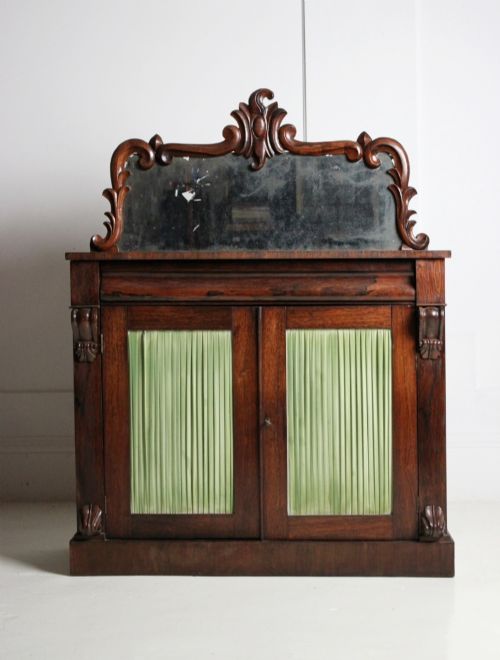
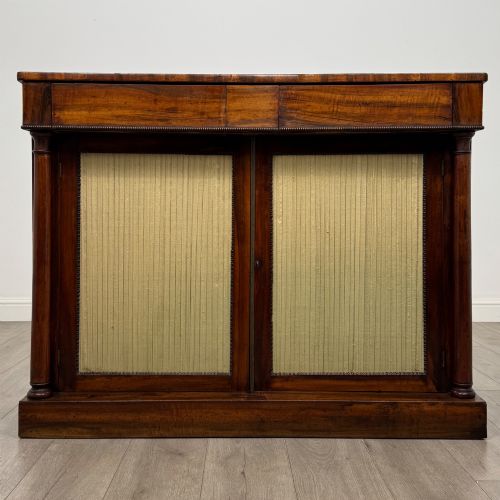
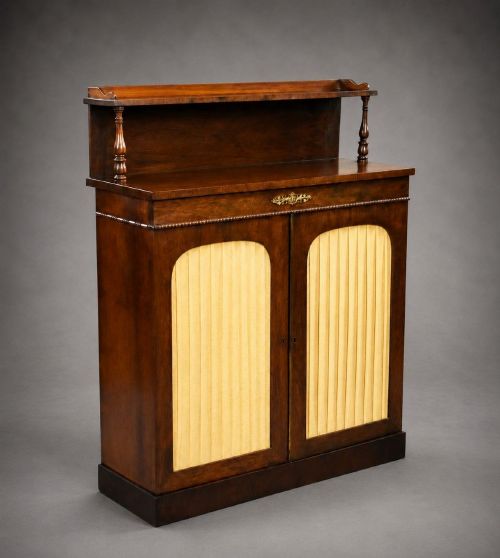
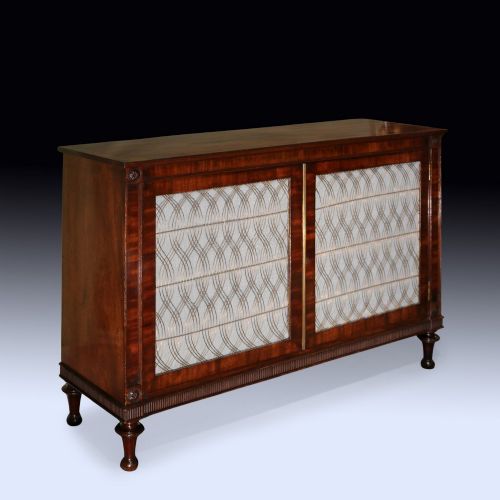


Pleated Silk Cabinet
These pleated silk cabinet pieces combine fine timbers and delicate textile panels to house your collection with quiet elegance.
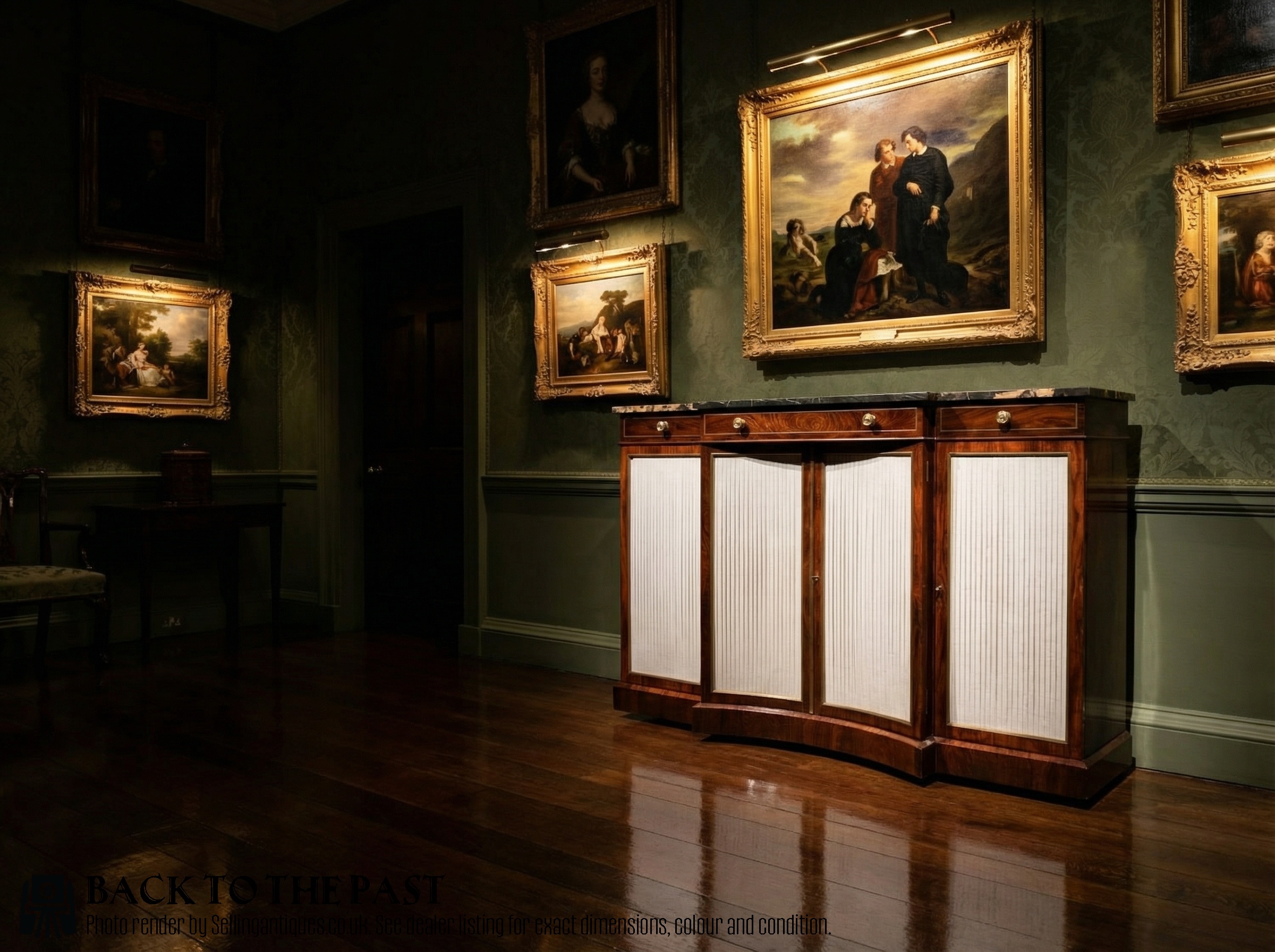
Pleated Silk Cabinet
A pleated silk cabinet sits within the broader family of nineteenth-century side cabinets, chiffoniers, and bookcases found in this collection. These items typically present as timber furniture featuring doors inset with gathered fabric panels.
The versions you are most likely to meet on this page date from the nineteenth century, spanning Regency, George IV, William IV, and Victorian periods. They take the form of side cabinets, chiffoniers, breakfront bookcases, and occasional sewing tables.
Makers constructed these pieces from woods such as mahogany, rosewood, simulated rosewood, walnut, and palisander. Many incorporate brass inlay or brass grilles alongside the silk panels, creating a distinct visual texture.
How they were made
Cabinet makers utilised dense hardwoods like mahogany and rosewood as the structural foundation for these pieces. They frequently applied brass inlay and brass grilles to enhance the polished timber surfaces.
The defining textile element involved skilled artisans gathering and pleating silk fabric behind glazed or grilled doors. This technique softened the overall appearance of the heavy wooden cabinetry.
One exceptional sewing table patiently waited through the decades just to hold your stray buttons.
What varies in quality
The distinction between standard examples and the finest pieces lies in the selection of timbers and the precision of the brass work. Grain figures in rosewood and mahogany set the better specimens apart.
Execution of secondary decorative elements, such as brass inlay and the neatness of the silk pleating, dictates the overall refinement of the piece.
The Pleated Silk Cabinet Glossary
- Chiffonier
- A low sideboard or cabinet featuring doors and shelves, often surmounted by a small shelf or back. This form gained popularity during the Regency and Victorian eras.
- Breakfront
- A piece of furniture where the central section projects forward from the flanking wings. This architectural arrangement creates depth and shadow across the front elevation.
- Palisander
- A dense tropical timber with rich dark figuring, frequently utilised in high-end nineteenth-century cabinet making. It shares visual similarities with rosewood.
- Brass Grille
- A decorative metal mesh fitted into cabinet doors in place of wood panels. These grilles allowed visibility into the interior while maintaining structural enclosure.
Pleated Silk Cabinet: Frequently Asked Questions
What is a pleated silk cabinet?
These items are nineteenth-century wooden storage pieces featuring doors inset with gathered silk panels. They include side cabinets, chiffoniers, and bookcases.
Craftsmen built them from timbers such as mahogany and rosewood, often incorporating brass details to complement the textile inserts.
How were these cabinets used?
Nineteenth-century households utilised these cabinets to store books, tableware, and domestic objects in principal rooms. The enclosed shelving kept contents protected from dust.
Panels of pleated silk obscured the interior contents while softening the formal appearance of the timber furniture.
How do I style a pleated silk cabinet?
Position the cabinet against a principal wall in a reception room or study to let the timber grain and silk panels catch the light. Keep surrounding decor restrained to highlight the period details.
Avoid placing the piece in direct, strong sunlight to protect the delicate fabric inserts from fading over time.
How do I identify a Regency cabinet?
Regency pieces often display classical architectural proportions, dark exotic timbers, and precise brass inlay work. They date from the early nineteenth century.
Look for specific stylistic markers such as breakfront facades, simulated rosewood finishes, and brass grilles alongside the characteristic silk panels.