


English Regency Chiffonier
An english regency chiffonier combines practical low storage with refined display surfaces, offering a disciplined architectural silhouette that anchors a sophisticated room.
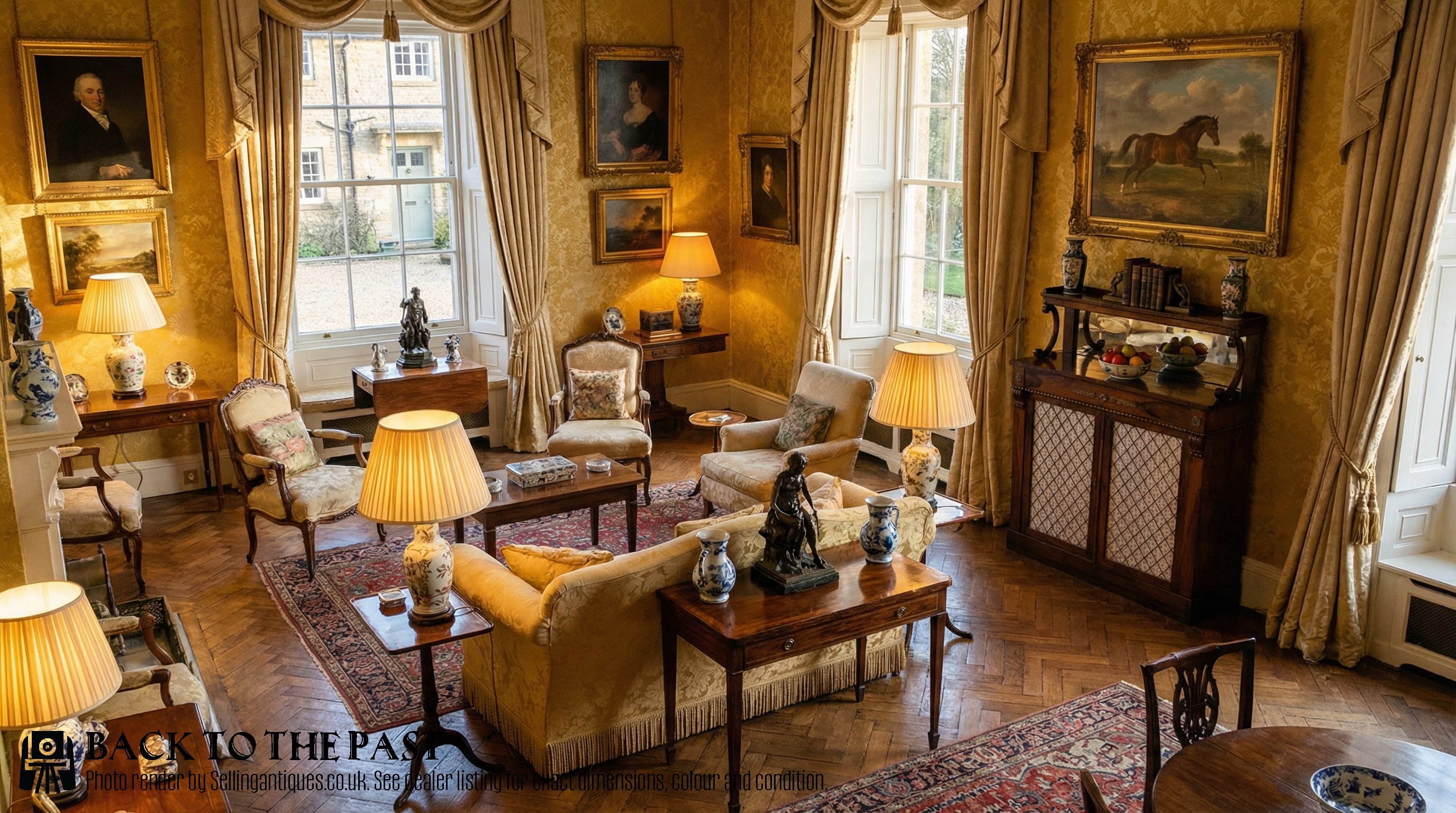
English Regency Chiffonier
When you search for an english regency chiffonier, you encounter low timber cabinets designed for nineteenth-century domestic interiors, frequently intersecting with sideboard and bookcase forms. These pieces originate primarily from the Regency and George IV periods, extending into William IV and early Victorian interpretations.
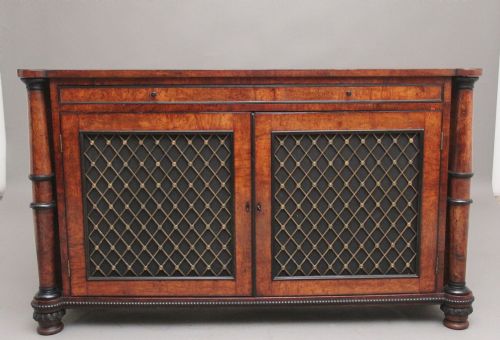
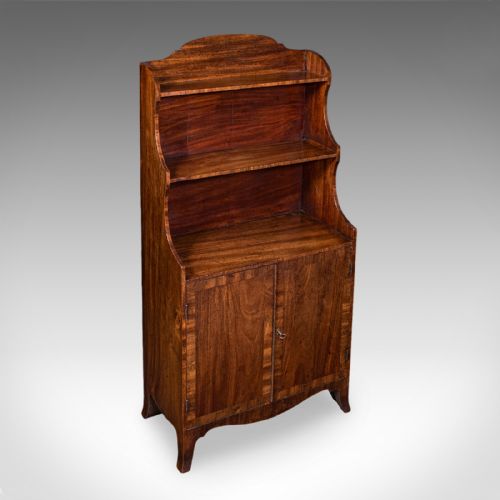
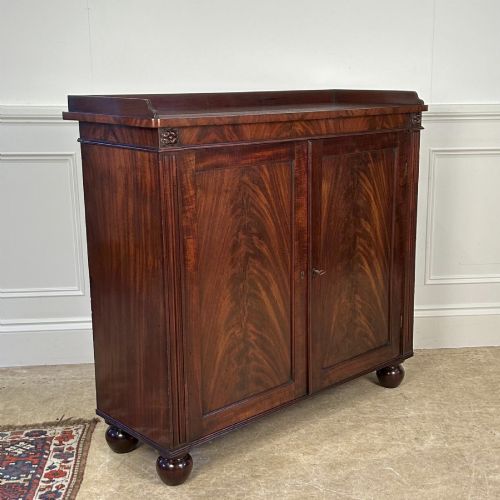
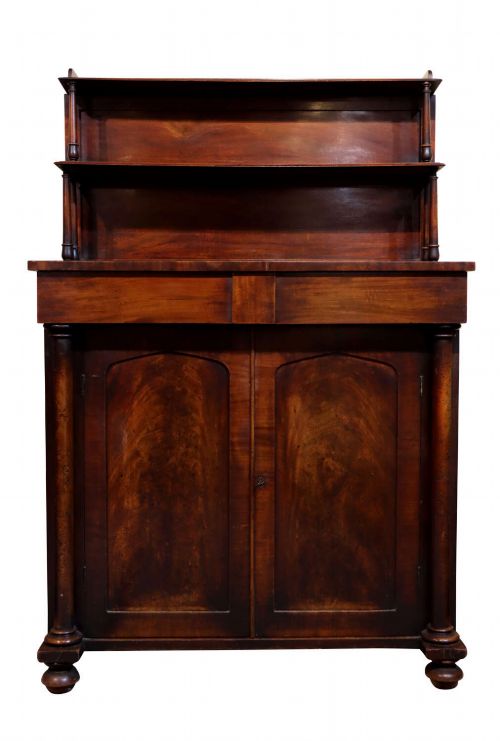
The common form on this page is a low cabinet featuring cupboard doors below, occasionally surmounted by a small bookcase tier or mirrored superstructure. Timbers such as rosewood and mahogany dominate the selection, often enriched with flame veneer or goncalo alves.
While many examples adhere strictly to the early nineteenth century, related listings include console tables and dwarf secretaires sharing the same vocabulary. Makers associated with these forms include Gillows, John McLean, and S. Jamar.
Materials and Technique
Cabinetmakers utilised dense tropical hardwoods like mahogany and rosewood, frequently laid as flame mahogany veneer over secondary structural carcases. Selected pieces incorporate pollard oak or exotic goncalo alves to create rich grain patterns across the primary surfaces.
Brass inlay and fine stringing punctuate the dark timber grounds, while specialist glass provides transparent or mirrored panels for upper tiers and cupboard doors. Silk linings occasionally back the glazed compartments, softening the interior presentation.
Joinery techniques rely on precise carcase construction and veneering dexterity, allowing curved breakfronts and dwarf proportions to remain stable over centuries of use.
Meticulous cabinetmakers occasionally hid secret stationery drawers inside dwarf secretaires, ensuring polite correspondence remained strictly confidential.
The Spectrum of Quality
The distinction between standard cabinetwork and exceptional execution lies in the selection of timber veneers and the precision of brass inlay. Finer examples display continuous grain matching across doors and drawers, whereas simpler items rely on plain solid boards or repetitive stock veneers.
Attribution to documented workshops like Gillows or John McLean elevates a piece through superior carving details, refined proportions, and sophisticated interior fittings such as secretaire drawers. Lesser pieces demonstrate utilitarian construction with minimal decorative embellishment.
The integrity of the original brass mounts, mirror glass, and structural carcase determines the standing of a chiffonier within its period category.
Gillows·John McLean·S. Jamar
The English Regency Chiffonier Glossary
- Chiffonier
- A low cabinet originating in the early nineteenth century, typically fitted with enclosed lower cupboards and sometimes an upper shelf tier. It serves as a side piece for dining rooms or drawing rooms.
- Goncalo alves
- A dense exotic hardwood with striking variegated dark brown and pale figuring, utilised on high-status Regency furniture. It yields a distinctive decorative surface.
- Flame mahogany veneer
- Timber sliced to reveal a rippling, flame-like pattern, applied over a stable carcase. This technique maximises the visual impact of figured wood.
- Breakfront
- A cabinet front where the central section projects forward from the flanking wings. This architectural arrangement creates depth and shadow.
English Regency Chiffonier: Frequently Asked Questions
What is an english regency chiffonier?
An english regency chiffonier is a low timber cabinet from the early nineteenth century, combining enclosed lower storage with surface display space. They frequently feature rich rosewood or mahogany veneers.
These pieces were developed to meet changing dining and drawing room requirements during the Regency and George IV eras. They bridge the gap between heavy sideboards and delicate side cabinets.
How were these cabinets used originally?
In period interiors, these cabinets stored glassware, linens, or books, while the top surface held decorative objects or serving items. Versions with upper bookshelves functioned as compact libraries.
Their low profile ensured they did not block wall art or tall windows, making them versatile furniture for principal reception rooms.
How do I identify a Gillows piece?
Attributions to Gillows rest on distinctive construction methods, high-grade mahogany or rosewood timbers, and refined brass detailing. Documentary evidence or stamped signatures occasionally confirm their origin.
Their cabinetwork displays exceptional internal joinery and proportion, reflecting the firm's prominent position in Lancaster and London.
Where should I place a chiffonier today?
These cabinets suit living rooms, dining spaces, or hallways where low storage and surface display are required. Their shallow depth allows them to sit comfortably against walls without dominating smaller rooms.
Pairing them with appropriate Regency or Georgian lighting enhances their architectural character.