

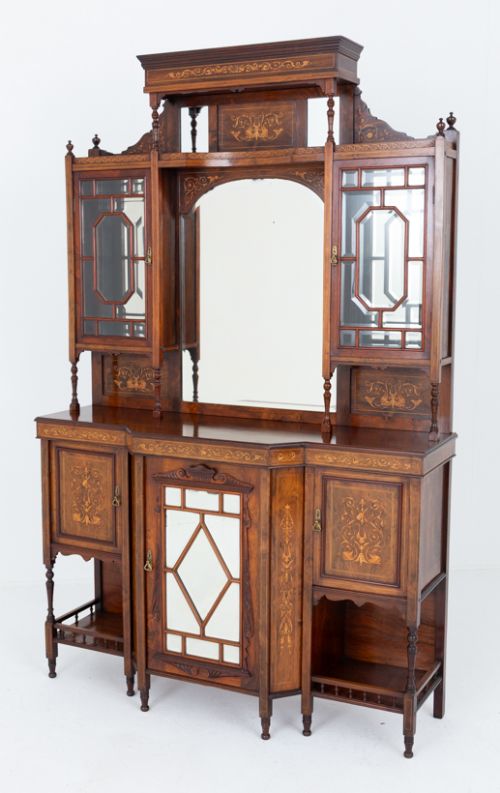


Rosewood Mirror Back Cabinet
A rosewood mirror back cabinet combines rich timber and reflective glass to anchor a reception room with functional display space.
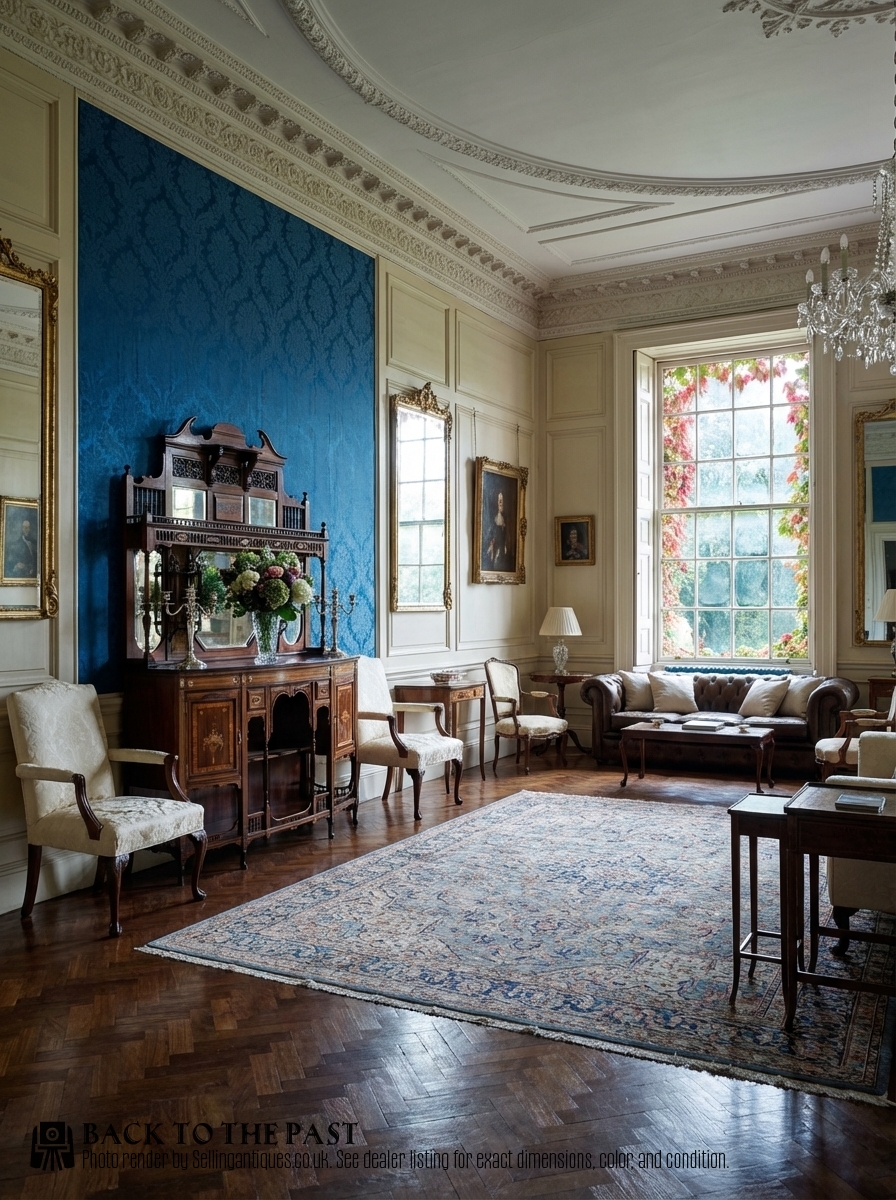
Rosewood Mirror Back Cabinet
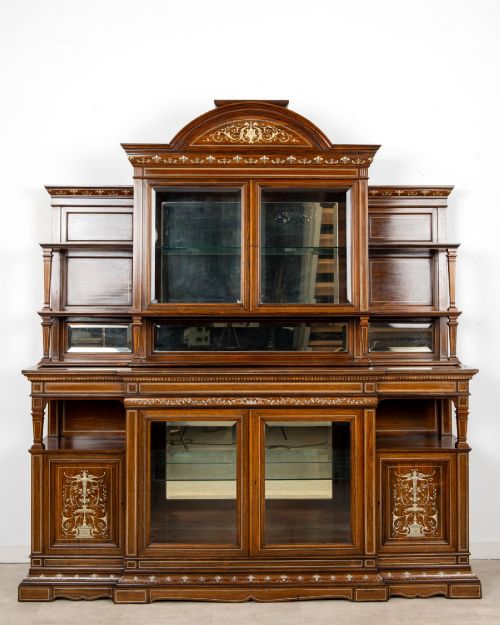
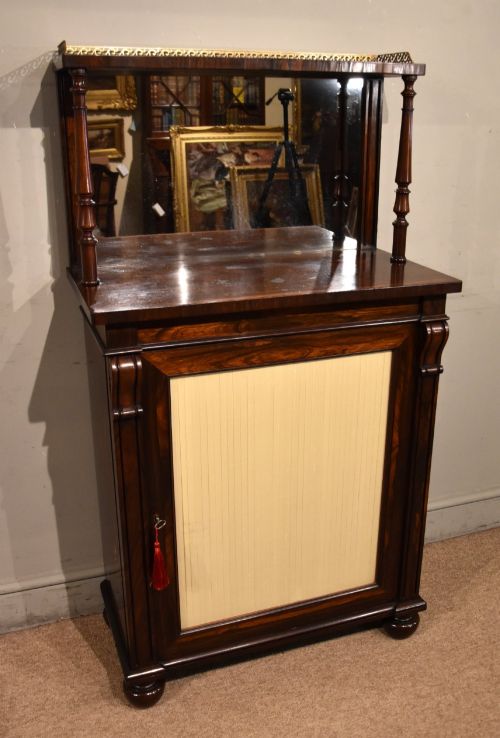
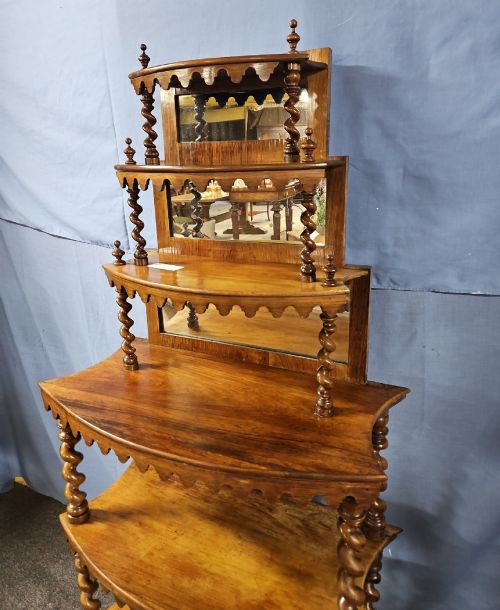
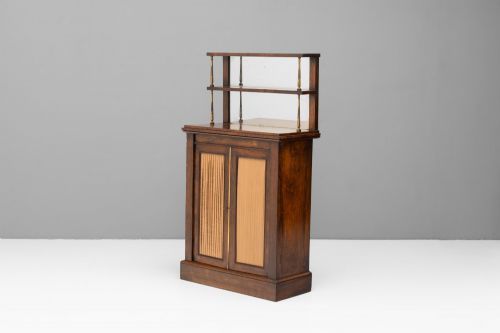
A rosewood mirror back cabinet is primarily encountered in Victorian and Regency iterations, spanning the nineteenth century alongside Edwardian examples. These pieces function variously as chiffoniers, display cabinets, sideboards and bookcases, serving to hold books, ceramics or sheet music while displaying a reflective glass panel.
The Victorian period yields many parlour cabinets and music cabinets featuring inlaid details, while Regency examples lean toward architectural sideboards and chiffoniers with brass or boxwood enrichment. Edwardian variants appear with lighter proportions and extensive inlay.
Buyers seeking a rosewood mirror back cabinet will frequently find side cabinets that integrate shelving, cupboards and a raised mirror superstructure designed to bounce light around a drawing room or dining space.
Design and execution
Quality separates along the crispness of the boxwood inlay and the intricacy of the marquetry, where deliberate hand-cutting creates sharp floral or geometric motifs rather than blurred or simplistic patterns. The figure of the rosewood veneer dictates visual depth, with richly variegated grain marking out superior cabinetmaking.
Architectural proportion and the integration of the mirror back define the higher tier, where brass inlays, ormolu mounts or marble tops are fitted with precision. Workshops known for documented cabinet work demonstrate tighter joinery and more refined proportions across doors, shelves and uprights.
Listings span the nineteenth century, including Regency, William IV, Victorian, and Edwardian eras, executed in rosewood with glass, brass, and boxwood inlay.
Collinson & Lock·Holland & Sons·Gillows·Stephen Webb
The Rosewood Mirror Back Cabinet Glossary
- Rosewood
- A heavy, durable timber prized for its dark grain and reddish-brown colour. It takes a high polish and forms the primary exterior surface of these cabinets.
- Chiffonier
- A low sideboard or cabinet with a raised back, frequently fitted with shelves or a mirror. It evolved during the nineteenth century for dining and drawing rooms.
- Marquetry
- The art of applying decorative pieces of veneer to a structure to form intricate designs. It appears on late nineteenth century panels.
- Ormolu
- Gilded bronze used for decorative mounts and fittings. It highlights architectural corners and door frames on select high-end cabinets.
- Credenza
- A sideboard or buffet cabinet without legs, often featuring cupboards and display space. It serves as a low surface for ornaments.
Rosewood Mirror Back Cabinet: Frequently Asked Questions
How do I date a rosewood mirror back cabinet?
Dating relies on stylistic markers such as Regency brass inlay or late Victorian marquetry. Construction methods and wood choices also assist in placing a piece within the nineteenth century.
Leg shapes, handles and the profile of the mirror frame further distinguish an 1810 sideboard from an 1890 parlour cabinet.
What was a mirror back cabinet used for?
These cabinets served to display porcelain, silver and glassware while reflecting interior candlelight or daylight. The lower cupboards stored books, linens or sheet music.
In Victorian drawing rooms, they acted as focal points for both decorative display and practical storage.
Is rosewood difficult to care for?
Rosewood requires stable humidity and protection from direct sunlight to prevent the timber from fading. Regular dusting with a dry cloth maintains the polished finish.
Avoid silicone-based polishes and rely on traditional wax applied sparingly to nourish the grain.
Can I place a mirror back cabinet in a modern room?
The rich dark tones and reflective glass provide a striking contrast against neutral contemporary walls. Their slender depths make them suitable for hallways, dining areas and living rooms.
They pair well with minimalist furniture by adding warmth and historical texture to a space.