





Pink Porcelain Floor Vase
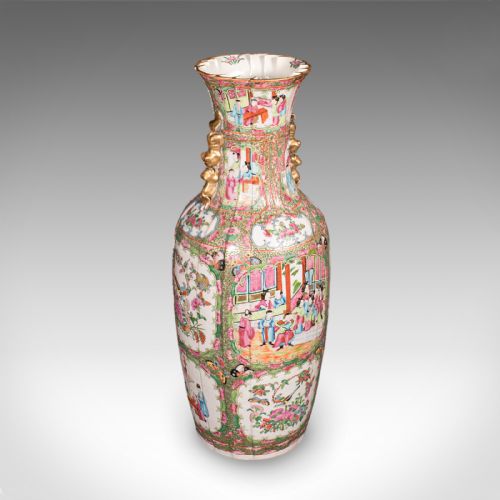
These large pink porcelain floor vases bring nineteenth-century Qing Dynasty artistry and striking scale into a room.
Pink Porcelain Floor Vase
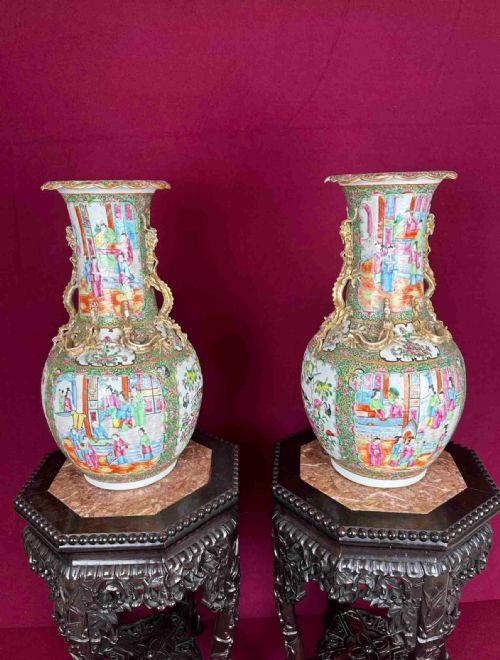
When you search for a pink porcelain floor vase, you encounter large nineteenth-century vessels created for export during the Qing Dynasty and the Victorian era. These pieces include monumental baluster shapes, centrepieces with covers, and imposing pairs designed to stand directly on the floor or upon dedicated wooden stands.
The aesthetic is dominated by the Famille Rose palette and its Cantonese variants, featuring abundant pink enamel tones alongside rich gilding and polychrome details. These large vases served as grand decorative statements in historic interiors, offering substantial presence through their height and elaborate pictorial scenes.
How they were made
Potters shaped high-fired ceramic bodies to achieve impressive heights, forming substantial baluster silhouettes capable of supporting extensive surface decoration. These robust forms provided a stable canvas for complex pictorial compositions.
Artisans applied overglaze enamel in varied pink hues, complemented by gold leaf and detailed gilding over a smooth glaze. Polychrome enamel work completed the intricate figurative and floral panels characteristic of these export wares.
Some nineteenth-century giants arrive with their own wooden shoes - traditional stands built just to keep grand vases off the chilly floorboards.
What varies in quality
The refinement of the overglaze enamel painting and the precision of the gilding determine the visual hierarchy of these large vessels. Finer examples display meticulous detail in the figurative scenes and floral borders, whereas simpler pieces rely on heavier, broader strokes.
Scale and structural ambition also set pieces apart, particularly when considering monumental heights, the inclusion of original covers, or matching pairs accompanied by period wooden stands.
The Pink Porcelain Floor Vase Glossary
- Famille Rose
- A palette of opaque enamel colours dominated by pink, introduced in Chinese porcelain production during the Qing Dynasty. This palette allows for subtle shading and detailed pictorial work.
- Baluster vase
- A tall vessel form featuring a rounded body that tapers toward the base and expands near the foot. It provides an ideal architectural silhouette for floor placement.
- Overglaze enamel
- Pigments applied over a previously fired and glazed ceramic surface, then fixed with a lower temperature second firing. This technique produces vibrant, raised surface colours.
- Gilding
- The application of gold leaf or gold powder to accentuate rims, handles, and decorative borders. It adds a luminous contrast to the pink enamel backgrounds.
Pink Porcelain Floor Vase: Frequently Asked Questions
Where should I place a floor vase?
These large vessels suit grand reception rooms, wide hallways, or empty corners where their height and vibrant pink palette can act as a focal point.
Position them on a firm surface or their original wooden stand to ensure stability and protect the ceramic base.
How do I identify a nineteenth-century piece?
Look for the characteristic heavy porcelain bodies, hand-applied overglaze enamels in rose and polychrome tones, and typical export motifs from the Qing Dynasty and Victorian periods.
Examine the surface for the distinct wear patterns and depth of colour typical of nineteenth-century craftsmanship.
Are these vases meant for holding flowers?
Due to their monumental scale, historic significance, and delicate overglaze enamels, these pieces function primarily as decorative floor art rather than practical vessels for water and fresh stems.
Using them empty preserves the interior glaze and protects the historic ceramic body from moisture damage.
What is Rose Medallion decoration?
Rose Medallion is a distinct style of Cantonese export porcelain featuring segmented panels filled with birds, flowers, and figures surrounding a central medallion.
This intricate compartmentalised design relies heavily on pink enamel tones and dense gilding.