







Rose Medallion Urn
These rose medallion urn and vase pieces bring vibrant nineteenth-century Cantonese colour and narrative court scenes straight into a room.
Rose Medallion Urn
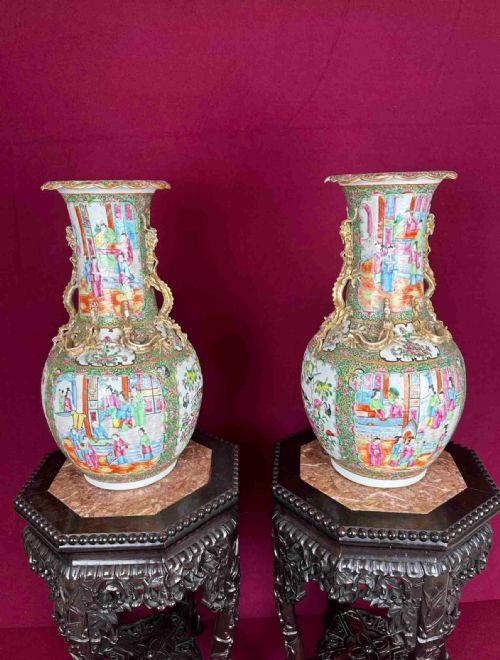
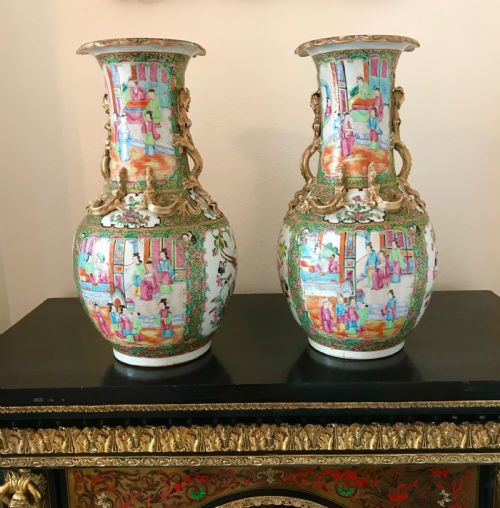
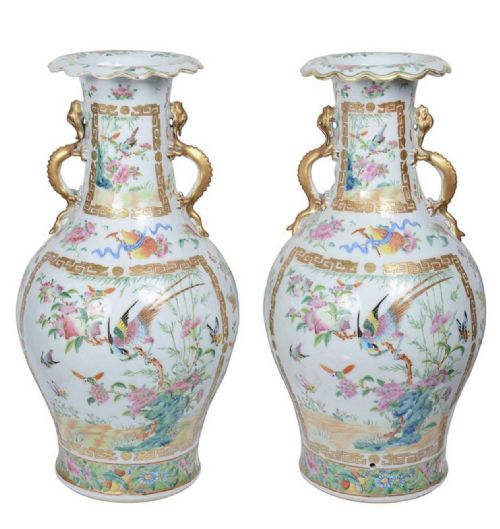
When you search for a rose medallion urn, you encounter nineteenth-century Chinese export porcelain and related decorative objects designed primarily for Western markets. The forms appearing here include large lidded vases, temple jars, and occasional examples mounted as table lamps with gilt bronze fixtures.
The objects span periods from the eighteen-seventies through the eighteen-eighties, often associated with Victorian interiors and Chinoiserie tastes. Many of these porcelain vessels survive as matched pairs, frequently accompanied by padouk wood stands or custom giltwood bases.
Materials and construction methods
Potters shaped these pieces from white porcelain before applying dense enamel painting in characteristic polychrome palettes, frequently highlighted with gold leaf. Gilt bronze mounts appear on specific lamp conversions, while associated support furniture utilises padouk wood.
The decorative surface work relies on compartmentalised panels showing figures and birds, executed during the Qing dynasty and Chinese export production eras. Kiln work from the nineteenth century resulted in robust bodies capable of supporting extensive enamel layering.
Several vases double as table lamps, proving that Victorians loved electrifying their porcelain.
Factors separating examples
Differentiation across these pieces rests on the crispness of the enamel painting and the density of the figurative panels. Finer examples display meticulous brushwork in the facial expressions and botanical details within the medallion reserves.
The presence of original matching stands, particularly carved padouk wood or giltwood components, influences the integrity of the ensemble. Condition of the gilding and any subsequent adaptations for electrical lamps also distinguish individual specimens.
The Rose Medallion Urn Glossary
- Canton
- A major port in southern China from which porcelain was exported to Europe and America during the nineteenth century. Much of the decorated ware associated with this trade was shipped through this hub.
- Padouk wood
- A dense tropical timber utilised for nineteenth-century furniture and display stands accompanying export ceramics. Its dark reddish-brown tone complements porcelain bodies.
- Chinoiserie
- European artistic style reflecting Chinese motifs and decorative techniques, popular during the Victorian period. This aesthetic influenced how these imported vases were displayed in British homes.
- Gilt bronze
- Metal mounts plated with gold, used to adapt porcelain vases into nineteenth-century table lamps. This technique integrated Asian ceramics into Western domestic lighting.
Rose Medallion Urn: Frequently Asked Questions
What is a rose medallion urn?
A rose medallion urn is a nineteenth-century Chinese export porcelain vessel characterised by segmented panels depicting figures, flowers, and birds. These pieces were produced in Canton for international markets during the Qing dynasty.
They function primarily as decorative mantel ornaments, floor vases, or converted table lamps. Their bright enamel palettes made them popular additions to Victorian interiors.
How do I date these porcelain pieces?
Dating relies on stylistic markers from the nineteenth century, including the specific density of the enamel work and the character of the porcelain body. Associated elements like padouk wood stands often correspond to the manufacturing period.
Victorian import records and stylistic comparisons with dated eighteen-eighties pieces help establish a chronological window. The presence of gilt bronze mounts can also indicate nineteenth-century European adaptation.
How were these vases used originally?
These large porcelain vessels served as decorative display items in formal reception rooms and drawing rooms. Their detailed narrative panels provided visual interest for collectors of foreign goods.
Over time, some examples were adapted with electrical fittings to serve as table lamps while retaining their original ceramic bodies and painted decoration.
How do I care for antique porcelain?
Cleaning requires gentle dusting with a soft, dry cloth to protect the delicate enamel and gold leaf detailing. Avoid harsh chemical cleaners or abrasive materials that could damage the nineteenth-century surface.
Keep the pieces away from direct sunlight to preserve the vibrancy of the polychrome pigments. Ensure any wooden stands are treated with appropriate furniture care suitable for padouk wood.