

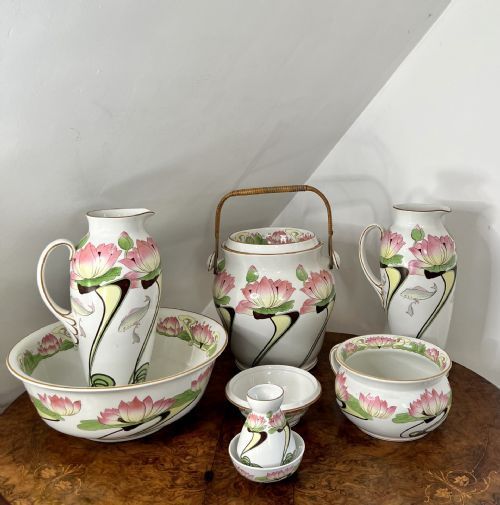


Pink Ceramic Pitcher
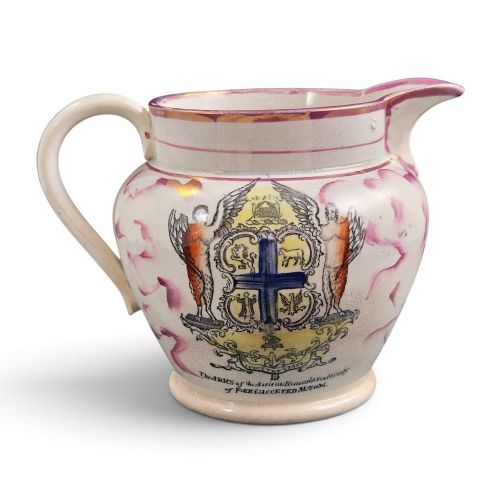
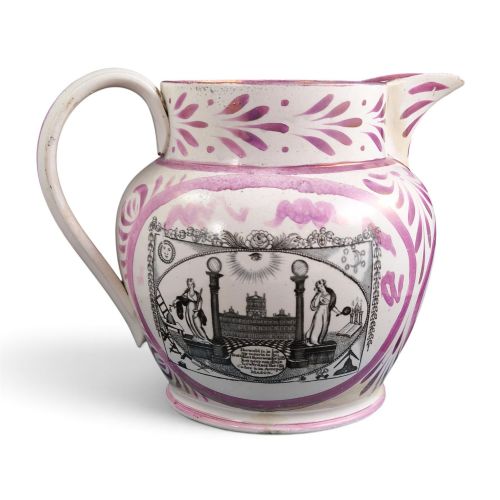
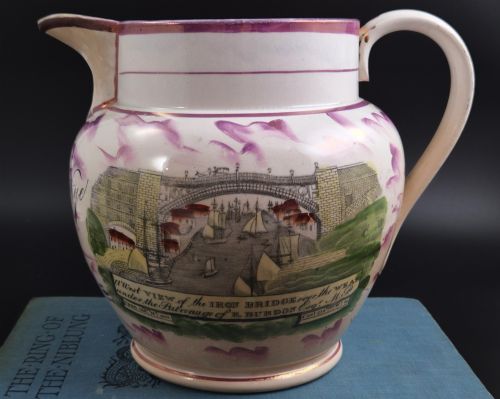
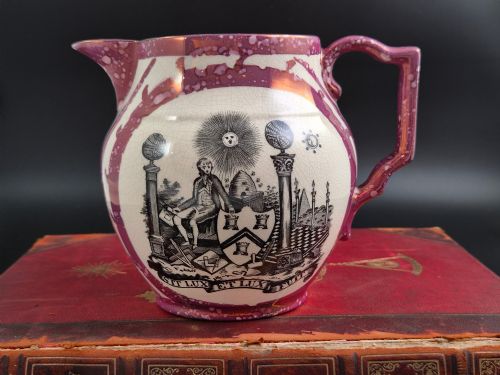
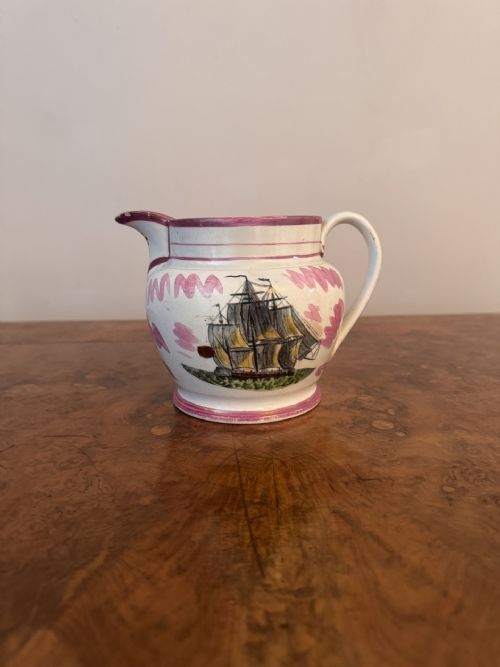
A pink ceramic pitcher brings robust earthenware and lustreware into the room, combining practical pouring vessels with maritime and Masonic transfer prints.
Pink Ceramic Pitcher
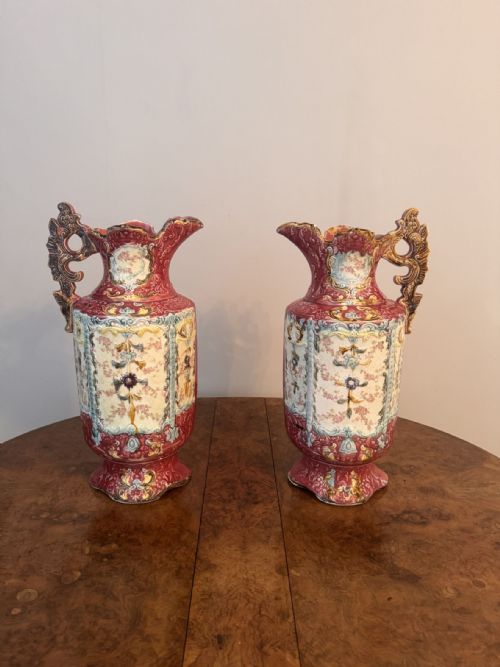
A pink ceramic pitcher or jug serves as a functional pouring vessel that doubles as a decorative object, spanning periods from the Georgian era through to the Victorian period and the early twentieth century. These pieces appear in forms such as cream jugs, decorative ewers, and large maritime jugs.
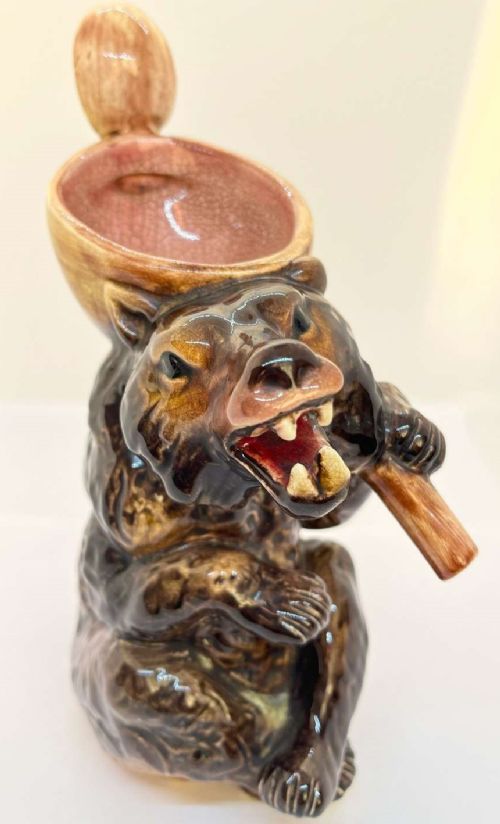
The selections found here frequently include Sunderland pink lustre ware alongside Staffordshire pearlware and majolica pieces, with makers utilising earthenware and porcelain bodies. Collectors encounter diverse designs ranging from commemorative ship prints to figurative animal forms.
Vessels emerge from distinct stylistic traditions including Victorian Majolica, Grand Regency, and Art Nouveau, reflecting both everyday domestic use and commemorative display purposes across British pottery centres.
Assessing quality
Quality rests in the crispness of transfer-printed details, the depth and coverage of the pink lustre glaze, and the precision of hand-painted highlights on earthenware or porcelain. Superior pieces display well-defined moulding, particularly on majolica animal and botanical forms.
The refinement of the ceramic body and the complexity of the form - such as reticulated porcelain work or figural handles - distinguish standard domestic cream jugs from exhibition pieces produced by notable factories.
Listings span periods from Georgian pearlware to Victorian majolica and early twentieth-century porcelain.
Holdcroft·Sunderland Garrison Pottery·Grainger Worcester·John Rose Coalport·Royal Worcester·George Jones
The Pink Ceramic Pitcher Glossary
- Lustre glaze
- A metallic glaze application that produces a reflective, iridescent sheen on the ceramic surface. This technique creates the characteristic pink colour found on Sunderland commemorative pieces.
- Pearlware
- A fine earthenware developed in the eighteenth century with a bluish-white glaze that provided a whiter background for transfer printing. It frequently underlies early nineteenth-century lustre jugs.
- Ewers
- Large water pitchers with wide spouts and handles, often designed for washing or decorative display rather than table service. They appear in Victorian and Regency collections.
- Majolica
- A colourful, lead-glazed earthenware style popular during the Victorian period, known for naturalistic botanical and animal motifs. Pieces utilise vivid metallic oxide colours.
- Transfer printing
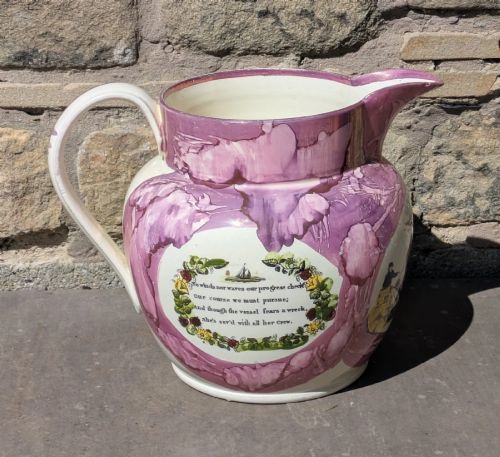
- A decoration method where an engraved copper plate transfers a design onto paper and then onto the ceramic body. This technique allowed the reproduction of detailed maritime scenes and poems.
Pink Ceramic Pitcher: Frequently Asked Questions
What are pink lustre jugs?
Pink lustre jugs are ceramic vessels decorated with a metallic glaze that yields a pink, reflective sheen. They frequently feature transfer-printed maritime scenes, ships, or Masonic symbols.
Produced primarily in the nineteenth century, these pieces served as commemorative items or presentation pieces in British households.
How were these pitchers used?
While smaller forms functioned as cream jugs for the tea table, larger pitchers served for pouring liquids or stood on display in domestic settings. Many carried commemorative messages or verses suited to public houses or homes.
Ewers formed part of wash sets used for personal hygiene in bedrooms before running water became common.
How do I date a ceramic jug?
Dating relies on ceramic bodies like pearlware versus later earthenware, along with stylistic indicators such as Regency shapes or Victorian majolica glazing. Transfer-printed subjects and named historical events provide further chronological markers.
Makers' marks, where present, help pinpoint the operating years of potteries and factories.
How do I care for antique pottery?
Antique ceramics require gentle handling and hand washing in lukewarm water without abrasive detergents. Lustre glazes and overglaze decorations can be sensitive to harsh cleaning agents and prolonged soaking.
Display vessels away from direct sunlight to preserve the integrity of the glaze and pigments.