
Pine Wooden Settle
A pine wooden settle brings honest rural warmth to a hallway or kitchen, offering high-backed seating and hidden storage.
Pine Wooden Settle
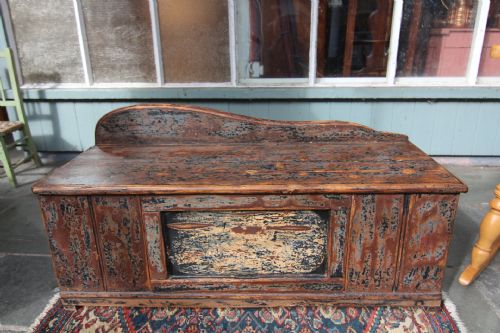
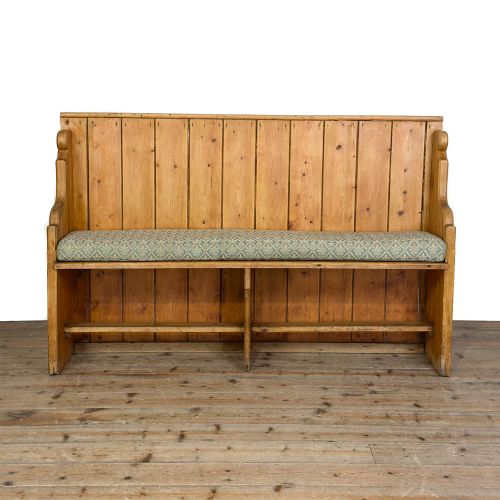
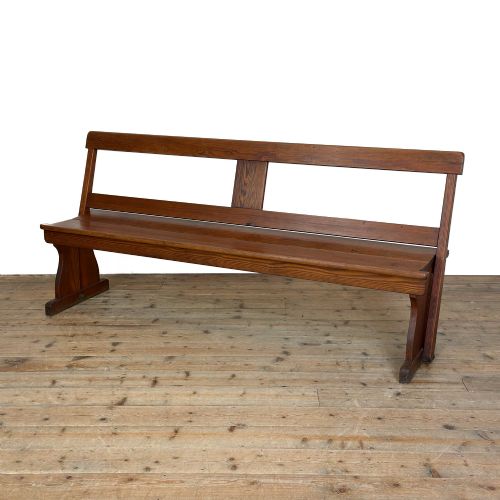
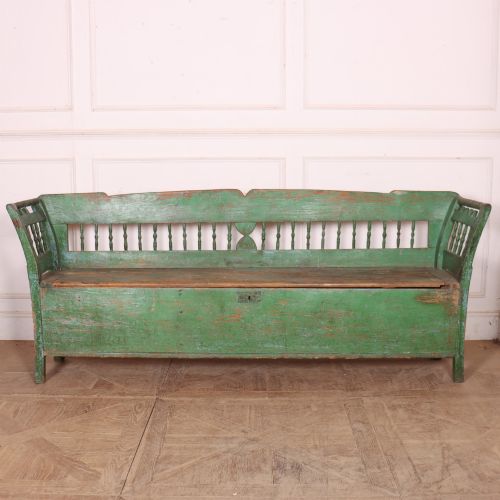
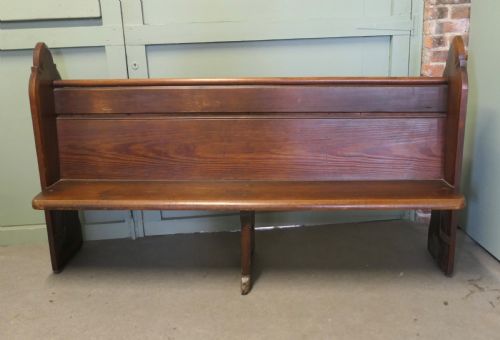
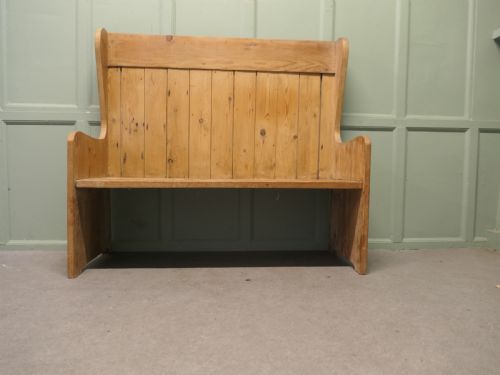
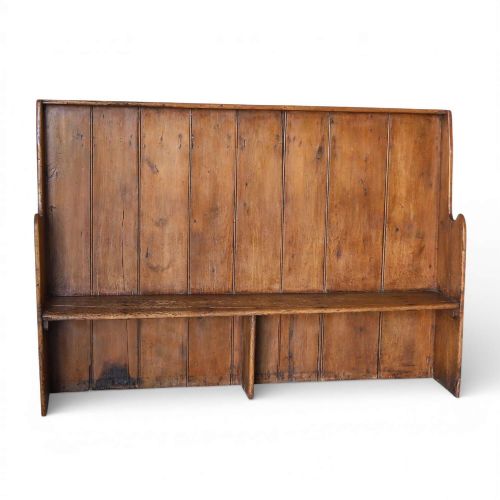
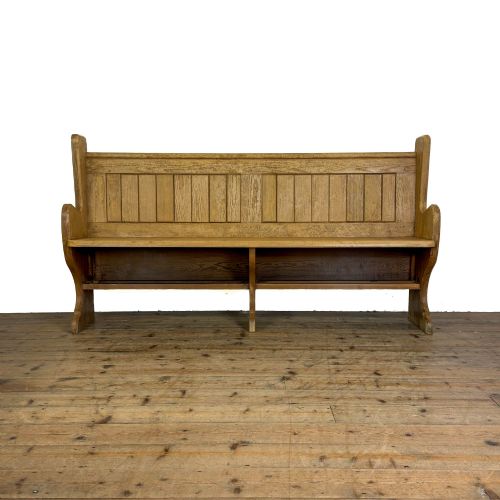
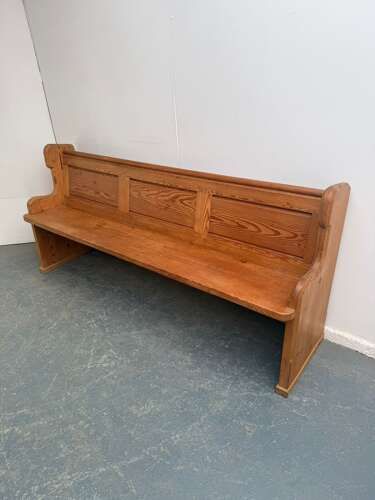
When you search for a pine wooden settle, you encounter sturdy seating designed to block draughts in farmhouses, country pubs and churches. The pieces listed here span the eighteenth, nineteenth and early twentieth centuries, taking forms such as high-backed settles, box settles with storage beneath the seat, and chapel or church pews.
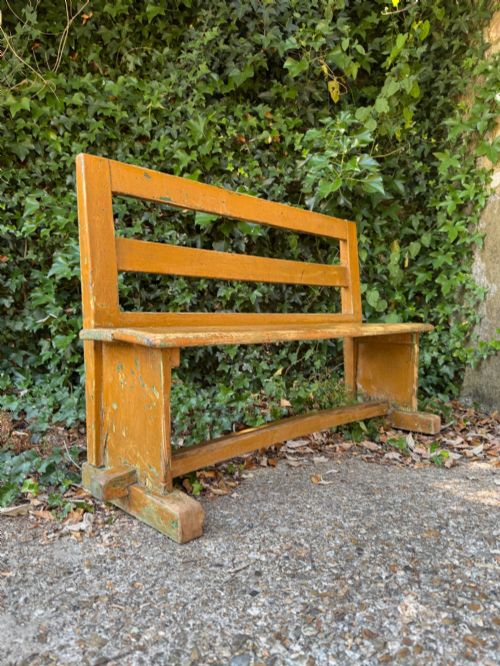
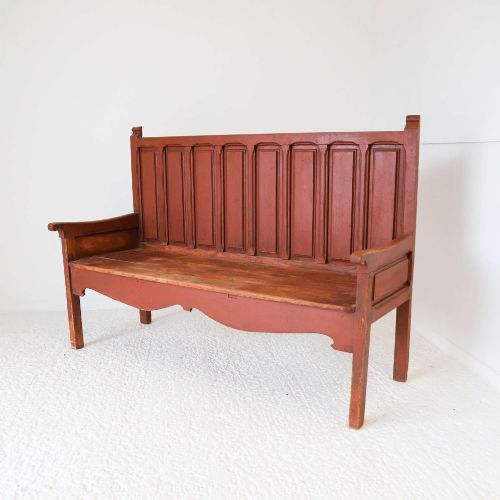
The version most commonly met on this page is the nineteenth-century pine settle, often originating from English, Hungarian or Spanish country traditions. These benches frequently combine solid pine with elm seats or iron fixings, appearing either in a waxed honey-brown patina or with original painted finishes.
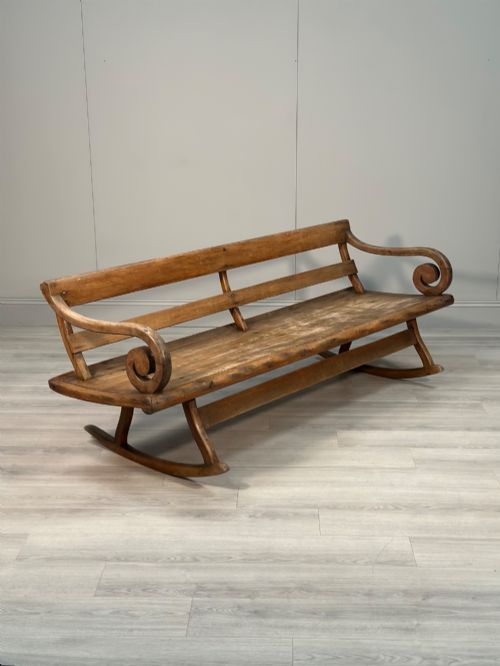
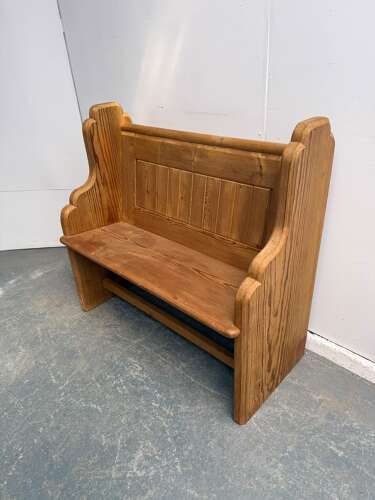
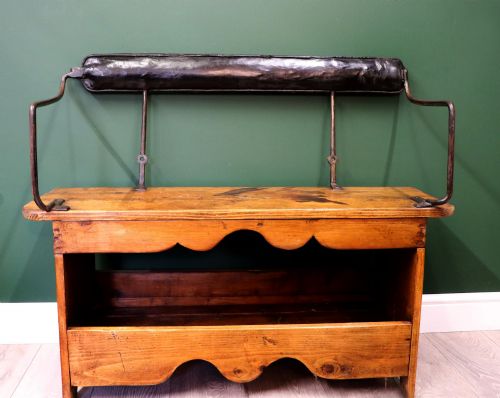
Beyond standard benches, the selection includes functional variations like flip-over chapel pews, rocking settles, and barrel-backed designs that envelop the sitter. Whether unadorned rustic farmhouse items or spindled folk art pieces, each settle serves as a substantial focal point for domestic spaces.
How they were made
Cabinet makers and rural carpenters constructed these settles primarily from solid pine and pitch pine, occasionally incorporating elm for heavy-wear seating planks. Construction relied on traditional joinery methods, utilising pegged mortise and tenon joints to withstand decades of daily use in busy households and public buildings.
Surface finishes applied to the wood include natural wax, which brings out the warm honey patina of the grain, alongside traditional paints in blue, grey, black, and cream. Iron hardware such as strap hinges and brackets often reinforced the storage boxes and movable elements like flip-over desk backs.
Object forms include standard benches, flip-over chapel pews, rocking settles, high-backed pub seats, and storage box settles.
What varies in quality
The distinction between standard utility seating and superior examples lies in the integrity of the original construction and the preservation of surface finishes. Pieces retaining untouched period paintwork or deep wax patinas command attention for their visual character, whereas heavily stripped or poorly restored items lose their historic depth.
Proportion and regional carpentry details also set pieces apart, from simple vernacular country forms to sophisticated high-backed barrel settles with integrated storage compartments. The presence of secondary timbers like elm for seats or original iron fittings indicates careful material selection by the maker.
The Pine Wooden Settle Glossary
- Settle
- A wooden bench with a high back designed to deflect cold draughts, often featuring solid arms and a storage box beneath the seat.
- Box settle
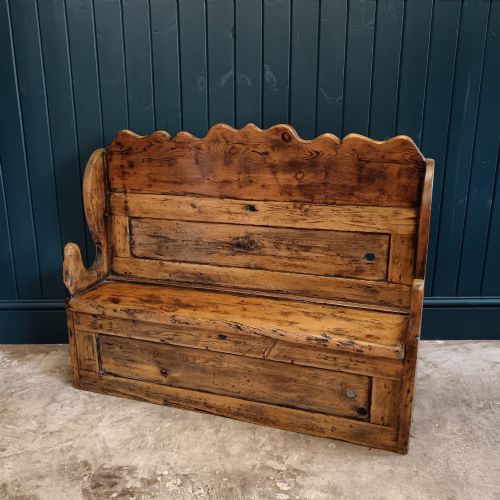
- A variant of the bench featuring a hinged seat lifting to reveal a compartment for household storage.
- Barrel-backed
- A style of seating where the high back curves around the occupant in a semi-circle to provide maximum shelter from room breezes.
- Pitch pine
- A dense, resinous softwood commonly utilised for nineteenth-century church pews and institutional seating due to its durability.
- Patina
- The surface sheen and colour developed on wood through age, wax polishing, and handling over generations.
Pine Wooden Settle: Frequently Asked Questions
What is a pine wooden settle?
A pine wooden settle is a traditional high-backed bench made from softwood, typically featuring solid sides or armrests to keep out cold draughts in older homes.
Many examples include a hinged seat opening to a storage box, making them practical seating options for hallways and kitchens.
Where were settles placed?
Historically, settles stood near hearths in farmhouses and country pubs where the high back protected occupants from cold air circulating near stone floors.
Today, they function well in hallways, boot rooms, and large kitchens as seating combined with concealed storage.
How do I tell periods apart?
Earlier eighteenth-century pieces often display folk art details, simpler structural lines, and heavier proportions compared to later designs.
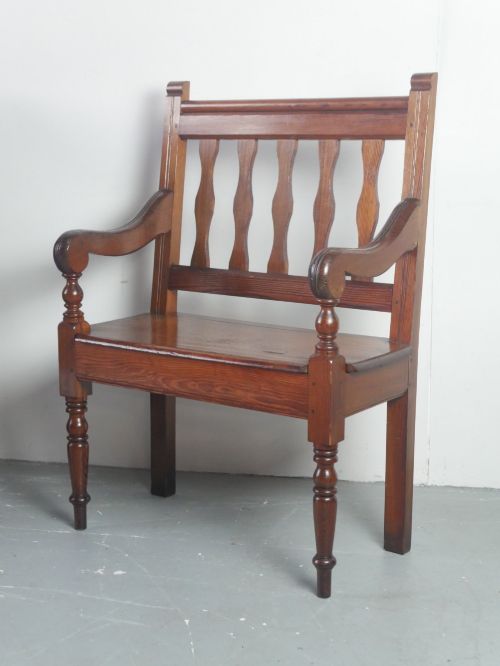
Nineteenth-century and Victorian examples introduce turned spindles, painted finishes, and specialised forms like chapel pews or rocking settles.
Are these benches painted or waxed?
Settles appear in both natural waxed finishes that highlight the honey-brown pine grain and traditional painted surfaces in blue, grey, or cream.
Original paint or early waxed patinas are valued by collectors for showing the authentic age of the piece.