
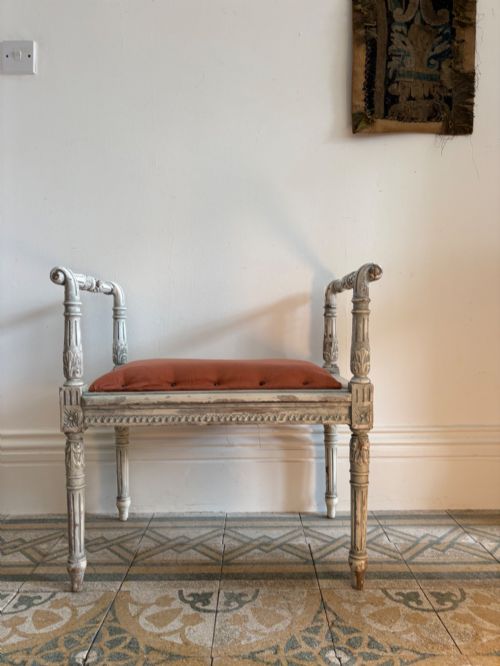
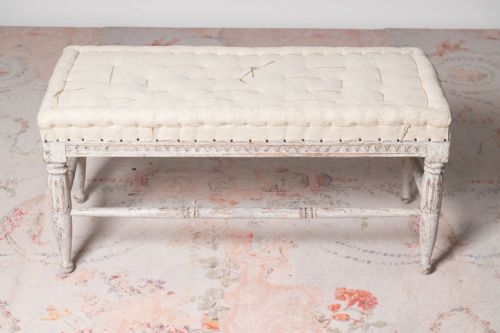



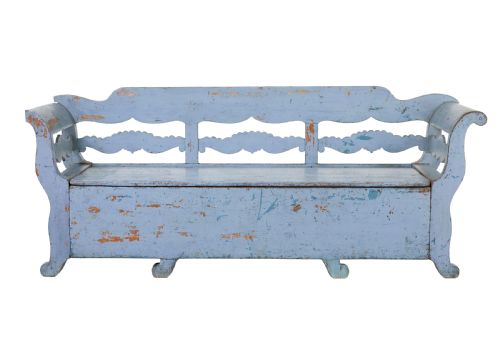


Gustavian Bench
Gustavian bench examples bring restrained Scandinavian neoclassical lines and pale painted woodwork into a room.
Gustavian Bench
A gustavian bench sits within a tradition of Scandinavian seating spanning the eighteenth century through to the early twentieth century. When searching for a gustavian bench, buyers encounter painted wood forms, settees, settle benches, and related stools originating from Sweden.
The objects appearing here range from eighteenth century originals to nineteenth century interpretations and later twentieth century pieces. Many examples display regional scandinavian country characteristics alongside formal neoclassical motifs.
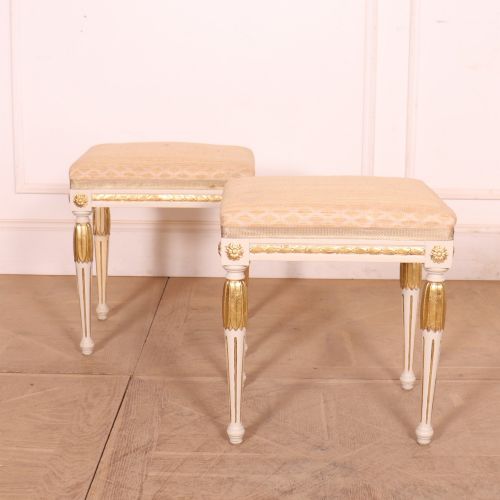
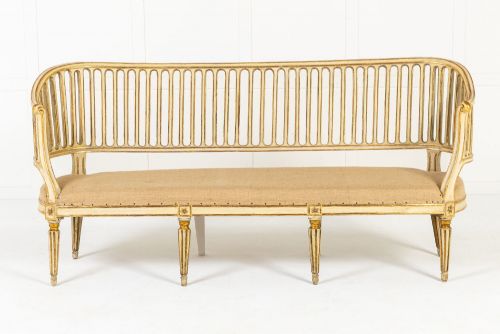
Stools, sofas, and settle benches share space with the primary bench forms. These pieces offer functional seating rooted in northern european domestic interiors.
What varies in quality
The integrity of the original paint surface distinguishes one piece from another. Surviving early paint layers carry historical depth that later refinishing obscures.
Construction methods reveal the hand of the maker through the depth of carved detail and the joinery of the pine frame. Proportion and balance across the legs, arms, and backrest separate standard regional work from finer pieces.
Listings feature pine and painted wood structures paired with linen, hessian, fabric, and cane upholstery across the eighteenth, nineteenth, and early twentieth centuries.
The Gustavian Bench Glossary
- Gustavian
- A swedish neoclassical style dating from the reign of Gustav III, characterised by restrained symmetry and classical motifs. This aesthetic defines the pale painted furniture of the period.
- Settle
- A wooden wooden bench featuring a high back and solid arms designed to block drafts in domestic rooms. Many incorporate enclosed storage beneath the seat.
- Settee
- An upholstered or wooden seat designed for multiple occupants, sharing forms with sofas. These pieces appear frequently in eighteenth and nineteenth century swedish contexts.
- Giltwood
- Wood that has been coated with a thin layer of gold leaf or gilt powder. This finish marks grander neoclassical and empire seating.
- Cane
- Woven rattan or plant material used for seat panels. It provides a lightweight, resilient surface on chairs and stools.
Gustavian Bench: Frequently Asked Questions
What is a gustavian bench?
A gustavian bench is a traditional scandinavian seating form rooted in eighteenth and nineteenth century swedish design. These pieces combine functional wooden construction with pale painted finishes.
They appear in domestic interiors as primary seating, often reflecting neoclassical influences adapted by regional makers.
How old are these benches?
The pieces span from the eighteenth century through the nineteenth century and into the early twentieth century. Eighteenth century examples represent the height of the classical period.
Later nineteenth century pieces often adopt gustavian style motifs while utilising pine and painted wood.
What materials were used?
Carpenters primarily worked with pine and solid wood to build the structural frames of these benches and settees. Surfaces were finished with paint layers in pale shades.
Upholstered components utilised fabrics such as linen, hessian, and silk, alongside natural cane panels for seating.
Where were they made?
These seating forms originate primarily from Sweden, reflecting Scandinavian country and neoclassical design traditions. Occasional pieces from neighbouring regions also appear.
Workshop production ranged from urban neoclassical cabinet makers to rural regional joiners.