


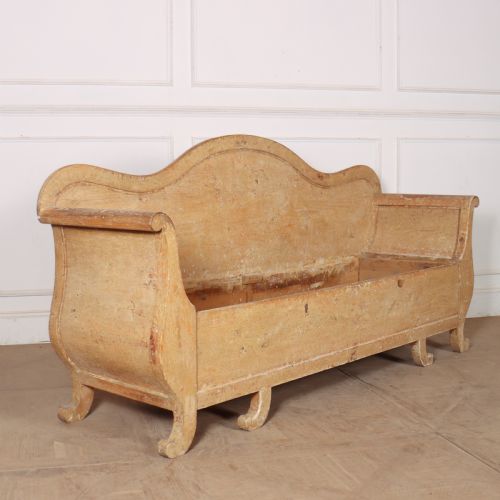


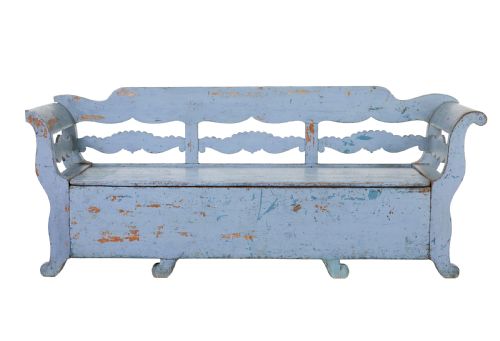
Swedish Painted Settle
A Swedish painted settle offers solid pine construction with integrated storage and enduring rustic charm for country interiors.
Swedish Painted Settle
A Swedish painted settle combines a high-backed wooden bench with a box compartment beneath the seat, serving as traditional seating and storage in one heavy piece of furniture. Buyers searching for a swedish painted settle encounter substantial wooden benches shaped by Scandinavian country craftsmanship and Gustavian design traditions.
The selections span the eighteenth century and the nineteenth century, including specific dates such as 1880 and 1890, alongside related forms like storage benches and sofas. Most examples reflect Scandinavian country and Austrian country styles alongside Gustavian-inspired pieces.
Materials and construction
These settles rely on pine and softwood timbers, shaped into robust benches designed for daily domestic use. Painted wood finishes protect the underlying timber while defining the decorative character of each piece.
Makers integrated fabric and linen elements into specific designs, combining textile components with traditional painted pine construction. Surface layers of paint have aged over the decades, creating the characteristic patinated finishes seen across the inventory.
Swedish Painted Settle Retail Price Guide 2026
Typical asking prices for swedish painted settle among the pieces listed under this phrase on Sellingantiques today, from the lower quarter to the upper quarter. They describe what is for sale here now, not the wider market.
Listings feature pine and softwood settles spanning the eighteenth and nineteenth centuries, including specific dates from 1880 and 1890.
Distinguishing quality in painted settles
Quality rests in the balance between original structural integrity and the natural wear accumulated across centuries of use. Pieces adhering closely to Gustavian aesthetic standards often display finer proportions than robust country variants.
The integrity of the painted surface significantly influences character, where untouched historic paint adds considerable weight to a piece compared to later surface renewals.
The Swedish Painted Settle Glossary
- Settle
- A wooden bench with high back and arms, featuring a box seat for storage underneath. This dual-purpose form remained a staple of rural domestic life.
- Gustavian
- The Swedish interpretation of French neoclassical design, characterised by restrained elegance and pale painted finishes. This style emerged during the late eighteenth century.
- Softwood
- Timber derived from conifers such as pine, widely employed in Scandinavian cabinetmaking for its workability. It forms the primary structural material of these benches.
- Box settle
- A variant featuring an enclosed compartment beneath the hinged seat. This space held household goods in rooms lacking dedicated closets.
Swedish Painted Settle: Frequently Asked Questions
How do I date a painted settle?
Dating relies on examining construction techniques, joinery methods, and the composition of the painted surface layers. Eighteenth-century examples typically show hand-planed boards and older forging methods in the ironwork.
Later nineteenth-century pieces, including those from the 1880s and 1890s, often incorporate tighter machine-sawn elements while retaining traditional painted finishes.
How were these settles used originally?
Families placed these benches near hearths to block cold drafts while providing shared seating around the main room. The deep seat cavity stored heavy textiles, bedding, or provisions.
Their substantial weight helped anchor them in large communal spaces where they doubled as room dividers.
How do I care for historic painted wood?
Maintain stable indoor humidity levels to prevent the pine timber from expanding or contracting excessively. Avoid placing the piece near direct heat sources or strong sunlight.
Dust gently with a dry cloth and avoid harsh chemical cleaners that might compromise the historic paint layers.