




Swedish Sofa Bench
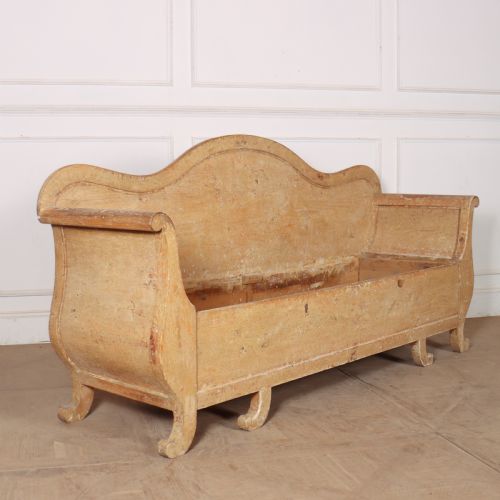
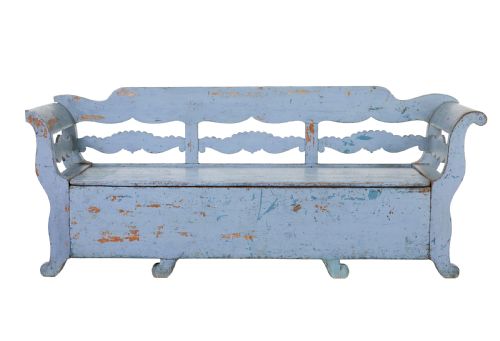
A swedish sofa bench offers seating with architectural restraint, pairing painted pine with the clean geometry of Gustavian and Empire design.
Swedish Sofa Bench
When you search for a swedish sofa bench, you encounter seating that bridges the domestic bench, settle and settee. These pieces originate across the eighteenth and nineteenth centuries, spanning eras from Rococo curves to Empire linearity.
The version you meet most often on this page is the painted wooden bench or settle, frequently constructed from pine or birch. Forms range from simple storage benches to high-backed settees influenced by classical Scandinavian design.
Makers drew upon regional traditions like Scandinavian Country as well as courtly Gustavian aesthetics. The resulting seating combines utilitarian function with refined proportions suited to both country houses and formal interiors.
How they were made
Construction relies heavily on local timbers such as pine and birch, shaped into solid frames and panelled backs. Many surfaces receive layers of original paint, which ages to show subtle undertones and wear.
Upholstery materials include linen and hessian beneath top layers of fabric, while some seating incorporates cane panels. Joinery techniques prioritise sturdy practicality, supporting heavy frames designed for daily domestic use.
Swedish Sofa Bench Retail Price Guide 2026
Typical asking prices for swedish sofa bench among the pieces listed under this phrase on Sellingantiques today, from the lower quarter to the upper quarter. They describe what is for sale here now, not the wider market.
This site's listings feature pieces spanning the eighteenth century through to eighteen-ninety, constructed primarily from pine, birch and painted wood.
What varies in quality
Quality rests in the survival of original painted finishes rather than later overpainting. Pieces retaining their early pigment show depth and character that modern restoration cannot replicate.
Proportion and decorative restraint separate finer examples from standard vernacular work. Refined carvings, balanced armrests and authentic period hardware distinguish high Gustavian and Empire pieces from simpler country variants.
The Swedish Sofa Bench Glossary
- Gustavian
- The Swedish neoclassical style spanning the late eighteenth century, characterised by restrained symmetry, fluted columns and pale painted surfaces. It takes its name from King Gustav III.
- Settle
- A traditional wooden wooden bench with a high back, solid arms and often a box seat for storage. These pieces were designed to block draughts in cold Nordic interiors.
- Giltwood
- Timber treated with gold leaf or metallic powder to resemble solid gold. This technique highlights carved details on formal nineteenth-century frames.
- Birch
- A hard, pale timber native to Scandinavia, valued by cabinetmakers for its fine grain and strength. It forms the structure of many nineteenth-century settees.
Swedish Sofa Bench: Frequently Asked Questions
What is a Swedish sofa bench?
A swedish sofa bench is a hybrid seating form combining the enclosed structure of a traditional settle with the comfort of a settee. These pieces developed in Scandinavian workshops during the eighteenth and nineteenth centuries.
They serve as practical hallway or dining seating while providing decorative impact through painted finishes and classical motifs.
How do I date a painted bench?
Dating relies on examining the construction methods, timber choice and the composition of the paint layers. Pine and birch were used across different eras, but specific stylistic details offer clearer clues.
Eighty or ninety years of wear creates distinct patination on original paint surfaces. Examining nail types and joinery inside storage compartments helps confirm the period.
Where should I place one?
These benches fit well in hallways, large kitchens or living rooms where linear seating is required. Their tall backs help define spaces within open-plan rooms.
Storage variants also offer practical utility for concealing blankets or shoes in domestic settings.
What styles are most common?
Gustavian and Scandinavian Country styles dominate the surviving inventory from this region. Gustavian pieces offer neoclassical symmetry, while country versions focus on robust utility.
Later nineteenth-century examples often incorporate Swedish Empire elements such as dark birch or subtle gilding.