
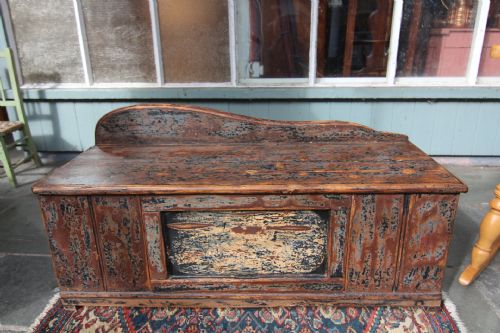
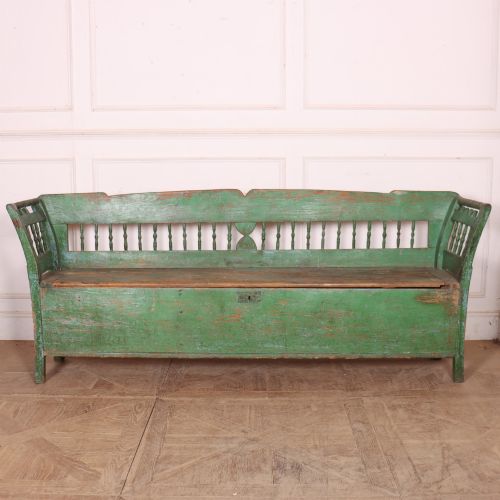
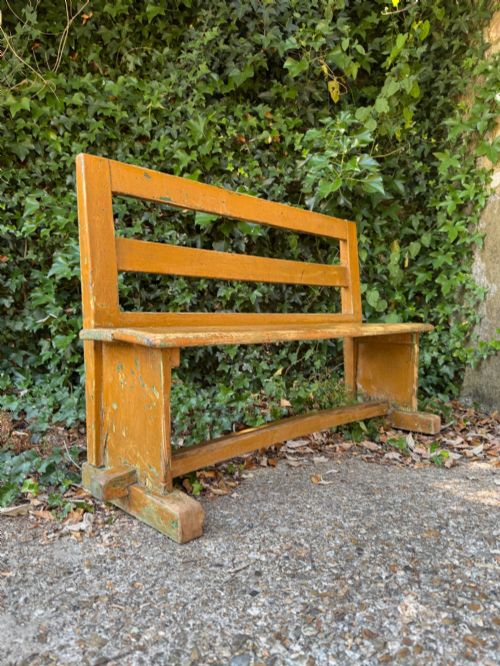

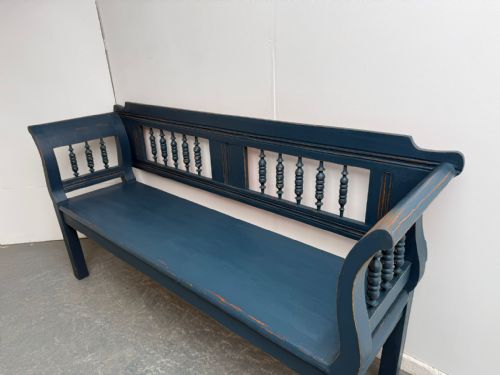
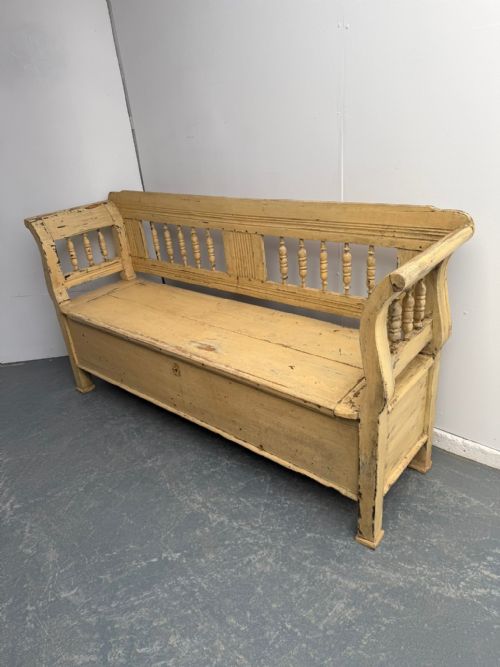


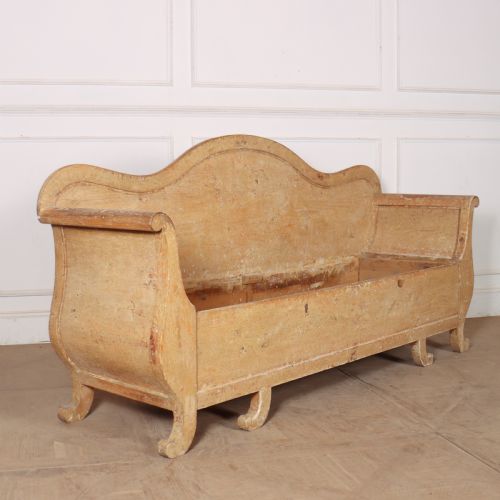


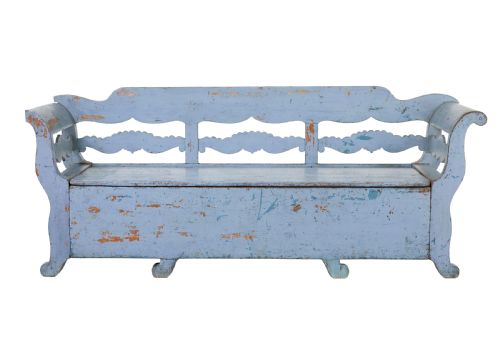


Distressed Painted Settle Bench
These distressed painted settle bench examples offer rustic charm and integrated storage, originating primarily from 18th and 19th-century European farmhouse traditions.
Distressed Painted Settle Bench
A distressed painted settle bench provides traditional seating with high backs and enclosed box seats designed to block drafts in older homes. The listings here showcase regional European variants including Hungarian box settles, Swedish Gustavian sofas, and Austrian farmhouse benches.
Most examples date from the 19th century and Victorian periods, constructed primarily from pine or timber with aged, weathered paint finishes. Forms range from simple high-back tavern benches to large multi-seater storage settles intended for farmhouse kitchens and halls.
How they were made
Construction relies on solid pine and timber planks joined to create durable box seats and high backrests. Iron hardware is frequently utilised for hinges and structural reinforcement on the storage compartments.
Surface decoration involves layers of paint applied in various regional styles, such as Scandinavian country and Austrian folk art. Subsequent wear creates the characteristic distressed appearance as the underlying wood and older paint layers emerge.
Some Hungarian box settles managed to survive centuries of farmhouse life while retaining their original bright blue paint.
What varies in quality
The integrity of the original paint surface determines much of the character, distinguishing untouched historical layers from later decoration. Proportion and scale also differ, from compact two-seater benches to very long dining variants.
Construction methods reflect regional joinery standards, with finer pieces exhibiting careful attention to structural box framing and high-backed panel work. The presence of authentic period hardware adds to the integrity of the piece.
The Distressed Painted Settle Bench Glossary
- Settle bench
- A wooden bench featuring a high back and solid arms, often incorporating a box seat for storage beneath the cushion or timber lid.
- Box seat
- A storage compartment integrated directly beneath the bench seat, accessed by lifting the hinged top.
- Gustavian
- The Swedish interpretation of French neoclassical style, characterised by restrained carving and light, muted paint finishes.
- Polychrome
- Decoration utilising multiple colours, frequently seen on folk art and painted farmhouse furniture.
- Folk art
- Utilitarian objects decorated within regional decorative traditions by local makers rather than academic workshops.
Distressed Painted Settle Bench: Frequently Asked Questions
What is a settle bench?
A settle bench is a traditional wooden seat with a high back designed to shield occupants from draughts in older properties. Many examples also include a built-in box compartment beneath the seat for storing household goods.
They were commonly placed near hearths in kitchens, taverns, and farmhouses. Today, they serve practical storage and seating functions in hallways and dining areas.
How do I identify a Gustavian bench?
Gustavian benches originate from Sweden and date from the late 18th to the mid 19th century. They typically exhibit neoclassical proportions, fluted details, and pale, restrained paint finishes.
Unlike heavier folk art pieces, Gustavian furniture reflects lighter continental influences adapted to Scandinavian tastes. They often feature clean lines and muted grey, cream, or blue tones.
Are these benches comfortable?
These benches were built for utility and posture rather than deep lounging. The upright wooden backrests and firm timber seats provide sturdy support.
Many owners add loose cushions or squabs to the seat base for daily comfort. The high back also provides an enclosed feel when placed against a wall.
How do I care for painted pine?
Maintain painted pine by dusting gently with a dry or slightly damp cloth. Avoid harsh chemical cleaners that can strip or damage historical painted surfaces.
Keep the wood away from direct heat sources and sudden humidity changes to prevent warping. Wax or specialised finishes are rarely needed if the original paint layer is fragile.