





Swedish Wooden Settle
A Swedish wooden settle brings rustic practicality and calm Nordic proportion to a room, offering both seating and enclosed storage.
Swedish Wooden Settle
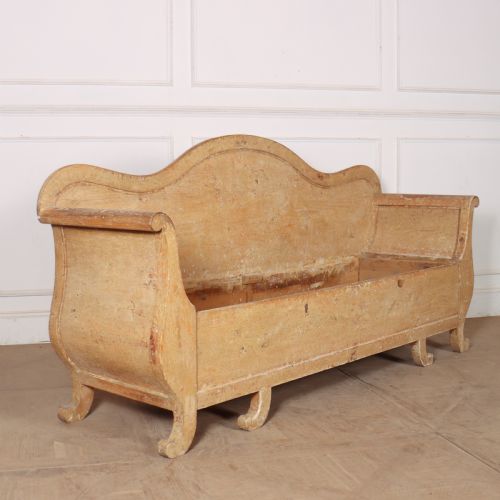
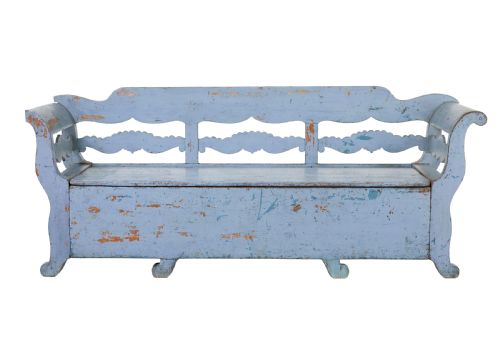
A swedish wooden settle is a substantial wooden bench featuring high backs and solid sides designed to block draughts in traditional interiors. The pieces gathered here span the eighteenth century and the nineteenth century, including specific dates like 1880 and 1890 alongside broader periods.
Most examples found on this page are constructed from pine or softwood, frequently finished with historic painted surfaces. Forms range from straightforward rustic storage benches and settle benches to refined Gustavian painted sofas and Scandinavian country benches.
Construction and Materials
Carpenters relied principally on pine, softwood, and beechwood to build these sturdy frames, shaping boards by hand for everyday domestic use. Joinery was robust and straightforward, designed to withstand heavy daily wear in rural farmhouses and homes.
Surfaces were frequently finished with paint, creating the characteristic painted pine or painted wood finishes seen across these items. Some examples incorporate fabric or linen elements, particularly on pieces influenced by the Gustavian style.
Current listings feature pieces primarily from the 19th Century, alongside 18th Century examples, constructed from pine, painted wood, and beechwood.
Assessing Quality
Quality rests in the integrity of the original timber construction and the preservation of authentic surface paint rather than later decoration. Pieces exhibiting early eighteenth century or nineteenth century provenance display proportions and joinery that reflect traditional craft standards.
The sophistication of the design dictates distinction, moving from rustic country benches to more refined Gustavian inspired forms. Untouched painted finishes carry greater character than heavily restored or later repainted surfaces.
The Swedish Wooden Settle Glossary
- Settle
- A wooden bench with high backs, solid arms, and often a storage compartment beneath the seat. This design protected occupants from cold draughts in older homes.
- Gustavian
- The Swedish interpretation of neoclassical style, characterised by restrained elegance, pale painted finishes, and classical proportions. It emerged during the late eighteenth century under King Gustav III.
- Pine
- A soft, accessible timber widely utilised in Scandinavian furniture making for its workability and availability. It accepts painted finishes particularly well.
- Softwood
- Timber derived from conifers, forming the primary structural material for the majority of these country benches. It provides a lightweight yet durable frame.
Swedish Wooden Settle: Frequently Asked Questions
What is a swedish wooden settle?
A swedish wooden settle is a high-backed wooden bench built to provide seating while blocking cold indoor draughts. Many examples also feature built-in storage beneath the seat for household items.
These pieces originate from Scandinavian country and Gustavian traditions, spanning the eighteenth and nineteenth centuries. They remain practical seating options for hallways, kitchens, and living spaces today.
How were these settles used historically?
Historically, families positioned these benches near hearths to keep warm during cold northern winters. The high wooden back and solid sides served as a barrier against chilly air currents.
The enclosed space under the seat offered convenient storage for blankets, tools, or provisions. This dual function made them central pieces of furniture in traditional rural homes.
How do I care for a painted wooden bench?
Protect historic painted surfaces by keeping the timber away from direct sunlight and excessive heat sources. Dust gently with a dry, soft cloth and avoid chemical cleaning products that might harm the old paint.
Maintain a stable indoor humidity level to prevent the pine or softwood from warping or splitting. Treating the wood with care preserves the character of the original finish.