





Scandinavian Wooden Bench
A scandinavian wooden bench brings enduring northern utility and restrained painted elegance into a room.
Scandinavian Wooden Bench
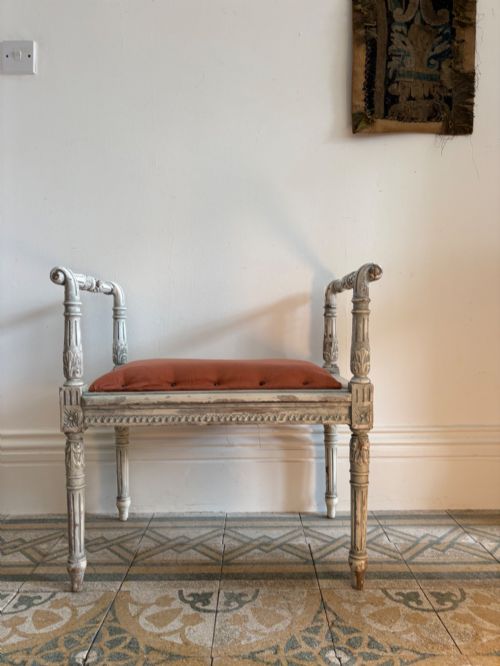
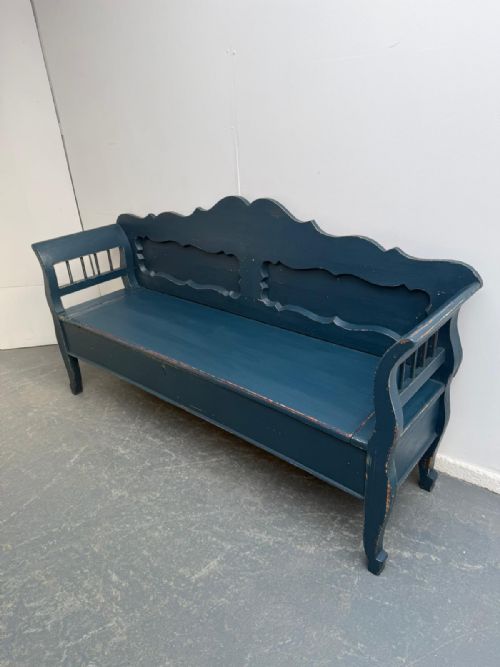
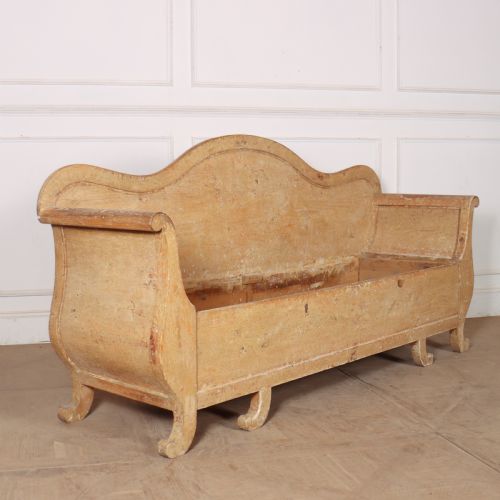
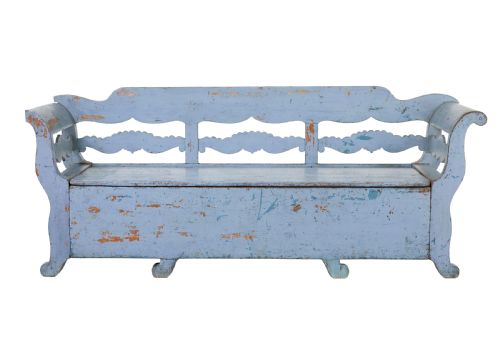
When you search for a scandinavian wooden bench, you encounter seating shaped by northern European domestic traditions across several centuries. These pieces encompass sturdy pine settles, large painted benches, and sophisticated Gustavian forms.
The examples on this page are most frequently nineteenth-century pine benches, often bearing original paint surfaces in muted tones. Alongside these, you find eighteenth-century settees and occasional children's beechwood benches.
Originating largely from Sweden, the selection reflects regional craft styles ranging from Scandinavian country and European folk art to Gustavian neoclassical refinement. These items served practical daily roles in historic households before becoming prized decorative seating.
How they were made
Construction relies primarily on solid pine and beechwood, worked by carpenters using traditional joining methods appropriate for heavy domestic utility. Timber was selected for structural endurance, particularly in large settle benches and dining preparation forms.
Surfaces were frequently finished with paint, often applied in layers that acquire a distinct patination over decades of use. Upholstered elements incorporate traditional textiles such as linen, hessian, silk, and fabric to pad seats and stools.
The documented periods span from the eighteenth century through the 1900s, covering both rustic folk traditions and Gustavian neoclassical design.
What varies in quality
The distinction in quality rests upon the preservation of original painted surfaces and the integrity of the structural timber. Pieces retaining their early or original paint schemes carry greater authenticity than those stripped or repainted later.
Proportion and decorative restraint also set examples apart, particularly in Gustavian pieces where carved neoclassical details display greater sculptural confidence. The subtlety of the joinery and the survival of secondary woods contribute to the standing of each piece.
John Tesch
The Scandinavian Wooden Bench Glossary
- Gustavian Neoclassical
- A Swedish design movement drawing on French Louis XVI styles but incorporating simpler, lighter geometric forms and pale painted finishes. This aesthetic defines much of the seating associated with northern European interiors.
- Settle
- A wooden bench featuring high backs and solid sides designed to block cold drafts in historic rooms. These often incorporate built-in storage beneath the seat for domestic items.
- Pine
- A softwood widely utilised across Scandinavia for utilitarian furniture due to its availability and workability. It forms the primary structural material for the regional benches found here.
- Patination
- The surface alteration acquired by wood and paint through age, handling, and environmental exposure. Collectors value this visual depth as a record of the object's history.
- Folk Art
- Utilitarian objects created within regional traditions rather than high academic workshops. These pieces express local decorative customs through naive carving and distinctive paint applications.
Scandinavian Wooden Bench: Frequently Asked Questions
How do I date an old pine bench?
Dating relies on construction methods, tool marks, and the characteristics of the timber and paint layers. Earlier eighteenth-century pieces often show hand-forged fixings and simpler joinery.
Later nineteenth-century examples may display machine-sawn elements alongside traditional construction. Comparing the surface wear to the recorded period helps confirm the age of the piece.
Are these benches comfortable for daily seating?
Many historical benches were built for utility rather than lounging, resulting in upright wooden backs and firm seats. Some examples feature upholstered cushions in silk, linen, or fabric to soften the seating experience.
Adding loose squabs or cushions is a common way to adapt them for modern living without altering the underlying structure.
What is a settle bench?
A settle is a high-backed wooden seat designed with solid sides and arms to shield occupants from draughts in older homes. Many versions include a hinged lid beneath the seat to provide concealed storage space.
They functioned as practical multi-purpose furniture near hearths and in entrance halls.
How do I care for a painted wooden surface?
Preserving historic paint requires keeping the furniture away from direct sunlight and drastic humidity changes. Dusting gently with a dry microfibre cloth prevents particle build-up without risking moisture damage.
Avoid chemical polishes or abrasive cleaners that can strip or soften the aged paint layers.
What is Gustavian style?
Gustavian design is the Swedish interpretation of neoclassical taste, patronized by King Gustav III during the late eighteenth century. It translates heavy European court styles into brighter, lighter furniture with pale painted finishes.
Common motifs include fluted legs, subtle rosettes, and restrained geometric carvings.