


19th Century Storage Bench
A 19th century storage bench combines practical seating with concealed box storage, offering a robust and useful item for hallways and living spaces.
19th Century Storage Bench
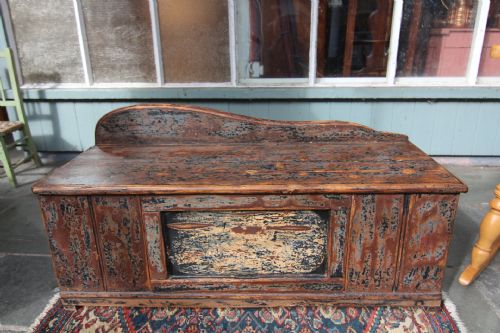
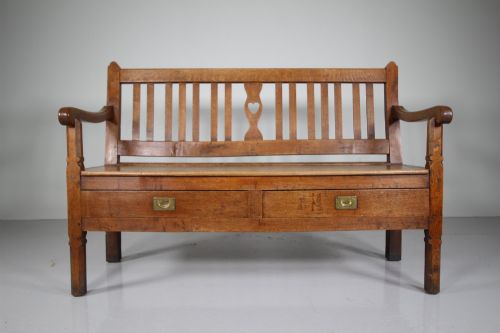
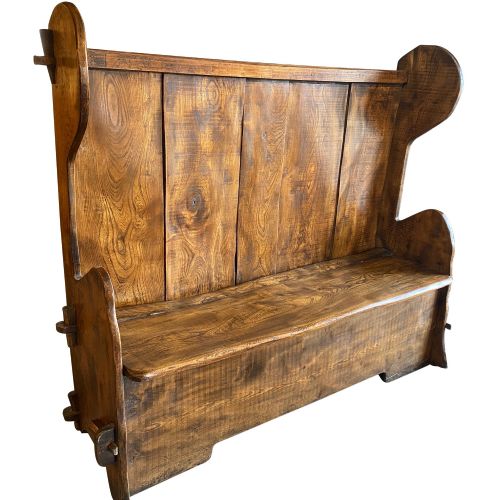
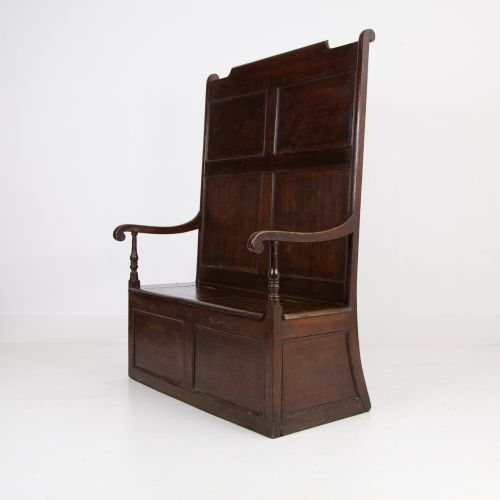
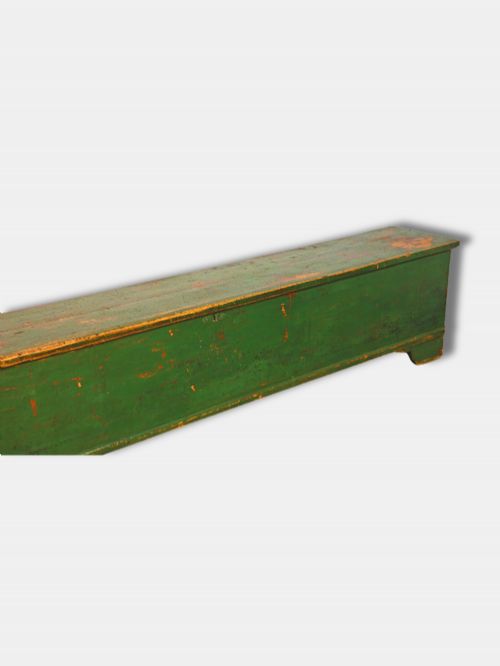
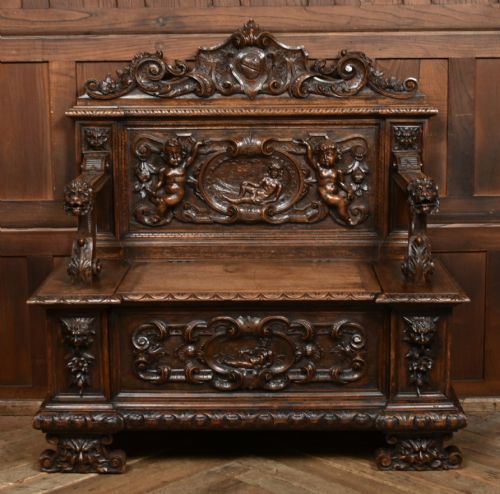
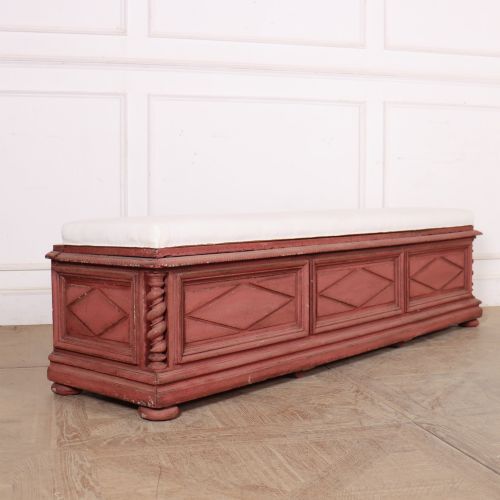
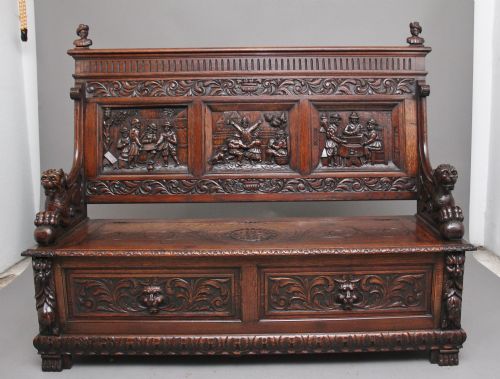
A 19th century storage bench takes several forms across different regions, spanning oak hall benches, pine settles, and painted Swedish seating. These pieces serve to provide both a seat and an internal compartment for household items.
The version most commonly met on this page is the wooden box settle or hall bench, typically constructed from pine or oak. They appear in styles ranging from rustic farmhouse and folk art to Victorian Gothic Revival and Scandinavian country.
How they were made
Carpenters utilised solid timbers such as pine, oak, walnut, and birch, building the bodies with heavy board construction and lift-up seats or lids. Joinery relied on traditional methods suited to domestic and country furniture.
Surfaces were frequently finished with paint, polychrome decoration, or left as plain wood that gained patination over time. Brass hardware occasionally appears on hinges and fittings.
Listings feature pine, oak, walnut, and birch materials, alongside painted wood finishes and fabric upholstery.
What varies in quality
The standard of carving and the selection of timber dictate the distinction between simpler country pieces and grander town examples. Heavily carved oak settles and finely painted Swedish benches represent the more ambitious end of production.
Proportion and scale also separate items, with large country house ottomans and extensive hall benches showing greater presence than smaller vernacular boxes.
The 19th Century Storage Bench Glossary
- Settle
- A wooden bench with a high back, solid arms, and a box seat compartment beneath. This form protects occupants from draughts while providing storage.
- Cassapanca
- An Italian wooden bench with a chest base and a backrest, often elaborately carved. These pieces combine seating with large-scale trunk storage.
- Box seat
- A hinged seat lid that opens to reveal an interior compartment for blankets or household goods. It forms the defining storage feature of these benches.
- Gothic Revival
- A design style drawing on medieval architectural motifs, seen in pointed arches and heavy tracery carved into oak and walnut. This aesthetic reflects 19th-century romanticism.
- Gustavian
- A Swedish neoclassical style characterised by lighter painted finishes and restrained classical ornamentation. Pieces from this tradition often feature soft colour palettes.
19th Century Storage Bench: Frequently Asked Questions
Where did regional styles originate?
Regional variations developed according to local timber availability and domestic traditions across Europe. Swedish workshops produced painted pine benches, while British makers favoured solid oak and elm.
Italian examples often utilised walnut and featured carved architectural details.
How do I distinguish oak settles from pine pieces?
Oak settles typically exhibit a denser grain structure, heavier weight, and often bear carved decoration characteristic of Victorian or earlier revival styles. They suit formal or vernacular interior schemes.
Ppine versions, particularly those from Scandinavia, usually display painted finishes or a softer timber grain suitable for country aesthetics.
How do I care for a painted Swedish bench?
Painted surfaces require gentle cleaning with a dry or barely damp cloth to preserve the original pigment and historic finish. Avoid harsh chemical cleaners and direct sunlight.
Keeping the piece in a stable environment prevents the timber beneath from expanding and cracking the paint.