

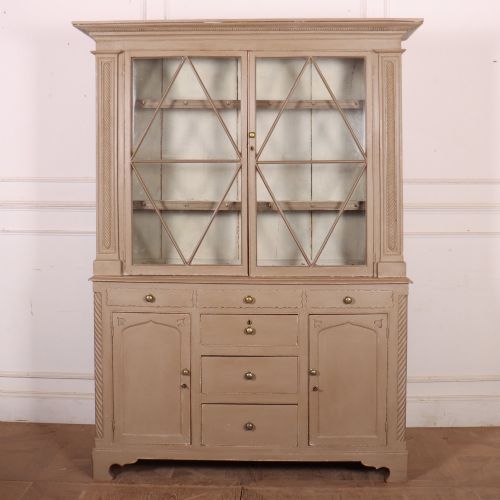

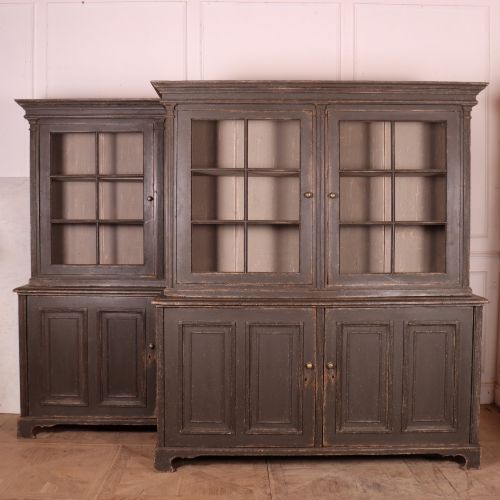
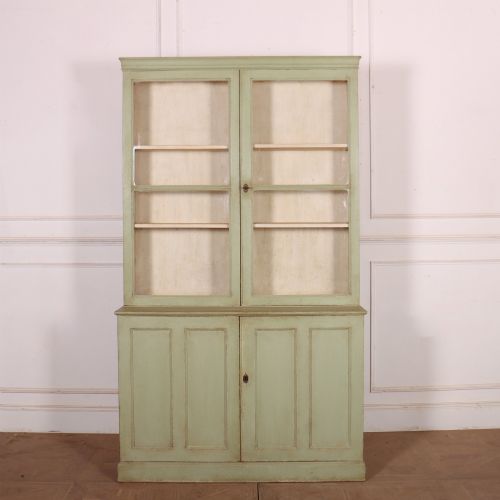
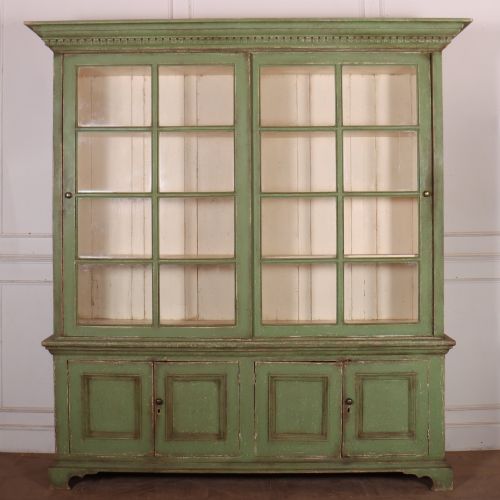
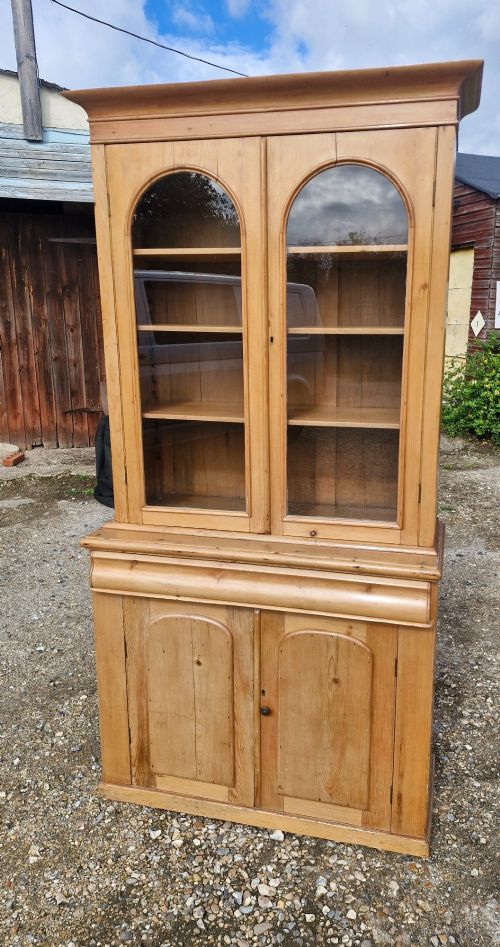
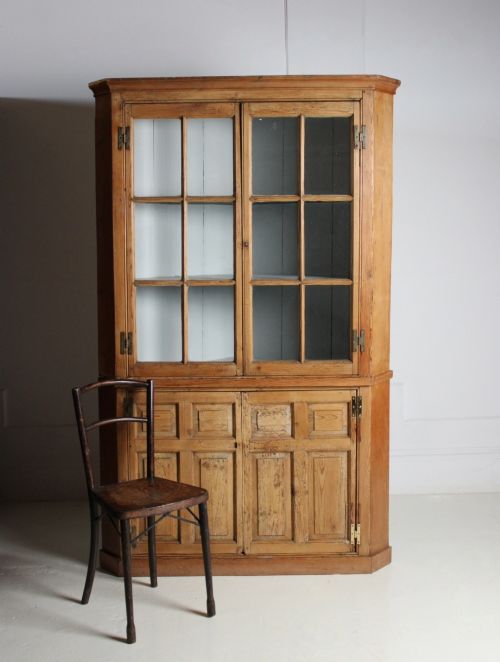
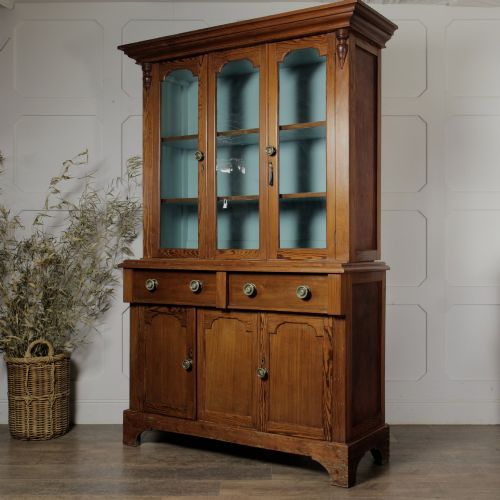
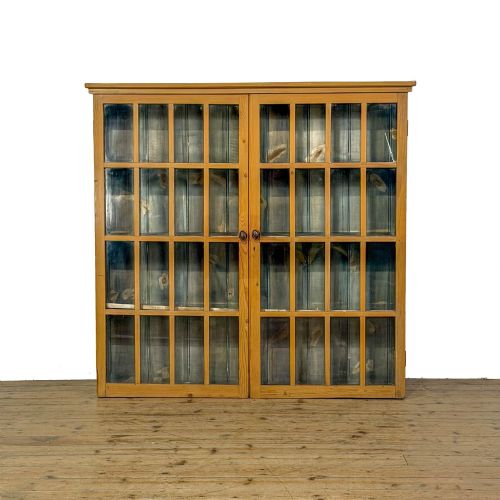
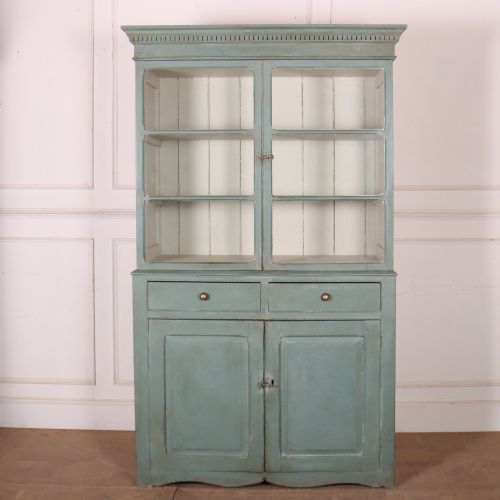
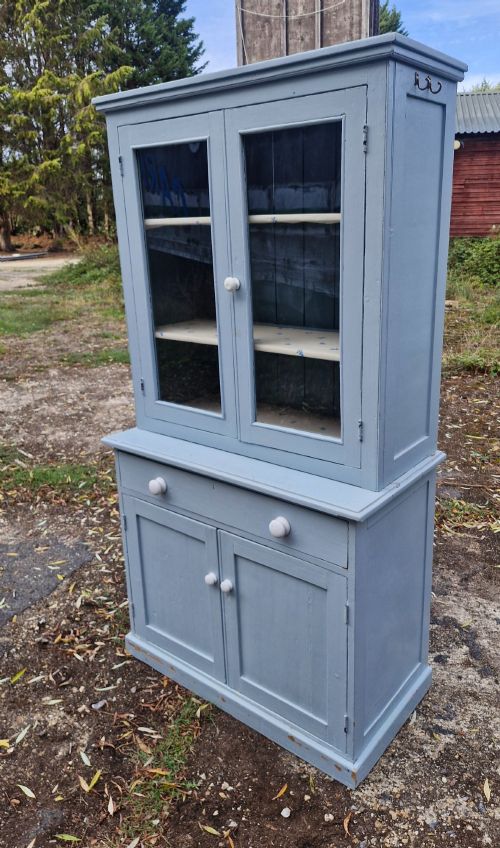
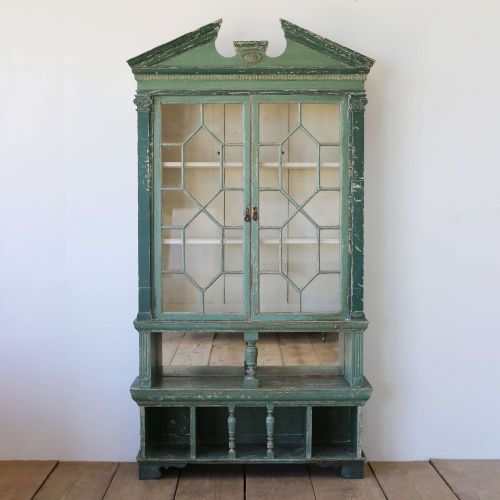
Pine Glazed Display Cabinet
A pine glazed display cabinet brings warmth and practical storage to a room, holding books and collections behind clear glass doors.

Pine Glazed Display Cabinet
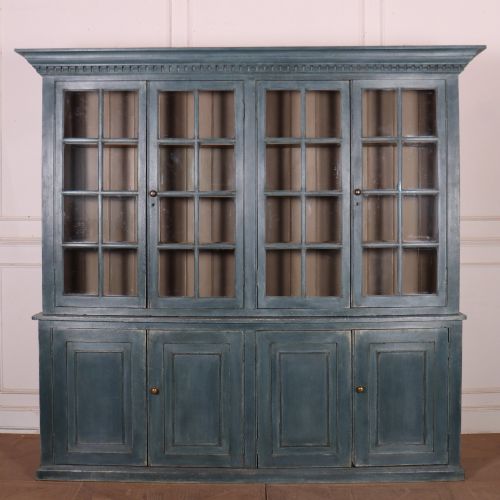
A pine glazed display cabinet is a storage piece designed to keep books, ceramics, or curiosities visible yet protected behind glass doors. These items appear across several historic periods, stretching from the Georgian era through the Victorian period and into the early twentieth century.
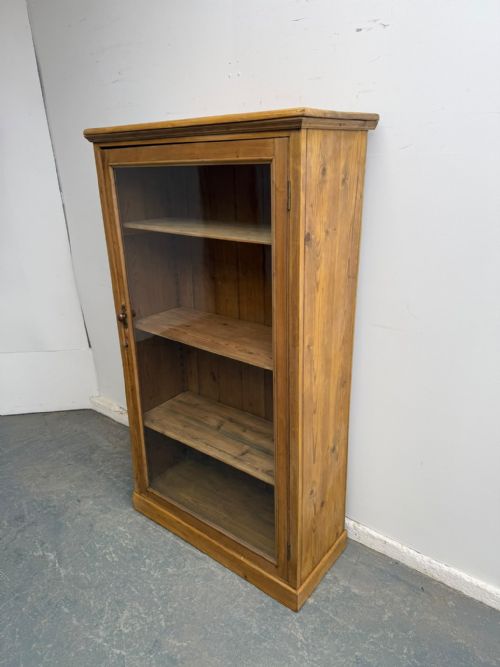
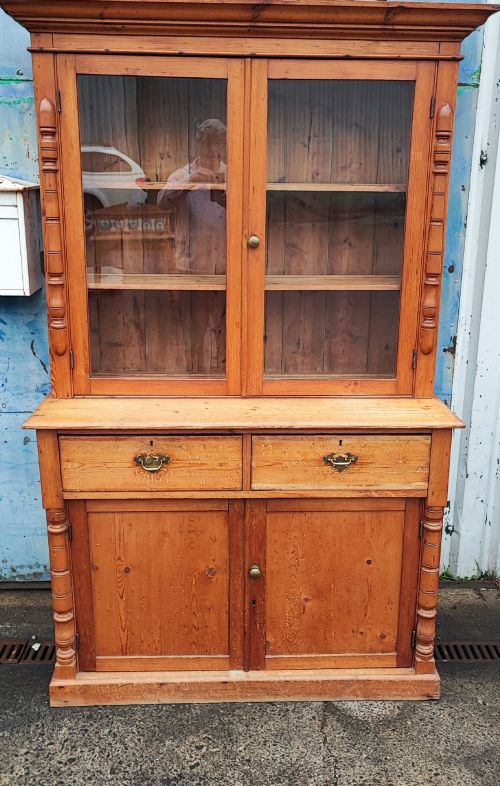
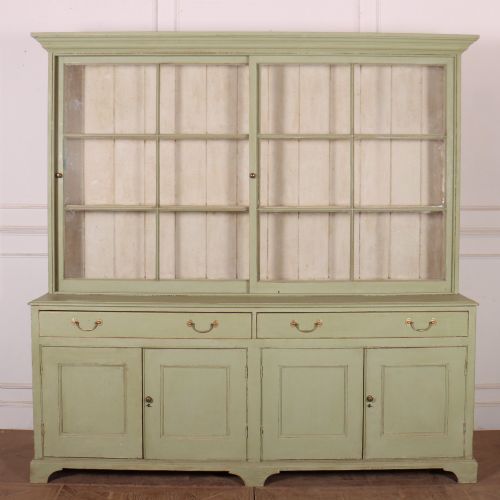
The format ranges from tall, upright bookcases and narrow wall-hanging units to substantial two-piece kitchen dressers and multi-door storage cupboards. Many examples reach us in bare timber ready for wax or paint finishes, while others retain original painted surfaces from Britain and continental Europe.
Regional variations include robust West Country pieces alongside simpler vernacular cupboards from the countryside. Buyers frequently encounter two-door configurations and tall single-piece cabinets fitted with adjustable shelving.
Materials and construction
Construction relies heavily on solid pine timbers, selected for structural framing, side panels, and internal shelving. Workshops joined these elements using traditional carpentry methods suited to softwood construction.
Glazing relies on framed glass panels secured with wooden glazing bars, letting light into the interior space. Iron and brass hardware, such as hinges, handles, and occasional drawer pulls, complete the assembly.
Pine Glazed Display Cabinet Retail Price Guide 2026
Typical asking prices for pine glazed display cabinet among the pieces listed under this phrase on Sellingantiques today, from the lower quarter to the upper quarter. They describe what is for sale here now, not the wider market.
Listings span four distinct eras: the 18th Century, Victorian period, 19th Century, and 1910.
Assessing quality and proportion
Quality rests in the balance of proportions and the joinery used to frame the glass doors and cornices. Finer examples display thoughtful timber selection with minimal knots where the maker intended a cleaner painted or polished finish.
The integrity of the original glass panes, functional hinges, and well-fitted doors distinguish better surviving pieces. Alterations to shelving or stripped surfaces alter the character of older pieces, whereas untouched original paint finishes add historical weight.
The Pine Glazed Display Cabinet Glossary
- Glazing bar
- A slender wooden strip that holds individual panes of glass within a sash door. These bars divide the window into smaller segments.
- Knockdown
- A piece of furniture designed to be dismantled easily for transport. This construction method uses wedges, pegs, or bolts rather than permanent glue.
- Cornice
- The decorative moulded projection that crowns the top of a cabinet. It finishes the upper edge and adds architectural weight.
- Vernacular
- Everyday furniture made by local cabinetmakers using regional styles and local woods rather than following metropolitan fashions. These pieces reflect practical domestic needs.
Pine Glazed Display Cabinet: Frequently Asked Questions
How do I care for antique pine?
Keep pine furniture away from direct heat sources and sudden temperature shifts to prevent the soft timber from splitting.
Feed waxed surfaces occasionally with a traditional beeswax polish to maintain the sheen and nourish the wood.
Can I paint a stripped pine cabinet?
Unfinished pine readily accepts traditional milk paint, chalk paint, or eggshell finishes once lightly sanded.
Applying a primer first helps seal any knots in the softwood and prevents resin from bleeding through the topcoat.
Are the shelves adjustable?
Many Victorian and later cabinets feature adjustable wooden shelving supported by peg systems or fixed shelf racks inside.
Older Georgian and country pieces more commonly have fixed shelves built directly into the structural carcass.
How do I date an old pine cabinet?
Examine the construction methods, such as hand-cut dovetails in drawers, backboards made of tongue-and-groove planks, and handmade iron nails.
Design details and secondary woods also offer clues to whether a piece originates from the eighteenth, nineteenth, or early twentieth century.