
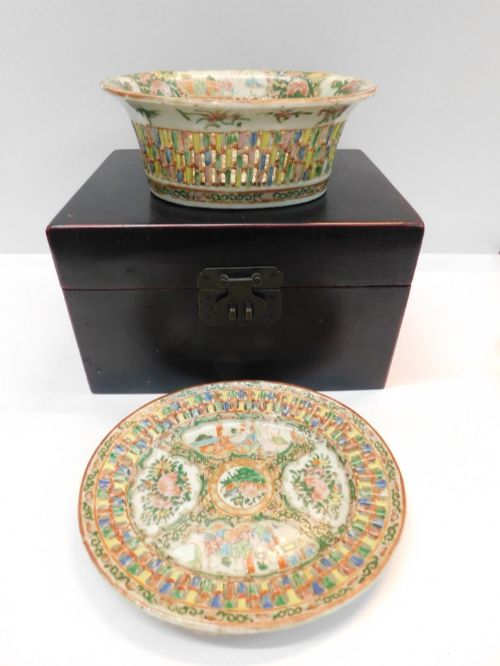
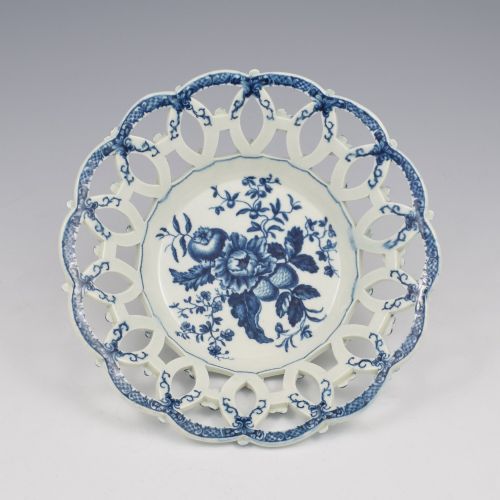


Pierced Porcelain Fruit Basket
A pierced porcelain fruit basket brings openwork elegance to a table, combining intricate lattice patterns with durable ceramic form.
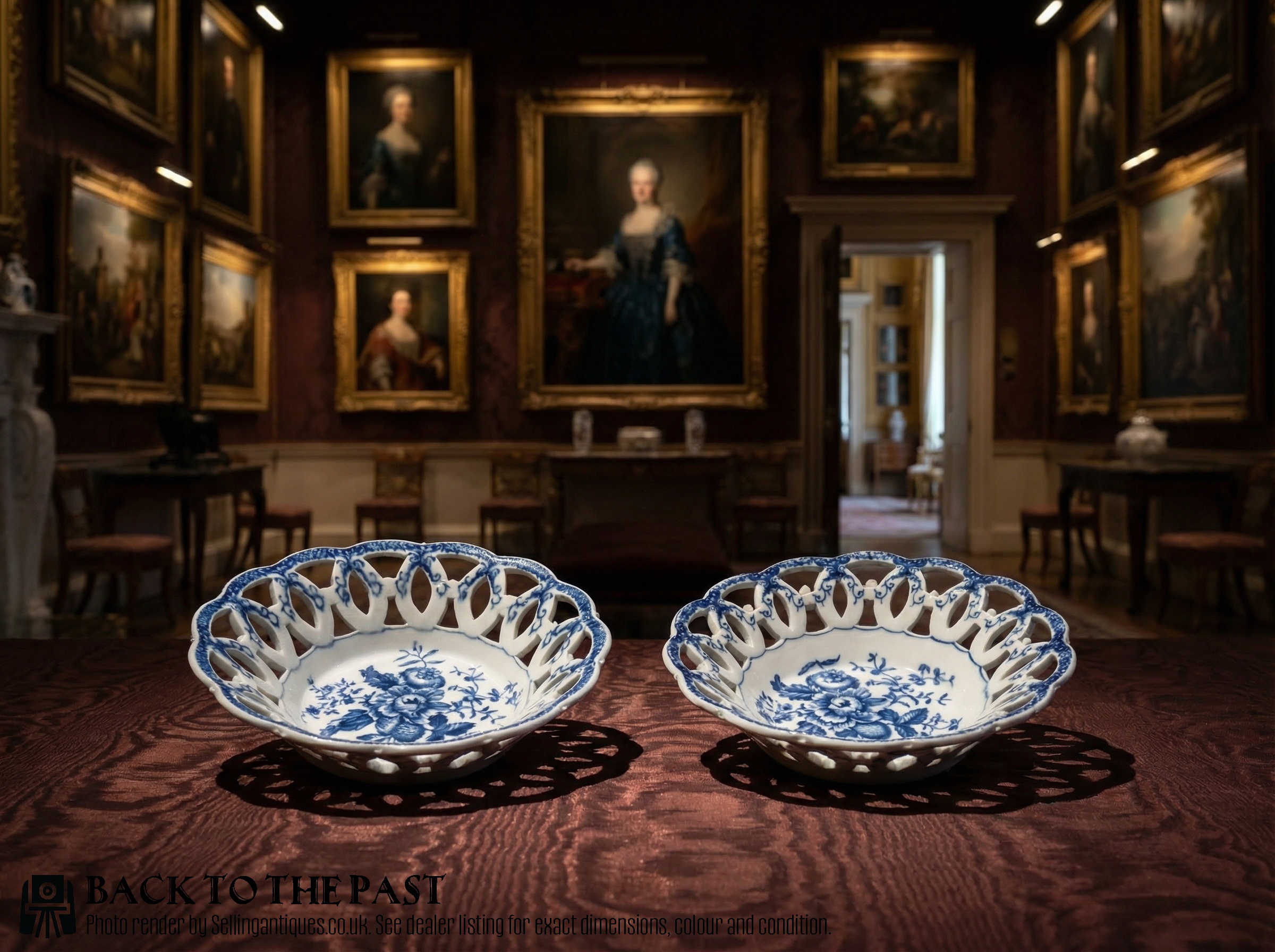
Pierced Porcelain Fruit Basket
A pierced porcelain fruit basket is a decorative vessel designed for serving fruit, appearing in forms such as chestnut baskets, centrepieces, and oval dishes. These items date from the eighteenth century up to the late nineteenth century, reflecting diverse periods including the Georgian and Qing eras.
The objects seen here range from English Worcester pieces and Chinese export works to French and German porcelain. Chestnut baskets with stands and covers represent a common form, alongside centrepiece bowls and sets of multiple baskets.
Makers and origins span from Dr Wall Worcester and Mason's Ironstone to French Sevres and Chinese famille rose productions. Buyers encounter both blue and white transfer printed pearlware and polychrome enamel decorated examples.
How they were made
Makers utilised soft-paste porcelain and standard porcelain, shaping them into decorative baskets through intricate piercing and reticulated openwork techniques. Applied details and hand-cut lattice walls required careful drying and firing before glazing.
Decoration relied on cobalt blue glaze, polychrome enamels, and gilding with gold leaf. Transfer printing, seen in patterns like the Willow pattern, sat alongside hand-painted motifs such as the Pine Cone pattern and famille rose designs.
Listings feature eighteenth-century and nineteenth-century pieces, incorporating soft-paste porcelain, cobalt blue glaze, and gold leaf gilding.
What varies in quality
Quality rests upon the crispness of the reticulation and the precision of the piercing through the porcelain body. Finer pieces maintain structural integrity and sharp geometric or floral lattice work without distortion from the kiln firing.
The standard of painting and gilding distinguishes finer examples, from delicate hand-poured cobalt blue glazes to detailed enamel work. Matching stands and surviving covers add significantly to the integrity of a basket.
Mason s Ironstone China·Sevres
The Pierced Porcelain Fruit Basket Glossary
- Reticulated
- Pierced or net-like openwork decoration formed in the wet clay before firing. This technique creates the lattice walls characteristic of chestnut baskets.
- Soft-paste porcelain
- An artificial porcelain composition fired at lower temperatures than hard paste. It was widely used by eighteenth-century English factories like Worcester.
- Famille rose
- A palette of opaque enamel colours dominated by pink, introduced in Chinese ceramics during the Qing dynasty. It appears on export baskets from the eighteenth and nineteenth centuries.
- Comport
- A large elevated dish or bowl used as a centrepiece on a dining table. They frequently accompany baskets in nineteenth-century table settings.
Pierced Porcelain Fruit Basket: Frequently Asked Questions
How were chestnut baskets used?
These baskets held roasted chestnuts or fresh fruit at the end of formal dining courses. The pierced walls provided ventilation for the contents.
Servants placed them on stands or trays to protect dining tables from moisture and fruit juices.
What is a First Period Worcester basket?
This refers to porcelain made at the Worcester factory during the proprietorship of Dr John Wall in the eighteenth century. These pieces often feature pine cone patterns and delicate openwork.
Collectors prize them for their translucent soft-paste bodies and fine blue and white decoration.
How do I distinguish Chinese export from English porcelain?
Chinese export pieces, such as eighteenth-century famille rose items, display specific potting characteristics and palette colours unique to Qing dynasty kilns. English equivalents from Worcester or Staffordshire use different clay bodies and local decorative motifs.
Examining the foot ring and glaze pooling often reveals the origin of manufacture.
Can I use antique porcelain baskets for serving food?
While structurally sound, antique soft-paste porcelain and delicate gilding require gentle handling rather than daily culinary use. Hand washing in warm water without harsh detergents preserves the historic glaze and enamel.
Most owners prefer to display them as decorative centrepieces or store dry items within them.