


Blue and White Reticulated Basket
A blue and white reticulated basket brings pierced ceramic craft and cobalt pattern into domestic rooms.
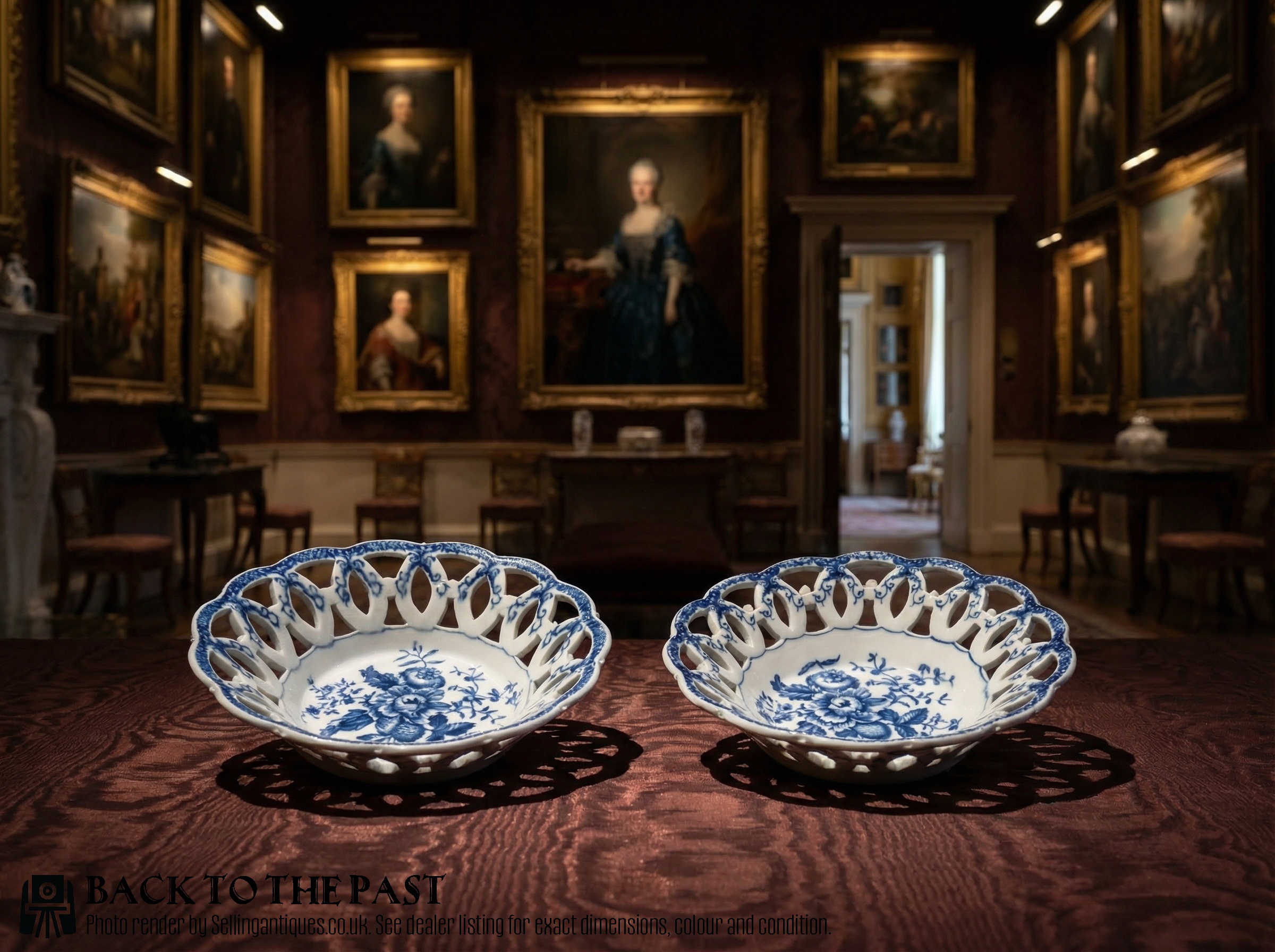
Blue and White Reticulated Basket
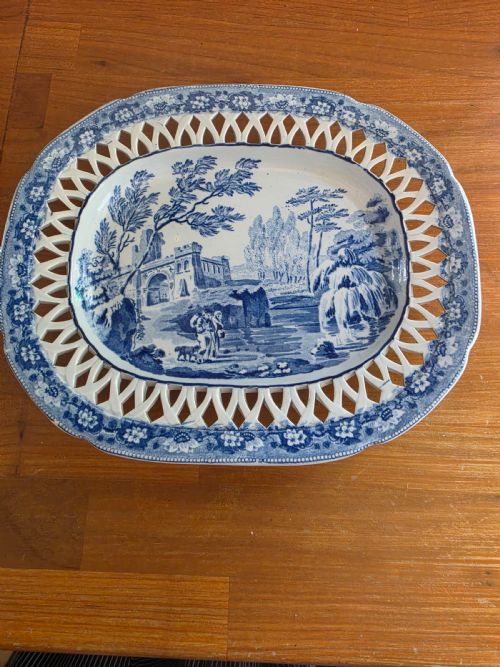
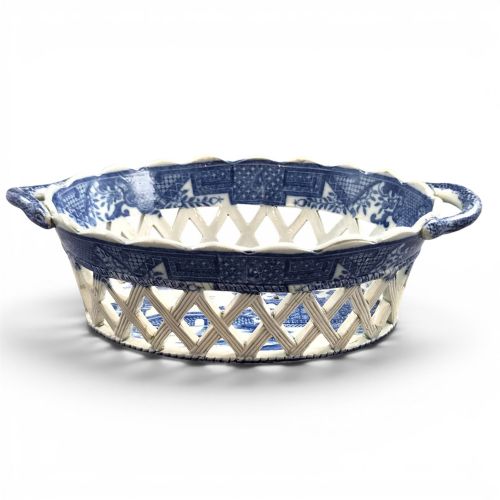
A blue and white reticulated basket combines openwork pierced sides with cobalt decoration across 18th century and 19th century periods. These vessels frequently take the form of chestnut baskets or fruit baskets designed for formal dining tables.
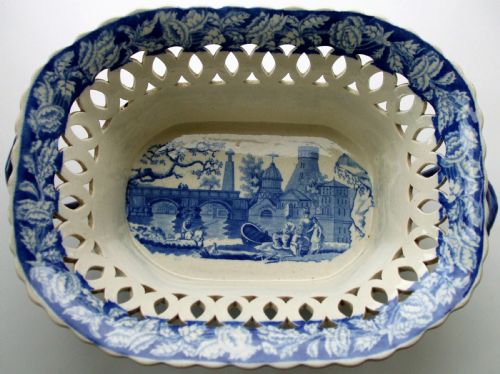
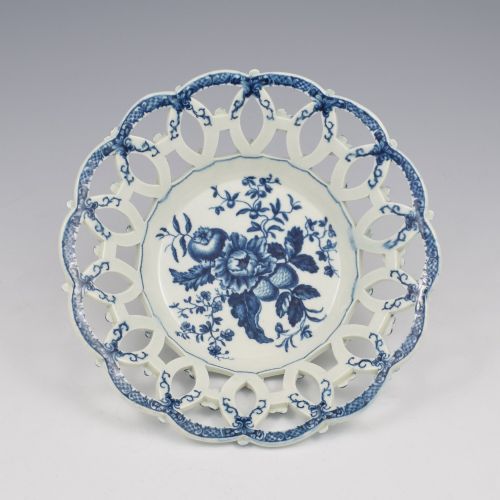
Makers produced these decorative ceramics in earthenware, pearlware, and soft-paste porcelain during Georgian and Regency eras. Buyers encounter Chinese export pieces alongside English pottery works featuring transfer printed scenes.
The objects appear singly or as matched pairs, often accompanied by matching stands or fitted lids. Pierced lattice walls and woven strapwork define the open structure of the form.
Materials and construction
Potters shaped soft-paste porcelain, pearlware, and earthenware bodies before cutting intricate openwork patterns through the wet clay walls. Artisans applied cobalt blue glaze by hand painting or through transfer printing techniques to render pictorial motifs.
High temperature kilns fused the cobalt blue glaze into the ceramic surface, creating deep indigo designs across Chinese export and English wares. Craftsmen constructed multi-part items like chestnut baskets with separate stands and applied twig handles.
Chestnut baskets kept nuts warm while letting guests admire the pierced basketry.
Judging the work
The crispness of the pierced reticulation dictates visual success, where cleanly cut lattice openings separate superior examples from heavy-potted pieces. Precision in transfer printing alignment or painted cobalt depth shows the skill of the original workshop.
Completeness alters the standing of a piece, particularly when lids and matching stands remain paired with the central basket. Surface preservation across the glaze and structural stability of applied handles distinguish better survivors.
Davenport·Spode·J. and R. Clews·Worcester
The Blue and White Reticulated Basket Glossary
- Reticulated
- Openwork pierced in a net or lattice pattern across the ceramic wall. This technique lightens the vessel whilst demanding high skill from the potter.
- Chestnut basket
- A deep serving vessel with pierced sides designed for holding chestnuts at the table. These often include an undertand or platter.
- Pearlware
- A refined earthenware with a thin glaze that pools blue in recesses. It was developed by English potters to mimic Chinese porcelain.
- Transfer printing
- A mechanical method of applying engraved designs to ceramics using tissue paper. It allowed complex pictorial scenes like river views to be reproduced rapidly.
- Soft-paste porcelain
- A glassy ceramic composition fired at lower temperatures than hard paste. 18th century factories utilised this formula before true porcelain production became widespread.
Blue and White Reticulated Basket: Frequently Asked Questions
What were blue and white reticulated baskets used for?
These vessels served dining tables as receptacles for fruit, sweetmeats, or roasted chestnuts during dessert courses. The pierced sides allowed air circulation around contents.
They functioned as decorative centrepieces when paired with matching ceramic stands or rectangular platters.
How do I date an 18th century basket?
Examination of the ceramic body reveals the period, with softer earthenware and early porcelain pointing to Georgian manufacture. Look for hand painted cobalt details before transfer printing became standard.
Underglaze blue marks and characteristic potting weight help distinguish earlier Worcester pieces from later 19th century items.
Are these baskets fragile to display?
The openwork lattice walls require careful handling during cleaning and repositioning. Solid placement on stable flat surfaces protects the pierced ceramic structure.
Pairs and handled chestnut baskets need adequate clearance to prevent accidental impact against the protruding twig handles.
What is the difference between pearlware and porcelain?
Pearlware uses an earthenware clay body covered in a slightly bluish tinted glaze designed to appear whiter than creamware. Porcelain relies on finer glassy ingredients that produce a more resonant and translucent material.
Both carried cobalt blue decoration, but porcelain pieces often display finer painted detail from factory workshops.