


Porcelain Chestnut Basket
A porcelain chestnut basket is a pierced ceramic server designed for the table, offering a glimpse into eighteenth and nineteenth-century dining grandeur.
Porcelain Chestnut Basket
A porcelain chestnut basket is a vessel designed specifically for serving chestnuts at the dining table, often accompanied by a matching stand or lid. These pieces appear frequently from the eighteenth and nineteenth centuries, spanning Georgian and Regency periods alongside Chinese Export wares.
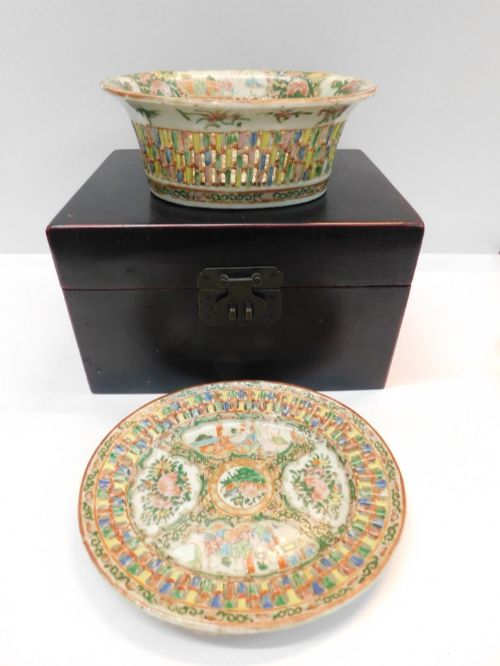
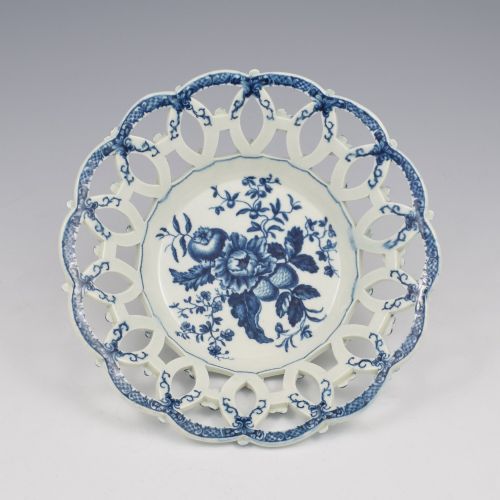
Most examples survive as decorative bowls and baskets, sometimes forming pairs or matched sets with stands. The physical evidence shows shapes ranging from circular pine cone patterns to elaborate famille rose decorations.
How they were made
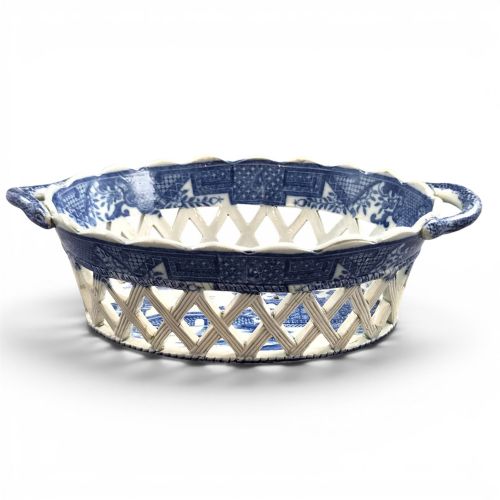
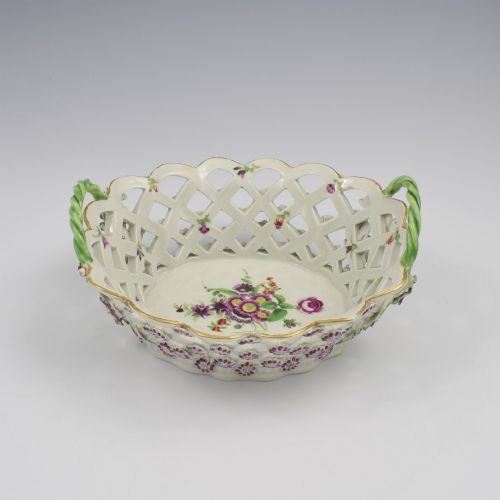
Makers utilised soft-paste porcelain, hard-paste porcelain, and earthenware bodies, shaping them into intricate pierced lattice structures by hand-cutting the clay. Glaze was applied before firing, creating a smooth protective coating over transfer-printed or hand-painted polychrome designs.
Decoration relied on skilled brushwork or early transfer printing techniques, incorporating gold leaf and gilding to highlight handles and rims. Enamel colours were applied over the glaze and fired again in a muffle kiln to secure the pigments.
Listings demonstrate a strong presence of eighteenth-century Worcester porcelain, alongside nineteenth-century Chinese Export and English ironstone wares.
What varies in quality
Quality rests primarily in the crispness of the pierced reticulation and the precision of the hand-painted or transfer-printed decoration. Finer examples display meticulous attention to detail in the woven lattice walls and well-defined floral or pine cone motifs.
The presence of original matching stands, covers, and intact gilding elevates the standard of a piece significantly. Early eighteenth-century factory output, particularly from designated periods of production, demonstrates superior paste consistency and artistic execution.
Dr Wall Worcester·Spode·Derby Porcelain·James Giles·Lowestoft Porcelain
The Porcelain Chestnut Basket Glossary
- Reticulated
- Pierced or honeycombed in a net-like openwork pattern. This technique allowed air circulation around chestnuts and demonstrated the modeller's skill.
- Soft-paste porcelain
- An artificial ceramic body composed of clay, glass frit, and white sand. It produced a warm, creamy translucent glaze characteristic of early English factories.
- Pine cone pattern
- A popular botanical motif painted or printed onto eighteenth-century ceramics. It appears frequently on Worcester porcelain baskets.
- Pearlware
- A refined earthenware developed in England featuring a bluish glaze that pooled in recesses to resemble Chinese porcelain. It provided an affordable canvas for blue and white transfer printing.
Porcelain Chestnut Basket: Frequently Asked Questions
What were porcelain chestnut baskets used for?
These vessels served roasted chestnuts at formal dining tables during the Georgian and Regency periods. The pierced sides allowed heat to escape while presenting the food attractively.
Over time, wealthy households used them as ornamental table centerpieces rather than functional serving ware. Today, they remain decorative objects for display on sideboards and mantels.
How do I care for a porcelain chestnut basket?
Dust the piece gently with a soft, dry brush to prevent dirt from accumulating in the pierced lattice work. Avoid harsh cleaning agents or immersion in water, particularly on pieces with gold leaf.
Keep the basket away from direct sunlight and areas subject to sudden temperature changes. Display it on a stable, flat surface where the delicate openwork cannot be snagged.
How do I distinguish eighteenth and nineteenth century baskets?
Eighteenth-century examples often feature soft-paste porcelain bodies with hand-painted polychrome botanical motifs or underglaze blue designs. They reflect the early output of factories like Worcester and Derby.
Nineteenth-century pieces frequently utilise ironstone, pearlware, or hard-paste porcelain, sometimes incorporating transfer printing. Chinese export wares from this era display distinct famille rose enamel palettes.
Why do some baskets have matching stands?
Matching stands caught any small debris or retained residual warmth from the roasted chestnuts resting above. They completed the formal serving set for upper-class dining.
Finding a basket with its original stand and cover intact is uncommon. These combined sets represent the higher end of historical ceramic production.