


Georgian Chinese Export Porcelain
Georgian chinese export porcelain combines British domestic commissioning with Oriental potting traditions to create table wares of remarkable decorative ambition.
Georgian Chinese Export Porcelain
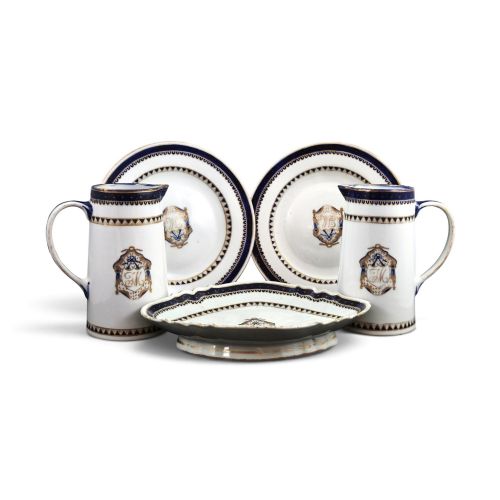
Georgian chinese export porcelain comprises tea wares, dinner services and decorative vessels ordered by British patrons and manufactured in kilns in the Far East. These objects bridge two distinct aesthetic worlds, pairing traditional Chinese ceramic shapes and painting with European coats of arms, monograms and service designs.
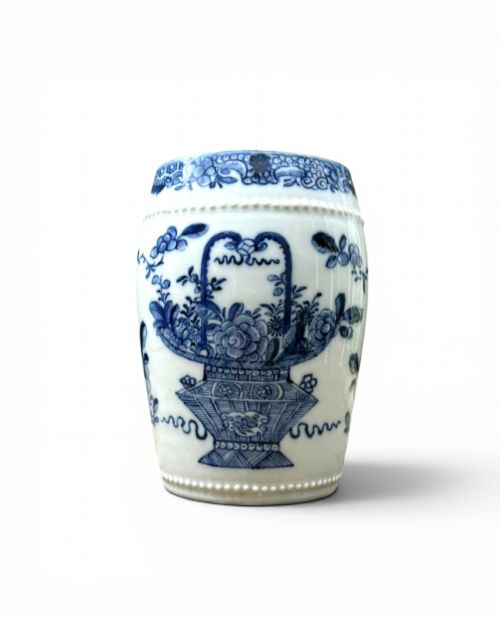
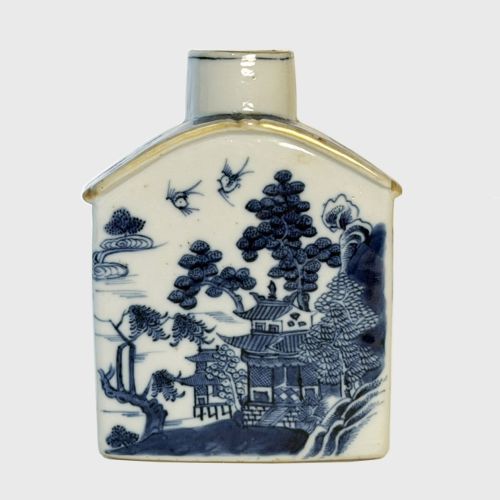
The selections encountered here span the eighteenth century and the year 1800, encompassing the Qianlong period and broader Georgian eras. Collectors frequently find decorative plates, armorial soup plates, barrel shaped mugs, tea caddies, chestnut baskets and large serving platters.
Alongside purely export wares, the category accommodates pieces showing European augmentation, such as London decoration executed on Chinese porcelain bodies. The resulting variety reflects the intricate trade routes and social aspirations of Georgian dining culture.
How they were made
Potters shaped these objects from fine porcelain and soft-paste porcelain, employing wheel-throwing and intricate moulding techniques for items like pierced chestnut baskets and octagonal soup plates. Cobalt underglaze and cobalt pigment provided deep blue foundation tones beneath translucent glazes.
Painters applied rich overglaze enamel, famille rose palettes and gold leaf across the dried surfaces before subjecting the vessels to high-temperature kiln firings. Certain items received subsequent embellishment in European workshops, uniting Eastern body preparation with Western enamelling styles.
Current listings demonstrate standard export forms including tea caddies, chestnut baskets, barrel-shaped mugs and armorial plates dated across the eighteenth century and the year 1800.
What varies in quality
Quality rests upon the precision of the initial porcelain throwing and the crispness of any pierced or moulded detailing, such as basketwork borders. Finer examples display meticulous control during the potting stage, yielding balanced vessel walls and well-aligned geometric or octagonal forms.
The standard of painting dictates the upper tiers of the range, marked by securely fired overglaze enamels, detailed armorial heraldry and well-preserved gold leaf. Lesser pieces show less refined brushwork or crowded compositions, whereas superior specimens exhibit deliberate pacing and vibrant colour placement.
James Giles
The Georgian Chinese Export Porcelain Glossary
- Armorial porcelain
- Ceramics painted with specific European family coats of arms or crests. These bespoke commissions represent some of the most historically documented export orders.
- Famille rose
- A polychrome enamel palette introduced in the eighteenth century, distinguished by its opaque pink and rose hues. It allowed painters to render naturalistic floral and figural scenes.
- Soft-paste porcelain
- A ceramic composition containing glass frit and white clay, fired at lower temperatures than hard-paste. It produces a warm, slightly creamy body texture.
- Overglaze enamel
- Pigments applied directly over the fired and glazed ceramic surface, requiring a secondary, lower-temperature kiln fix. This technique permits a broader range of bright colours.
- Cobalt underglaze
- Blue pigment painted onto the raw clay body before glazing and firing, producing a permanent decoration beneath the glossy surface. It withstands high temperatures without fading.
Georgian Chinese Export Porcelain: Frequently Asked Questions
What is georgian chinese export porcelain?
These items are porcelain vessels manufactured in China for the British market during the eighteenth and early nineteenth centuries. They combine Oriental ceramic techniques with European decorative preferences, including monograms and heraldic crests.
Buyers encounter a range of functional and ornamental forms, from tea caddies to large platters and armorial plates. Each piece documents the active trade between Britain and the Far East during the Georgian era.
How were armorial services ordered?
British families provided sketches of their coats of arms to trading companies operating in Canton. These designs were then dispatched to kilns where painters copied the heraldry onto porcelain blanks.
The resulting services demonstrated the wealth and social standing of the owners upon their dining tables. Every armorial plate or platter functioned as both tableware and a statement of lineage.
How should I display these porcelains?
These ceramics suit secure plate rails, cabinets or specialised wall hangers designed for heavy plates and platters. Placing them away from direct foot traffic prevents accidental knocks to protruding rims or handles.
Displaying them in stable indoor environments protects the overglaze enamels and gold leaf from excessive light and atmospheric fluctuations. Careful placement allows the detailed brushwork of the period to remain clearly visible.
Can I use these antiques daily?
Gentle hand washing in lukewarm water with mild soap preserves the fragile overglaze enamels and gold leaf decorations. Dishwashers and abrasive cleaning agents cause irreversible damage to eighteenth-century pigments and glazes.
While structurally sound, their age suggests limiting their role to light display or infrequent service. Treating them with care ensures the historical surfaces endure for future collectors.