
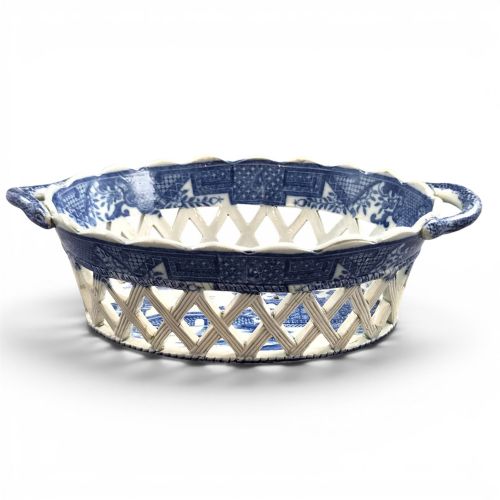
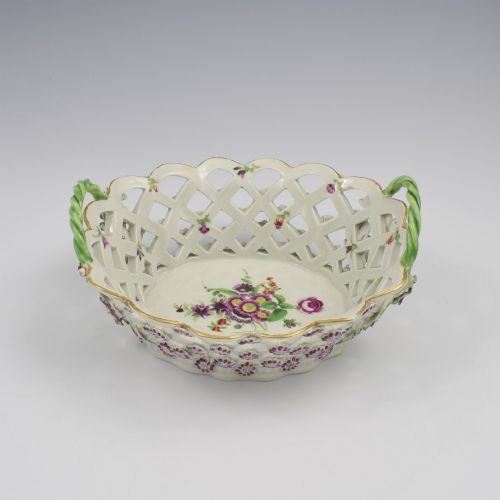
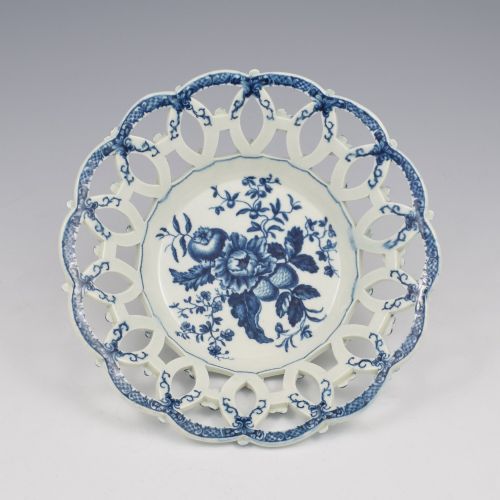


Georgian Porcelain Chestnut Basket
These Georgian porcelain chestnut baskets are pierced serving vessels designed for the dessert table, offering pierced lattice walls and fitted lids.
Georgian Porcelain Chestnut Basket
A georgian porcelain chestnut basket is a pierced decorative bowl created for serving roasted chestnuts or fruit during the Georgian and Regency periods. The listings here present circular forms and lidded vessels spanning the eighteenth and nineteenth centuries.
Makers and potteries represented on this page include Derby, Spode, Worcester, and Mason's, alongside English pearlware and Chinese Export porcelain. These vessels often incorporate stands or covers, displaying patterns such as the Pine Cone design, Willow pattern, and Indian Grasshopper.
The periods governing these objects range across the eighteenth century, the Georgian era, circa eighteen hundred, and the nineteenth century. Most examples show pierced or reticulated walls designed to circulate air around dry provisions.
Materials and construction
Potters constructed these vessels using soft-paste porcelain, earthenware, pearlware, and ironstone china, finished with transparent glaze, enamel colours, and gold leaf. The piercing or reticulation was hand-cut into the damp clay before firing.
Decoration relied on hand-painted polychrome enamels, Chinese famille rose palettes, and blue and white transfer printing in patterns such as the Willow design.
The listings here feature soft-paste porcelain, pearlware, and ironstone, spanning the eighteenth and nineteenth centuries.
Assessing quality
Quality rests upon the crispness of the pierced lattice work and the precision of the hand-painted or transfer-printed decoration. Finer examples retain their matching covers and original stands, showing careful attention to botanical or geometric motifs.
The composition of the body, whether soft-paste porcelain, refined pearlware, or early ironstone, dictates the weight and translucency of the vessel. Superior pieces exhibit clean kiln scars and stable enamel adhesion across the exterior surface.
Derby Porcelain·Spode·Dr Wall Worcester
The Georgian Porcelain Chestnut Basket Glossary
- Soft-paste porcelain
- An artificial ceramic body composed of white clay, glass, and ground minerals, fired at lower temperatures than hard-paste porcelain. It produces a warm, slightly creamy background ideal for eighteenth-century enamels.
- Reticulated
- Pierced or openwork decoration formed by cutting shapes out of the clay wall before firing. This technique created the distinctive lattice patterns on serving baskets.
- Pearlware
- A refined earthenware developed in England featuring a slightly bluish glaze that pooled in recesses. It bridged the gap between creamware and true porcelain.
- Transfer printing
- A method of applying engraved designs to ceramics using paper pulled from a copper plate. It allowed complex patterns like the Willow design to be replicated consistently.
- Famille rose
- A palette of opaque enamel colours dominated by pink or rose shades introduced in Chinese export porcelain. It influenced European factories during the eighteenth century.
Georgian Porcelain Chestnut Basket: Frequently Asked Questions
What were chestnut baskets used for?
These pierced vessels served roasted chestnuts, dry fruits, or sweetmeats at the conclusion of formal meals. The open lattice walls allowed air to circulate around the contents while presenting an ornamental centrepiece on the table.
Guests selected provisions directly from the bowl, often accompanied by a matching undertradish or stand to catch stray crumbs.
How do I date a porcelain basket?
Dating relies on material composition, factory marks, and stylistic indicators such as transfer printing or hand-painted enamel palettes. Eighteenth-century pieces frequently utilise soft-paste porcelain bodies with hand-cut piercing.
Nineteenth-century examples often incorporate refined pearlware, ironstone, or distinctive Regency period motifs that separate them from earlier eighteenth-century productions.
Are covers and stands essential?
Matching covers and stands complete the intended design of the vessel, though many historic pieces survived separated over centuries. Finding a basket with its original lid or undertray remains a desirable attribute for collectors.
Even without covers, the pierced bowls function as decorative table centrepieces or mantel displays.
How do I care for antique porcelain?
These ceramic vessels require gentle handling and hand washing in lukewarm water with mild soap. Avoid abrasive sponges or immersion in ultrasonic cleaners that might damage fragile enamel or gold leaf.
Display them away from direct sunlight and heavy foot traffic to protect the historical glaze and body.