


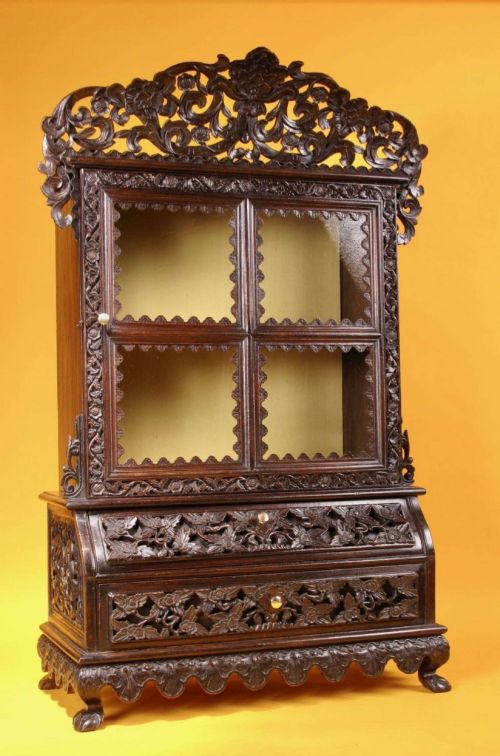

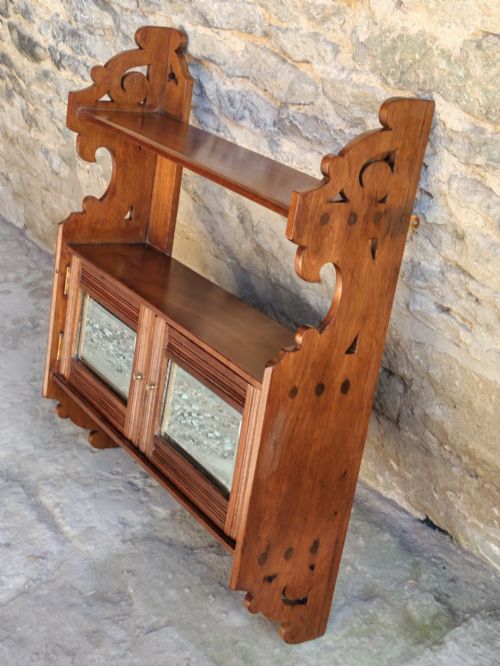


Pierced Carved Wood Cabinet
These pierced carved wood cabinet examples span centuries of intricate woodworking traditions, offering both functional storage and striking decorative presence for your home.
Pierced Carved Wood Cabinet
A pierced carved wood cabinet represents a fascinating intersection of global trade and domestic furnishing, ranging from compact hanging shelves to substantial sideboards. When you search for a pierced carved wood cabinet, you encounter diverse regional interpretations spanning the eighteenth, nineteenth, and early twentieth centuries. The nineteenth-century Anglo-Indian and Burmese examples dominate this selection, frequently showcasing deep floral and scrollwork relief.
Beyond colonial and regional works, the inventory embraces domestic Georgian mahogany bedside tables and French Art Nouveau music cabinets. This variety means you might select an intimate corner cupboard, a teak veranda gin cabinet from Ceylon, or a dramatic padauk sideboard. Each form serves a distinct domestic purpose while sharing a commitment to elaborate wooden decoration.
The materials dictate much of the visual weight, shifting from dense tropical hardwoods like padauk, teak, and rosewood to European walnut and mahogany. Smaller pieces like bedside tables and wall cabinets offer accessible entry points into carved furniture without dominating a room. Larger sideboards and breakfront chiffoniers provide substantial display surfaces alongside enclosed storage.
Assessing quality and execution
The crispness of the chisel work separates ordinary production from exceptional craftsmanship, visible in the undercut details of foliage and figures. Superior pieces maintain symmetry and depth across the pierced panels without ragged edges in the negative spaces.
Timber selection and grain matching further distinguish the tiers of quality, particularly in how exotic woods like padauk and rosewood retain their rich natural hues. The integration of structural joinery with decorative carvings ensures that the cabinet remains stable despite the removal of wood for piercing.
Pierced Carved Wood Cabinet Retail Price Guide 2026
Typical asking prices for pierced carved wood cabinet among the pieces listed under this phrase on Sellingantiques today, from the lower quarter to the upper quarter. They describe what is for sale here now, not the wider market.
Ceylon veranda gin cabinets provided colonial households with secure, well-ventilated refreshment storage complete with intricate carved ventilation grilles.
The Pierced Carved Wood Cabinet Glossary
- Padauk
- A heavy tropical hardwood prized for its reddish-orange hue that deepens to a rich dark brown over time. It provides a stable canvas for intricate deep-relief carving.
- Pierced carving
- A technique where the carver cuts entirely through the timber thickness to create openwork patterns. This method produces a delicate, lace-like visual effect on cabinet doors and panels.
- Chiffonier
- A relatively small sideboard or low cabinet equipped with drawers and shelves. These pieces gained popularity for displaying decorative items while offering modest enclosed storage.
- Breakfront
- A piece of furniture featuring a central section that projects forward from the flanking wings. This architectural arrangement adds depth and shadow to large sideboards and cabinets.
Pierced Carved Wood Cabinet: Frequently Asked Questions
What is an Anglo-Indian cabinet?
These pieces were produced in the Indian subcontinent during the British colonial period, often combining traditional local carving motifs with European furniture forms. Artisans utilised dense native timbers such as padauk and teak.
The resulting cabinets feature dense floral motifs, pierced fretwork panels, and elaborate crests designed to appeal to British officers and export markets.
Where should I place a corner cabinet?
Corner cabinets make efficient use of dead space in dining rooms, living areas, or hallways while introducing architectural interest. Wall-mounted versions suit compact rooms where floor space is limited.
Larger floor-standing corner cupboards provide stable surfaces for displaying ceramics or glassware while anchoring an empty room junction.
How do I clean carved wooden cabinets?
Dust the intricate pierced recesses regularly with a soft-bristled brush to prevent particulate buildup in the carved channels. Avoid heavy liquid polishes that accumulate in the negative spaces.
Apply a microcrystalline wax sparingly every few years to nourish the hardwood and preserve the natural grain without softening the sharp edges of the carving.
How can I tell the period of a carved cabinet?
Examine the secondary woods inside the drawers, the style of the brass hardware, and the underlying joinery methods to establish an approximate date. Eighteenth-century pieces typically show Georgian proportions and simpler mahogany structures.
Nineteenth-century examples tend towards heavier revival styles or dense colonial carving, while later works adopt Art Nouveau asymmetry or simpler softwood construction.