

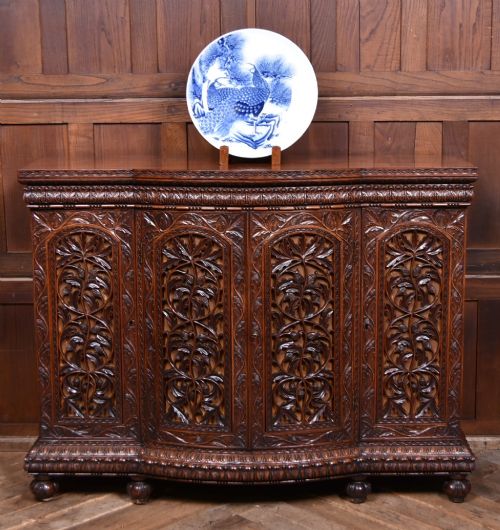



Colonial Carved Sideboard
A colonial carved sideboard brings dense hardwoods and intricate carving straight into a room, offering both storage and strong historical character.
Colonial Carved Sideboard
A colonial carved sideboard is a substantial dining or living room piece that typically combines British furniture forms with local craftsmanship from regions such as India and Burma. When you search for a colonial carved sideboard, you will most frequently encounter nineteenth-century examples produced under Anglo-Indian or Burmese colonial influences.
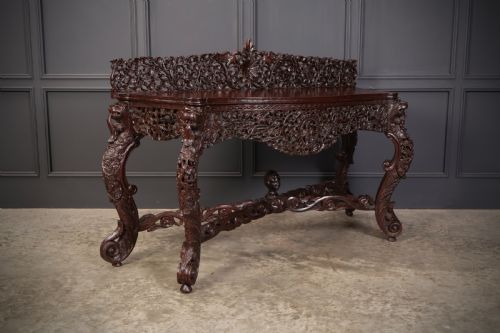
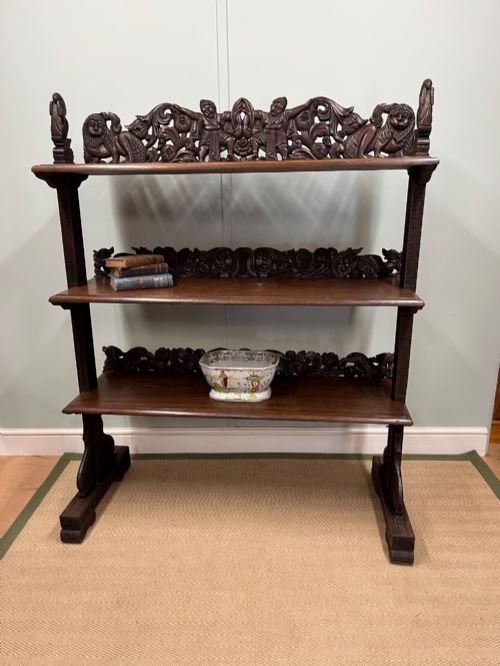
The forms on this page extend beyond standard dining room service furniture to include related storage and display pieces. Sideboards appear alongside three-tier buffets, side cabinets, console tables, and inverted breakfront pedestal cabinets, each serving similar practical and decorative roles.
These items originate primarily from the nineteenth century, including specific dates around eighteen eighty and eighteen sixty, alongside occasional seventeenth-century Spanish oak console tables. The geographical and stylistic origins shape the heavy carving and specific choice of timber visible across the collection.
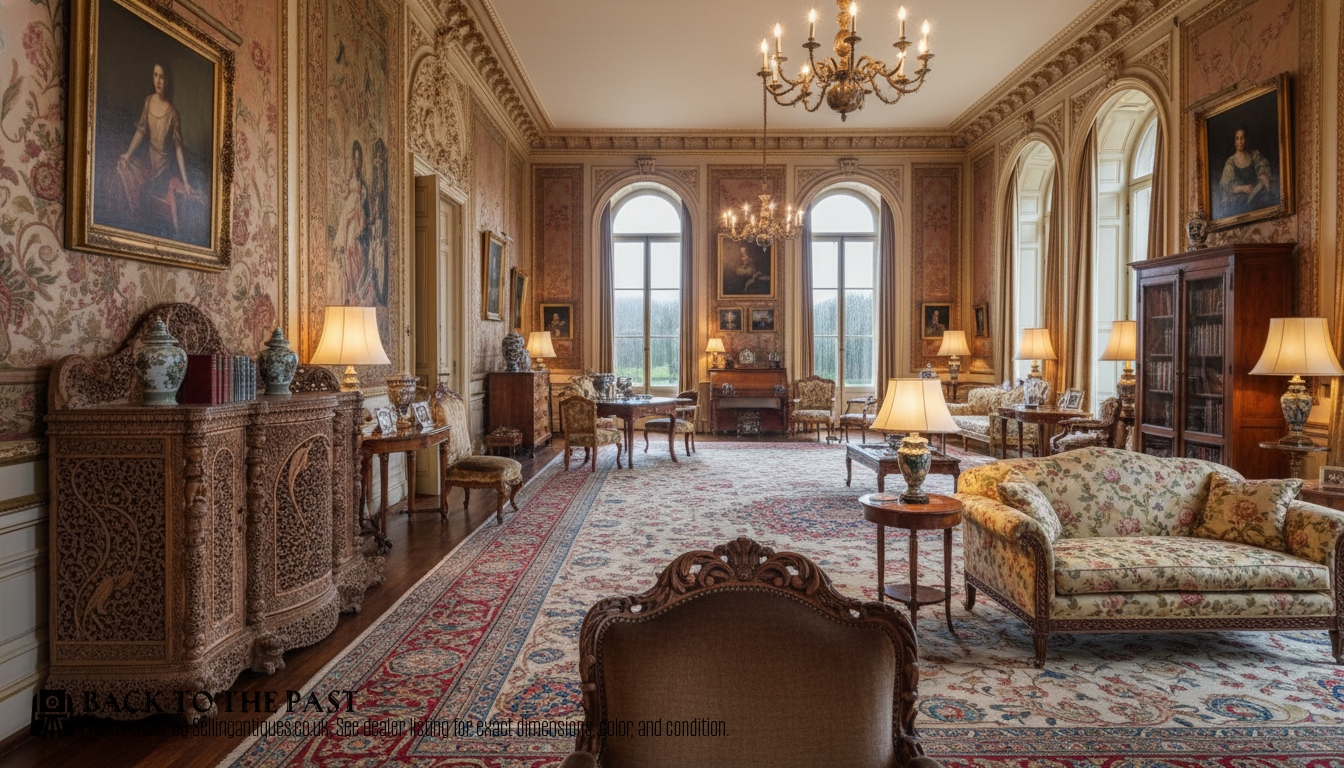
How they were made
Makers utilised dense tropical timbers that could withstand deep relief carving without splitting or losing structural integrity. Padouk wood, teak, rosewood, and solid satinwood form the primary material body of these pieces, occasionally accented by iron fittings.
The defining decorative technique involves intricate hand carving applied directly to the solid hardwood carcass. Workshops in Anglo-Indian and Burmese colonial contexts combined European furniture silhouettes with traditional local carving motifs, producing deeply textured surfaces across panels, doors, and tiers.
Colonial Carved Sideboard Retail Price Guide 2026
Typical asking prices for colonial carved sideboard among the pieces listed under this phrase on Sellingantiques today, from the lower quarter to the upper quarter. They describe what is for sale here now, not the wider market.
Materials span tropical hardwoods such as padouk, teak, rosewood, and satinwood, alongside iron and oak.
What varies in quality
Quality rests in the crispness and depth of the hand carving across the hardwood surfaces. Pieces displaying sharp, well-defined floral or figurative motifs demonstrate superior craftsmanship compared to softer, shallower relief work.
The choice and figuring of the timber also separate examples within the range. Solid padouk, rosewood, and satinwood exhibit varied grain patterns and natural warmth that elevate the overall presence of the cabinet or sideboard.
The Colonial Carved Sideboard Glossary
- Padouk
- A dense, durable tropical hardwood with a reddish-brown hue that darkens with age. It is frequently chosen for heavy nineteenth-century colonial furniture due to its stability and fine grain.
- Anglo-Indian
- A stylistic descriptor for furniture made in India during the British colonial period, blending European forms with traditional Indian woodworking and carving techniques.
- Breakfront
- A cabinet design where the central section projects forward from the flanking outer sections. This architectural arrangement creates visual depth on large sideboards.
- Satinwood
- A lustrous, yellowish hardwood valued for its fine texture and reflective grain. It was often utilised for high-status side cabinets and chiffoniers.
- Console table
- A table designed to stand against a wall, frequently supported by brackets or legs at the front. These pieces appear in Burmese and Spanish styles within the inventory.
Colonial Carved Sideboard: Frequently Asked Questions
How do I identify Anglo-Indian furniture?
Anglo-Indian furniture is identified by its fusion of British furniture shapes, such as pedestal sideboards and cabinets, with traditional Indian carving motifs. The use of regional timbers like padouk and teak further supports this attribution.
Makers during the nineteenth century produced these pieces to serve colonial households and export markets.
What woods were used for these sideboards?
The listings show furniture constructed from dense tropical and European hardwoods. Padouk wood, teak, rosewood, and solid satinwood appear most frequently, along with occasional Spanish oak.
These timbers provided the heavy structural support needed for deep relief carving and daily utility.
How do I style a carved sideboard?
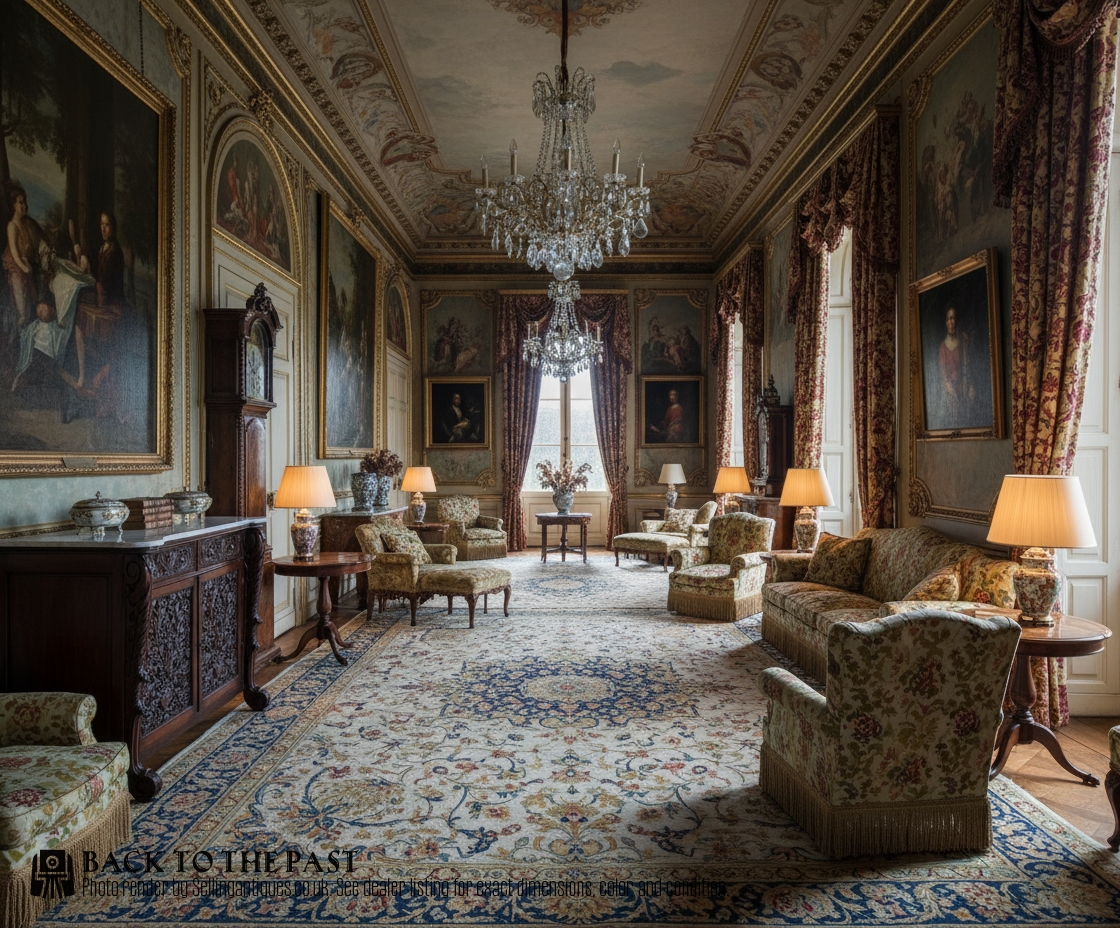
A carved sideboard works well in dining rooms, hallways, or living spaces where its substantial form and detailed woodwork can be appreciated. Pair it with simpler surrounding decor to let the dense relief carving stand out.
Use the surface for lamps, ceramics, or serving trays while utilising the internal cabinet space for storage.