
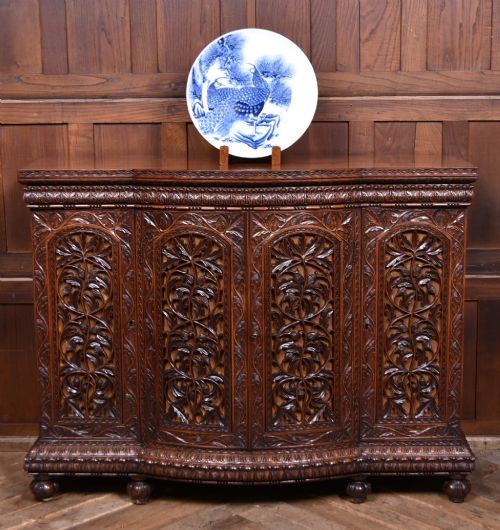



Colonial Carved Credenza
A colonial carved credenza brings rich timber and deep relief work into a room, offering both practical surface space and striking character.
Colonial Carved Credenza
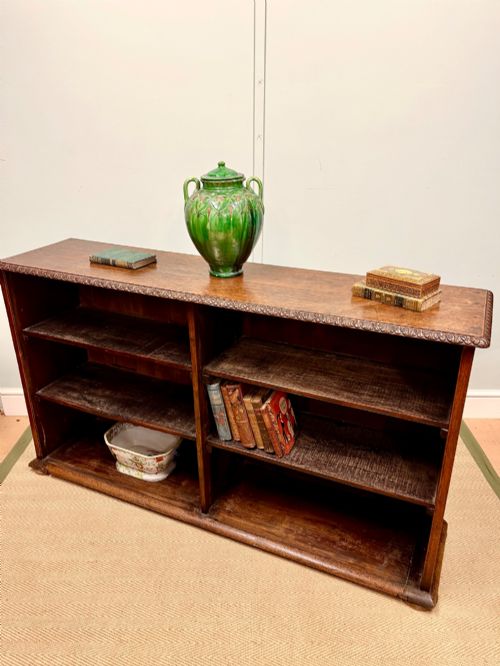
A colonial carved credenza encompasses substantial sideboards, side cabinets, bookcases, and console tables designed with heavy relief work. These pieces span the nineteenth century, seventeen-eighty, seventeen-sixty, the Regency period, and the seventeenth century.
The objects present diverse stylistic roots, appearing as Anglo-Indian, Anglo-Indian colonial, Spanish Baroque, and Anglo-Burmese forms. Buyers frequently encounter sideboards and cabinets constructed from padouk wood, teak, rosewood, hardwood, oak, and iron.
Originating from cross-cultural design exchanges, these credenzas and related sideboards serve as functional storage pieces while displaying intricate floral, foliate, and geometric carving across doors, panels, and friezes.
How they were made
Cabinetmakers utilised dense tropical timbers such as padouk wood, teak, rosewood, and solid satinwood alongside European oak for structural elements and iron for hardware. These woods provided the necessary weight and stability for deep, three-dimensional chiselling.
Craftsmen executed intricate relief carving by hand directly into the dense timber boards, creating layered surface textures across doors and pediments. Joinery methods combined traditional cabinet construction with large solid panels suited to humid climates.
Listings span the seventeenth through the nineteenth centuries, featuring padouk wood, teak, rosewood, oak, and iron across sideboards, cabinets, and console tables.
What varies in quality
The depth, precision, and sharpness of the hand-carving define the upper tier of these pieces, distinguishing crisp architectural detailing from softer execution. Mastery in relief work creates distinct shadows and clean edges across foliage and figurative motifs.
The selection and figure of the timber also separate ordinary examples from exceptional ones, particularly in the grain pattern of padouk, rosewood, or solid satinwood. Uniformity in colour and the integrity of large, unwarped solid timber panels indicate superior material selection.
The Colonial Carved Credenza Glossary
- Padouk
- A heavy, durable tropical hardwood with a reddish-brown tone that deepens with age. It provides a stable canvas for intricate carving.
- Anglo-Indian
- A design style produced in India during the British colonial period, combining European furniture forms with traditional Indian carving techniques.
- Console table
- A table designed to stand against a wall, frequently supported by brackets or legs and topped with marble or wood.
- Inverted breakfront
- A furniture facade where the central section recedes rather than projects, creating varied planes across the front of a sideboard.
- Chiffonier
- A compact sideboard or cabinet featuring a set of drawers and shelves, developed during the nineteenth century for smaller living spaces.
Colonial Carved Credenza: Frequently Asked Questions
What rooms suit a colonial carved credenza?
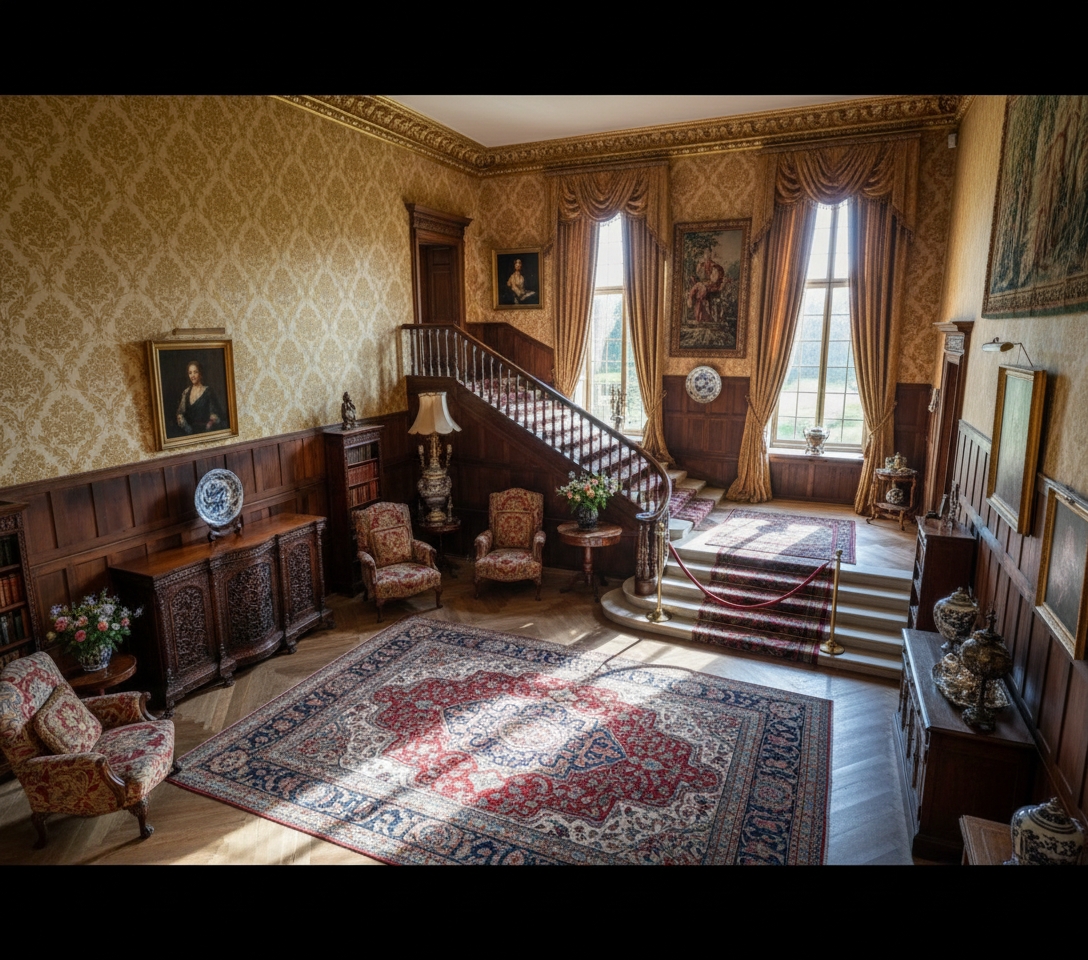
These substantial storage pieces fit well in dining rooms, large hallways, or living spaces where their deep wood tones and heavy carving establish a focal point.
They offer practical surface space and enclosed storage while bringing rich texture and historical depth to an interior.
Are these pieces made from solid wood?
Many examples from this group utilise solid tropical timbers such as padouk, teak, rosewood, and satinwood for their primary construction and decorative panels.
The use of heavy hardwoods provided the structural strength needed to support deep, hand-chiselled relief work.
How do I care for padouk furniture?
Padouk timber benefits from stable indoor humidity levels and protection from direct sunlight, which helps preserve the rich reddish-brown tone of the wood.
Regular dusting with a soft, dry cloth is generally sufficient to maintain the finished surface and intricate carved details.