



Dark Hardwood Sideboard
A dark hardwood sideboard brings heavy timber and deep carving into a room, offering practical storage with strong period character.
Dark Hardwood Sideboard
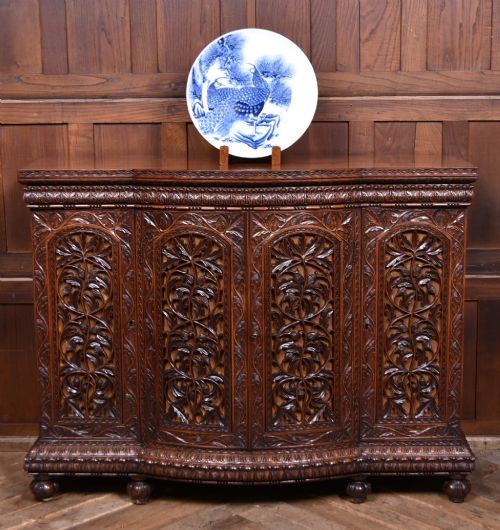
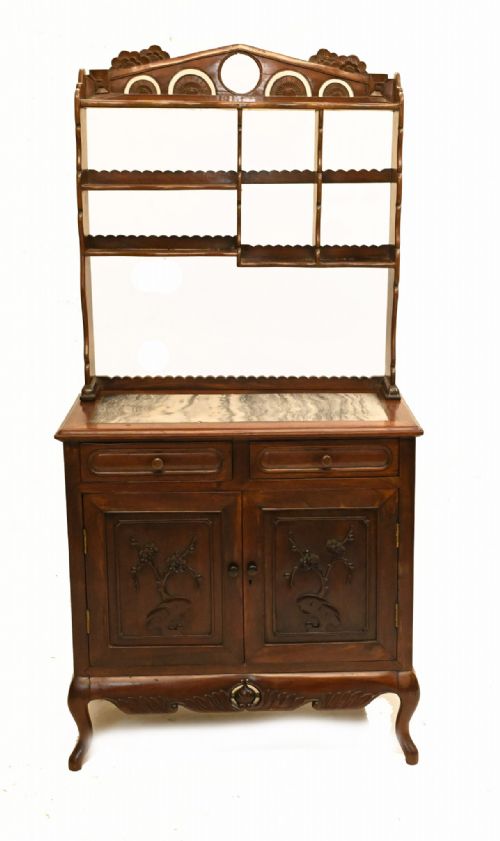
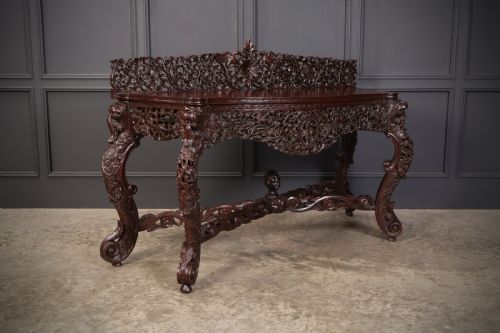
A dark hardwood sideboard combines heavy storage cabinetry with dense, resilient timber surfaces drawn from global trade and colonial exchange during the nineteenth century. These pieces encompass forms ranging from low console tables to tall dresser bookcases and carved cabinets.
You are most likely to meet 19th-century examples created within Anglo-Indian, Anglo-Burmese, and Chinese Qing traditions. Padouk, teak, rosewood, and lacquered hardwood define the material palette across these regional workshops.
Makers shaped these dark hardwood sideboards with deep relief carving, architectural mouldings, and substantial brass hardware. The resulting furniture anchors a dining room or hallway with substantial weight and dark, figured grain.
How they were made
Carpenters utilised dense tropical timbers such as padouk, teak, and rosewood, which allowed for crisp, deep chisel work without splintering. These heavy woods were joined using traditional framing techniques suited to humid climates.
Carvers worked directly into the solid timber to create intricate foliage, figures, and panel designs. Certain Chinese examples also received black lacquer surfaces over the hardwood base, while specific tables incorporated fitted marble inserts.
The listings span the nineteenth century, featuring Victorian, 1850, 1880, and 1900 periods alongside Anglo-Indian, Anglo-Burmese, and Qing dynasty styles.
What varies in quality
The depth, sharpness, and continuity of the hand carving separate simpler utility cupboards from ambitious colonial and Qing dynasty commissions. Crisp undercut foliage and well-defined figures demonstrate skilled workshop execution.
The choice and matching of the timber grain determine the visual coherence of the front elevation. Dense padouk and figured rosewood with stable joints and original brass fittings represent the finer end of the surviving range.
The Dark Hardwood Sideboard Glossary
- Padouk
- A heavy, durable tropical hardwood with a dark red-brown colour that deepens with age. It was favoured by colonial makers for its stability and resistance to woodworm.
- Anglo-Indian
- A style of furniture produced in India during the British period, combining European cabinet forms with traditional local carving. These pieces often feature dense botanical motifs.
- Qing Dynasty
- The final imperial dynasty of China, spanning the seventeenth to early twentieth centuries. Furniture from this period utilises traditional joinery and carved hardwood panels.
- Console Table
- A wall-mounted or freestanding table designed to sit flat against a surface. In these listings, they appear carved from solid padouk wood.
- Dresser Bookcase
- A tall combination piece uniting a lower cabinet with upper shelving or enclosed cupboards. They provide substantial vertical storage in heavy hardwood.
Dark Hardwood Sideboard: Frequently Asked Questions
How do I care for a padouk sideboard?
Feed the dense hardwood occasionally with a suitable wax to maintain the moisture of the timber and protect the dark surface. Avoid placing the cabinet near direct heat sources that might cause the heavy wood to split.
Dust the deep carvings regularly with a soft brush to prevent dirt accumulation in the recesses. Gentle handling preserves the original patination built up over the nineteenth century.
Where should I place a heavy hardwood cabinet?
Position the piece against a structurally sound wall where its weight will not cause floorboards to sag. Ensure the floor is level so that heavy doors and drawers align properly within their frames.
Keep the cabinet out of direct sunlight to prevent uneven fading of the dark padouk or rosewood grain. Adequate clearance around the piece also allows its substantial proportions to anchor the room.
How do I tell Chinese and colonial sideboards apart?
Chinese pieces often display traditional frame-and-panel construction and restrained architectural mouldings or dark lacquer finishes. Anglo-Indian and Anglo-Burmese pieces tend to feature dense, all-over relief carving of foliage and figures.
Examining the structural joinery and the specific style of the carved motifs reveals the regional workshop traditions. Both traditions utilise heavy tropical hardwoods but apply distinct decorative vocabularies.
What is the difference between a console and a sideboard?
A console table is typically an open, shallow table designed to stand against a wall without enclosed lower storage. Sideboards incorporate cupboards, drawers, or cabinets intended for dining room utility.
Both forms utilise heavy hardwoods in these listings, but serve different functional roles within a room layout. Sideboards offer substantial enclosed space, whereas consoles provide a display surface.