



Hand Carved Wooden Sideboard
These hand carved wooden sideboard examples combine robust storage with deep relief work across diverse global traditions.
Hand Carved Wooden Sideboard
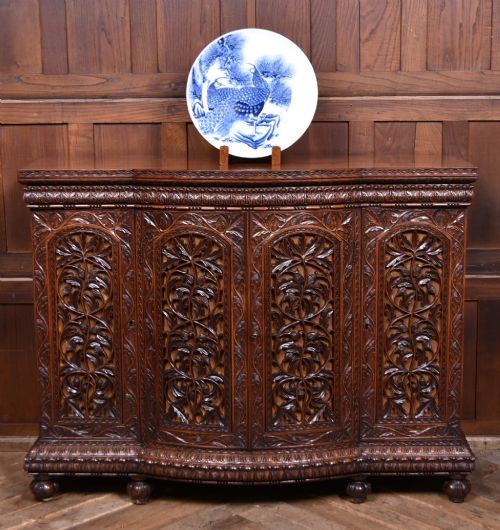
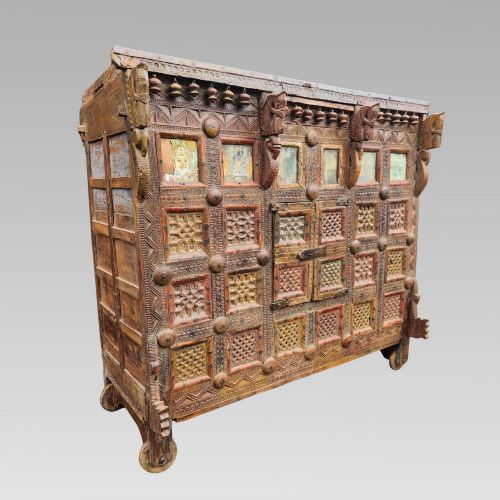
A hand carved wooden sideboard serves as a substantial storage vessel and a decorative focal point in a dining room or hall. When you search for a hand carved wooden sideboard, you encounter forms ranging from nineteenth-century Anglo-Indian cabinets to traditional Indian dowry chests and Victorian revivals.
The pieces listed on this page encompass various regional expressions, including Anglo-Burmese padauk furniture and lacquered Chinese storage units. Each variant offers distinct proportions, ranging from tall cupboards to long serving tables and cabinets on stands.
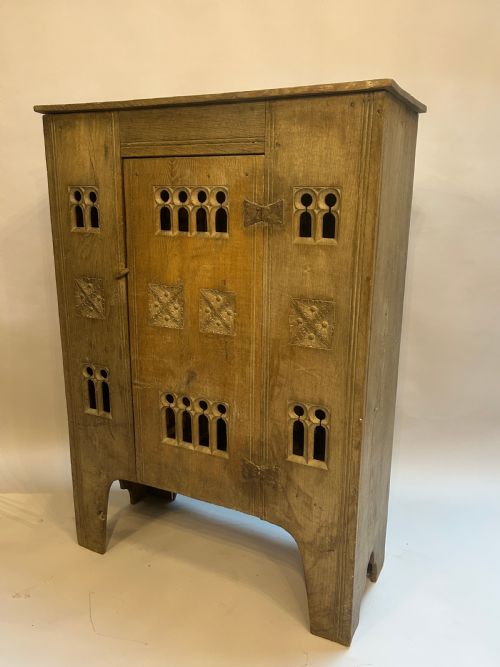
Victorian examples bring European revival styles to heavy timber carcasses, while colonial pieces integrate dense tropical hardwoods with intricate floral and geometric motifs. Buyers select these items to anchor a room with rich texture and historical presence.
Materials and construction
These items rely on dense timbers such as padouk wood, teak, rosewood, walnut, and oak to support deep chisel work without splitting. Artisans shaped these heavy materials using traditional hand joinery and panel construction.
Surface ornamentation involves intricate hand carving, piercing, and inlay work executed directly into the solid wood or applied panels. Lacquering and hand-painting appear on specific regional cabinets, adding colour and smooth finishes to the timber ground.
Listings feature pieces from the nineteenth century, including Victorian Gothic and Chippendale revivals, alongside 1930s painted cabinets.
Assessing quality and craftsmanship
Quality rests in the crispness and depth of the carving, where master carvers achieved sharp undercut details and balanced symmetry across dense tropical timbers. Weaker examples show shallow, blunt relief work with hurried finishing on secondary surfaces.
The integrity of the original construction, including heavy joinery and well-fitted doors or drawers, separates superior cabinets from lesser altered pieces. Timber selection also dictates grade, with finely figured padouk or teak commanding greater visual weight than plain utility woods.
The Hand Carved Wooden Sideboard Glossary
- Padouk wood
- A heavy, durable tropical timber with a reddish hue used frequently in Anglo-Indian and Burmese furniture. It takes fine detail during carving and darkens with age.
- Damchiya
- A traditional Indian dowry chest or low storage cabinet featuring hinged lids or doors and extensive surface carving. These pieces often incorporate mirrored glass elements.
- Anglo-Indian
- A designation for furniture made in India during the British colonial period, combining European furniture forms with local carving traditions. The style utilises native hardwoods like padouk and teak.
- Cabinet on stand
- A freestanding storage cabinet elevated on an independent support frame with legs. This form lifts heavy timber storage off the floor to create lighter room proportions.
Hand Carved Wooden Sideboard: Frequently Asked Questions
How do I clean a carved wooden cabinet?
Dust the deep relief carvings regularly with a soft, dry brush to prevent dirt accumulation in the recesses. Avoid wet cloths and harsh polishes, applying a sparing coat of quality beeswax only when the timber appears dry.
Keep the cabinet away from direct heat sources and strong sunlight to prevent the dense hardwoods from splitting or the lacquer finishes from fading over time.
What is an Anglo-Indian sideboard?
An Anglo-Indian sideboard is a storage piece constructed in India during the nineteenth century for British expatriates and local elites. These items merge Western dining room forms with traditional Indian floral and figurative wood carving.
They are typically fashioned from dense tropical timbers such as padouk or teak, offering deep storage capacity behind heavily decorated doors and panels.
Where should I place a heavy wooden cabinet?
Position these heavy storage units against structurally sound interior walls that can support substantial timber weight. Ensure the floor is level so the large doors and drawers align correctly within their frames.
Allow enough clearance around the piece for the doors to open fully, especially on cabinets featuring projecting cornices or deep carved panels.
How do I date a nineteenth-century sideboard?
Examine the construction methods, timber choice, and secondary woods used inside the drawers and cabinet backs. Nineteenth-century pieces often show hand-sawn board marks and traditional joinery rather than modern mechanical fasteners.
Compare the decorative motifs, such as Victorian Gothic revival details or colonial Anglo-Burmese carving styles, with documented period examples to narrow down the decade.