
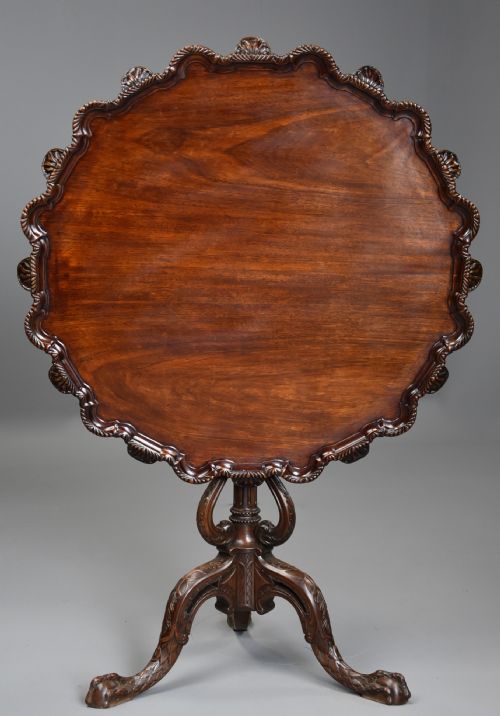
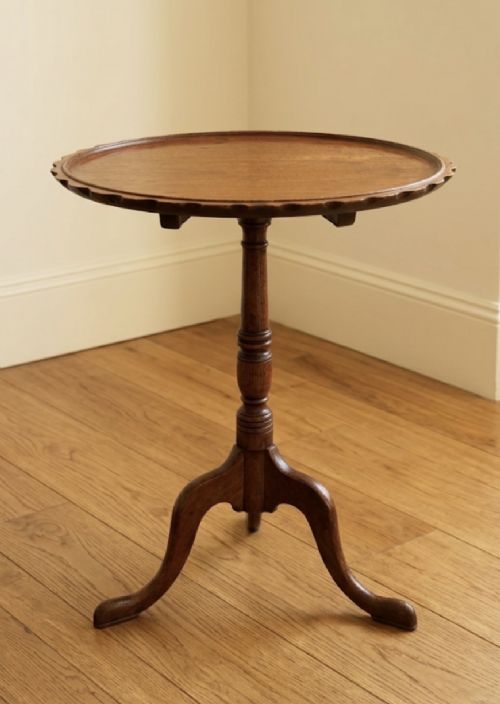


Piecrust Tilt Top Table
A piecrust tilt top table combines a shaped moulded rim with a clever pivoting mechanism, offering both display space and compact storage.
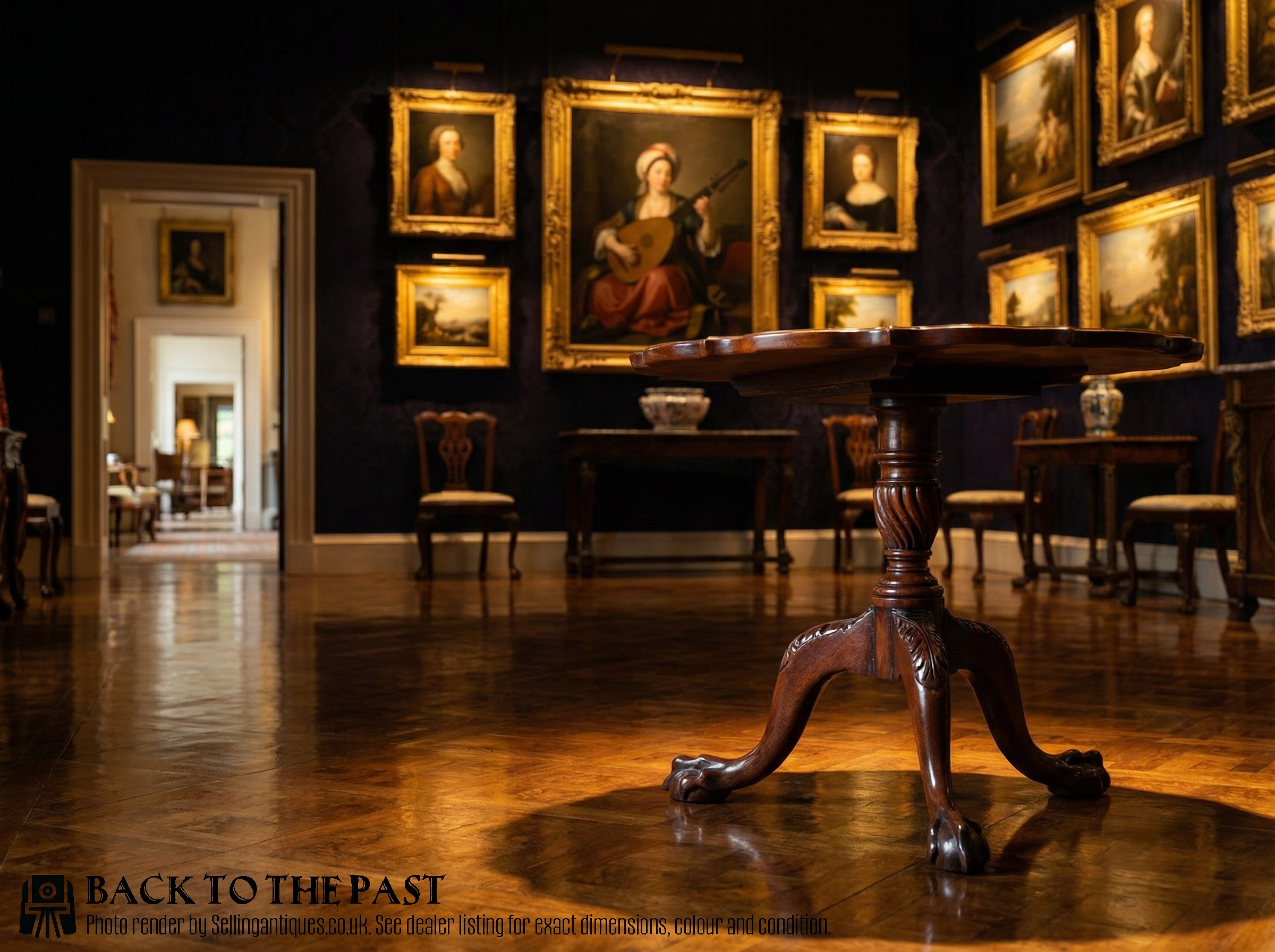
Piecrust Tilt Top Table
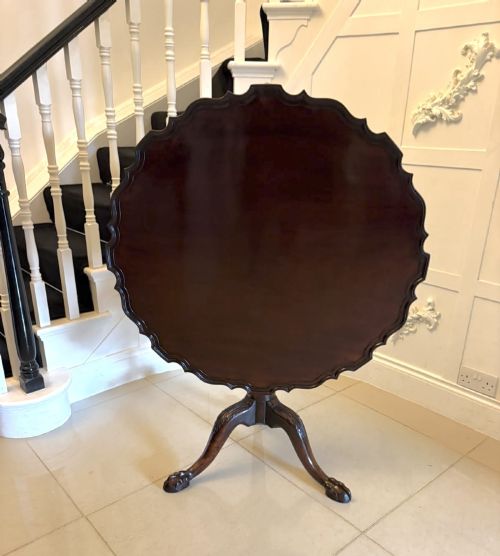
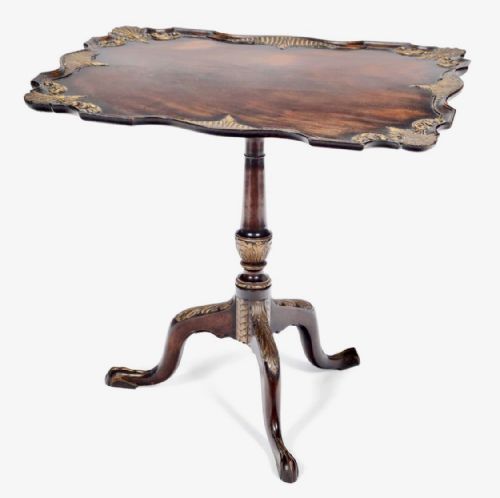
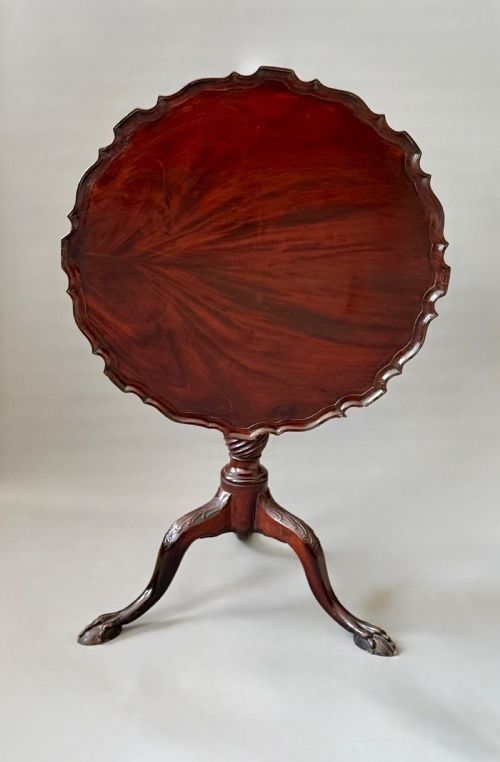
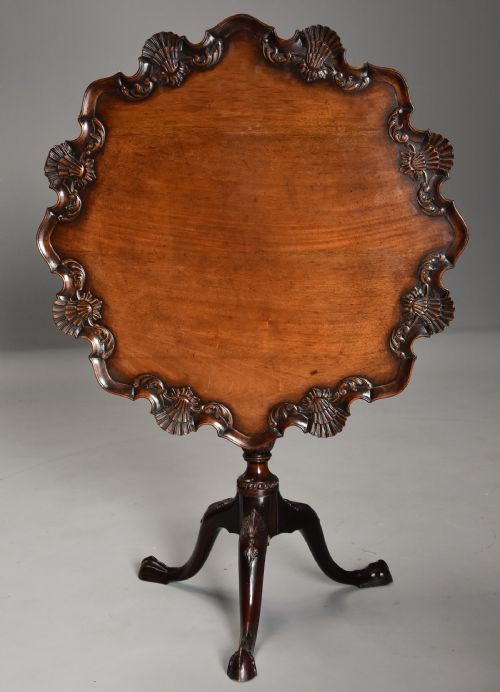
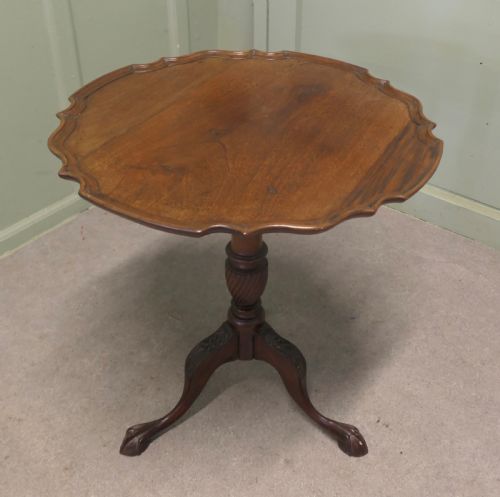
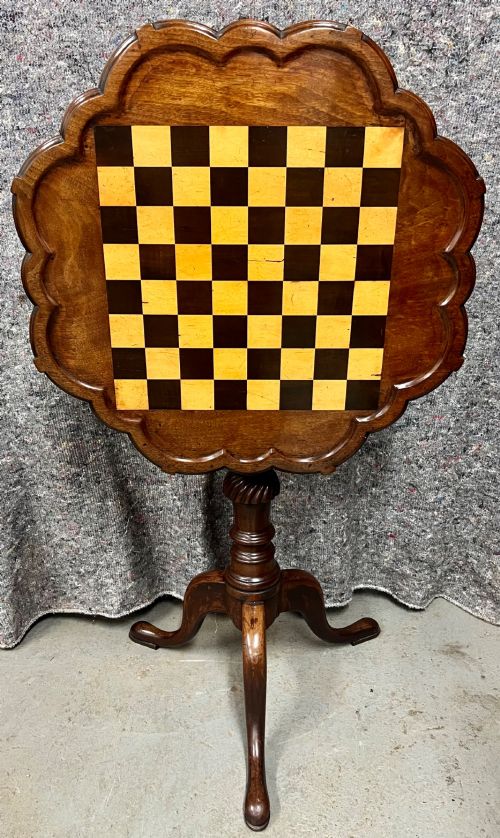
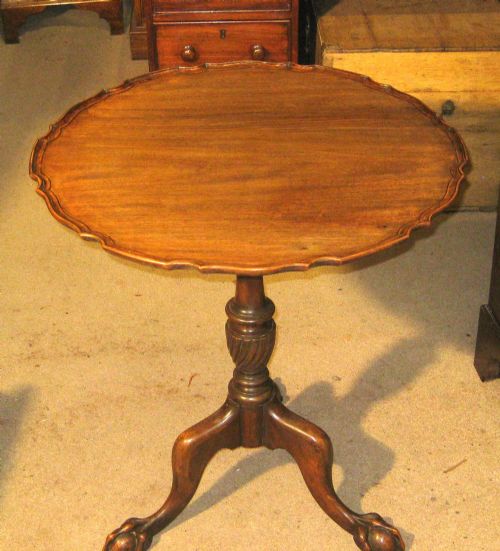
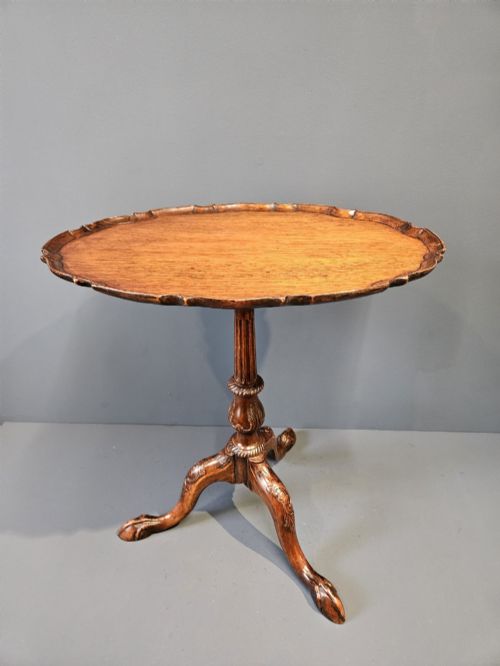
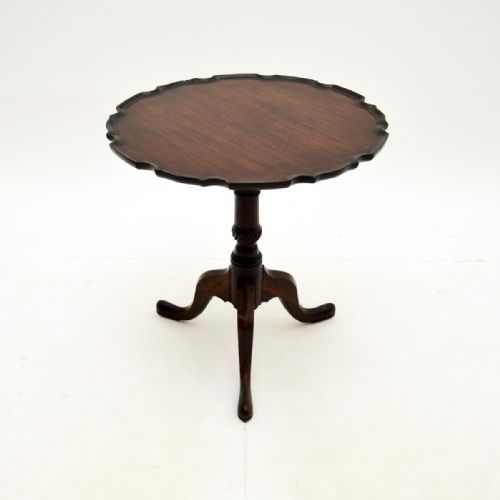
A piecrust tilt top table is a distinct form of tripod support furniture designed for the home, originating primarily in the eighteenth century during the Georgian period and reappearing in revival styles. These pieces feature a circular top with a raised, carved edge resembling pastry crust, mounted on a central pillar with three legs.
The version most commonly met on this page is constructed from mahogany, often dating from the eighteenth century or belonging to later Chippendale revival periods up through the Edwardian era. They serve various functions as occasional tables, wine tables, side tables, and centre tables within domestic interiors.
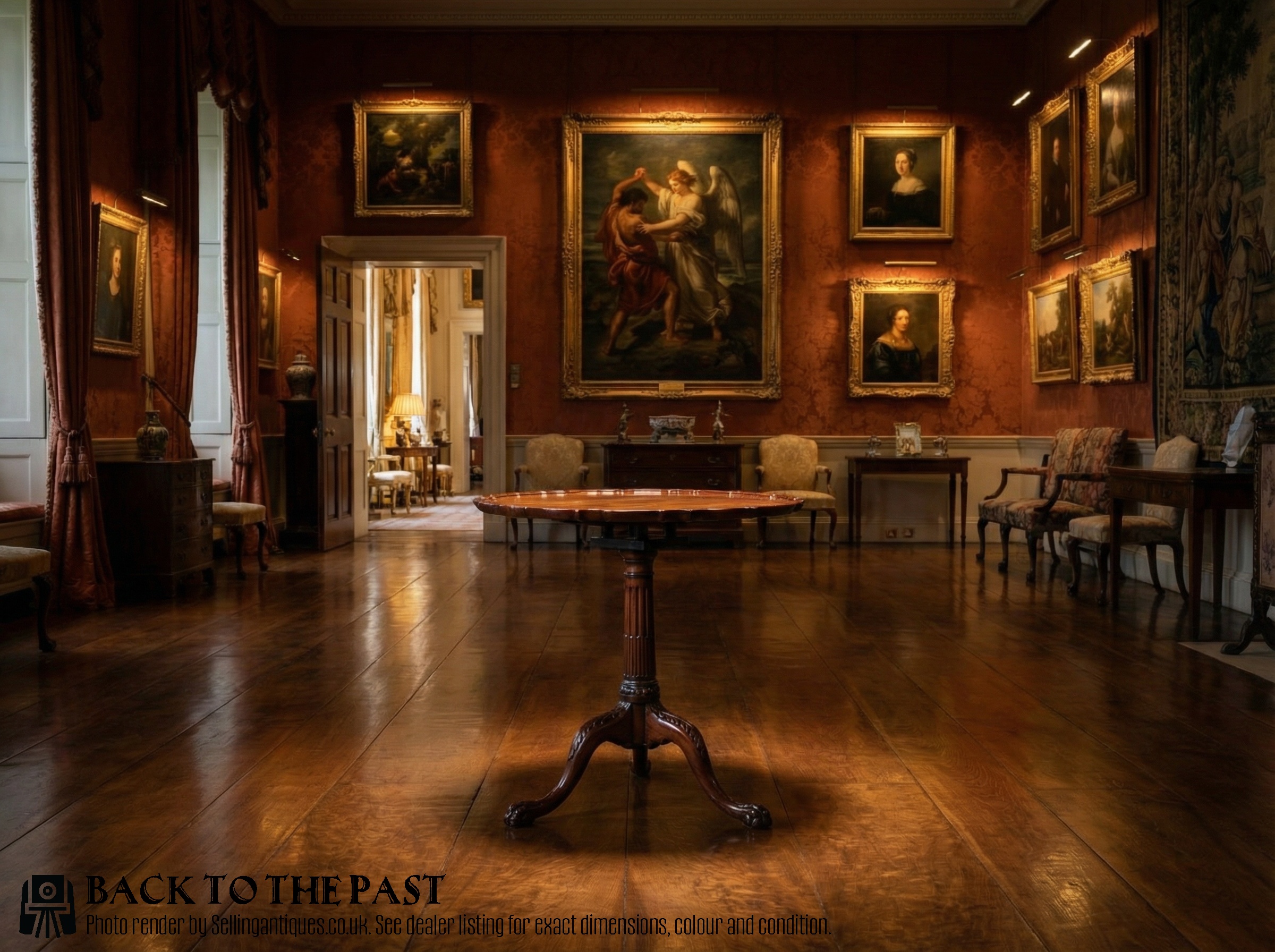
How they were made
Cabinet makers produced the characteristic raised rim of a piecrust tilt top table by carving the edge directly from a solid piece of thick timber rather than applying a separate moulding. This required immense skill to shape the curves and lobes precisely without splitting the wood grain.
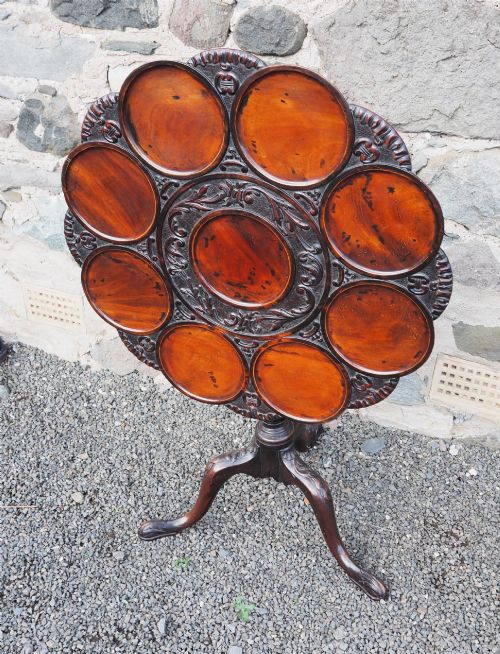
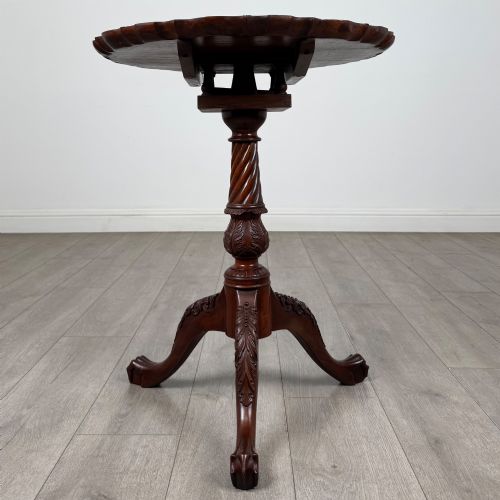
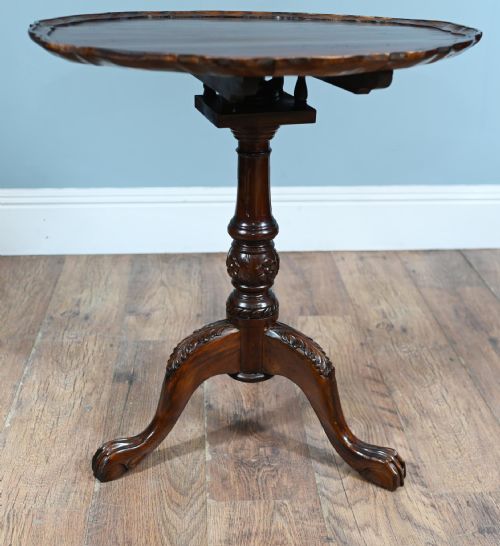
The top connects to the pedestal via a tilting mechanism, frequently incorporating a birdcage block that allows the surface to pivot and rotate for storage against a wall when not in use. The central column stands upon a three-legged tripod base, frequently finished with pad or claw and ball feet.
Piecrust Tilt Top Table Retail Price Guide 2026
Typical asking prices for piecrust tilt top table among the pieces listed under this phrase on Sellingantiques today, from the lower quarter to the upper quarter. They describe what is for sale here now, not the wider market.
Tables were often tilted against walls to function as decorative screens when dining rooms needed floor space for dancing.
What varies in quality
The distinction between standard examples and the finest pieces lies in the crispness of the carved border and the proportion of the tripod base. Superior examples display deeply undercut moulding on the top edge and refined carving on the knees of the cabriole legs.
Material selection also dictates distinction, with dense, highly figured mahogany or burr walnut marking the upper tier of production. The mechanical integrity of the birdcage pivot and the originality of the timber surface further separate everyday pieces from exceptional survivals.
S & H Jewell London
The Piecrust Tilt Top Table Glossary
- Piecrust edge
- A raised, undulating rim carved into the perimeter of a circular table top. This decorative border mimics the fluted pastry edge of a pie.
- Tilt top
- A hinged mechanism beneath the table surface that allows the top to pivot from horizontal to vertical. This design saves floor space when the furniture is pushed against a room perimeter.
- Birdcage
- A small wooden framework beneath the table top that houses turning spindles, allowing the surface to both tilt and rotate. This assembly is characteristic of better quality eighteenth century examples.
- Tripod base
- A support structure comprising a central pedestal resting on three radiating legs. These legs frequently terminate in pad, claw and ball, or snake feet.
- Chippendale style
- A decorative aesthetic drawing on the designs published by Thomas Chippendale in the eighteenth century and revived during the nineteenth and twentieth centuries. It is characterised by carved mahogany, cabriole legs, and intricate edge details.
Piecrust Tilt Top Table: Frequently Asked Questions
How do I use a tilt top table?
These tables are designed for versatile placement as side, wine, or occasional furniture in a principal room. When not in use, the mechanism allows the top to lock into a vertical position so it sits flat against a wall.
In the horizontal position, the surface accommodates small items such as tea wares, lamps, or decorative objects. Their compact footprint suits corners and tight spaces between seating.
What is a birdcage mechanism?
The birdcage is a rotating box structure fitted beneath the table top, containing small wooden turnings or spindles. It permits the surface to spin independently of the central pillar.
This adds a second motion to the tilting function, allowing the user to adjust the orientation of the table top easily. It indicates a higher standard of construction on eighteenth century and revival examples.
How do I date a piecrust table?
Dating relies on timber species, construction methods, and the style of the carving on the tripod base and edge. Eighteenth century pieces typically show dense mahogany with hand-cut joinery and patination accumulated over generations.
Revival pieces from the Victorian and Edwardian eras often feature machine-sawn elements or different secondary woods beneath the surface. Comparing the turning of the central pillar to established period forms helps clarify the age.
Are these tables sturdy?
Tripod tables are inherently stable due to the three-point contact of the legs with the floor, provided the joints where the legs meet the central pillar remain tight. The inclusion of a tilt mechanism introduces some movement at the pivot joint by design.
Care should be taken when placing heavy objects near the edge of a tilted or unevenly balanced top. Normal daily use for drinks or display presents no difficulty when the central catch is securely engaged.