




Pewter Wall Platter
A pewter wall platter brings heavy metal warmth to a room, offering centuries of English craftsmanship from Charles II to the Arts and Crafts period.
Pewter Wall Platter
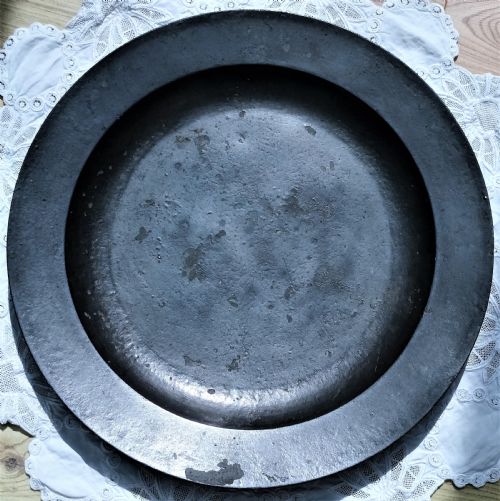
A pewter wall platter, also referred to as a charger, plate, or dish, is a substantial circular metal vessel designed historically for dining or display and now sought as a wall decoration. When you search for a pewter wall platter, you encounter large formal dishes and broad rim chargers spanning the seventeenth century, the Georgian era, and the late nineteenth century.
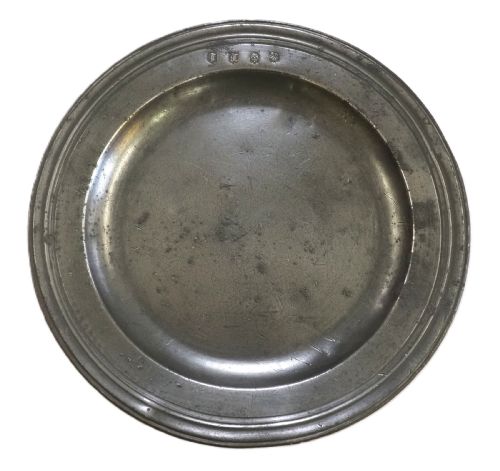
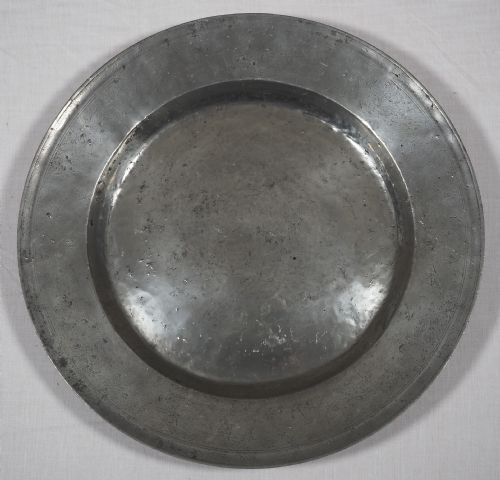
The pieces on this page are predominantly English in origin, ranging from plain domestic items to impressive large chargers bearing family crests. You will meet formats such as triple reeded plates and hammered surfaces, reflecting country house aesthetics and the domestic interiors of earlier centuries.
The selection extends from the restrained surfaces of the Charles II and William & Mary periods through to later Georgian dishes and beaten Arts and Crafts interpretations. Each object demonstrates the enduring utility of base metal transformed into decorative wall art.
What varies in quality
The distinction between standard domestic items and top-tier pieces rests on scale, weight, and the crispness of initial manufacturing marks. Larger examples, particularly those measuring over twenty inches across with broad rims, command greater attention for their visual presence.
Provenance and personalisation elevate certain objects above ordinary tableware, such as pieces engraved with contemporary family crests or bearing the touchmarks of known makers. The integrity of the surface, whether smooth or evenly hammered, defines the visual success of the piece on a wall.
Some seventeenth-century chargers still bear the scars of family crests hammered into the rim by proud owners wishing to settle ownership disputes at dinner.
Samuel Smith·John Tubb·Lawrence Dyer·Thomas Powell·Nehemiah Cloudesley
The Pewter Wall Platter Glossary
- Charger
- A large decorative or serving plate, typically measuring upwards of fifteen inches in diameter. These substantial vessels were often displayed upright on sideboards or hung on walls.
- Broad rim
- A wide flat border surrounding the central well of a plate or charger. This expanse often carries maker marks, ownership initials, or armorial crests.
- Triple reeded
- A rim profile featuring three parallel raised rings or mouldings. This decorative detail stiffens the edge of the soft metal plate.
- Touchmark
- A small stamp impressed into the pewter by the maker or workshop. These marks serve as a signature of origin and quality.
- Skrymshire family crest
- A heraldic engraving added to signify ownership by a specific lineage. Such bespoke additions indicate a commissioned or presentation piece.
Pewter Wall Platter: Frequently Asked Questions
How were pewter chargers used historically?
Pewter chargers served as large service platters for communal dining in substantial households before passing into decorative use on walls and dressers.
Over time, as ceramic and porcelain wares supplanted metal at the dining table, these heavy plates transitioned into purely decorative items within English country houses.
How do I hang a heavy pewter platter safely?
Displaying a heavy metal charger requires a dedicated plate hanger with coated spring clips that distribute the weight evenly across the rim without biting into the soft alloy.
Ensure the wall fixing engages directly with a stud or utilise an appropriate heavy-duty wall anchor capable of supporting the dead weight of the metal.
How can I tell a seventeenth-century charger from a Georgian one?
Seventeenth-century examples often feature very broad flat rims, hammer marks across the surface, and deep wells designed for substantial joints of meat. They frequently carry triple reeded borders.
Georgian dishes tend towards smoother finishes and simpler geometries, reflecting changing domestic fashions and evolving manufacturing techniques during the eighteenth century.
Did Arts and Crafts makers produce pewter wall plates?
Late nineteenth-century designers revived hand-working techniques to produce decorative metalwork for domestic interiors, resulting in heavily beaten wall plates.
These later items embrace visible tool marks and organic textures, distinguishing them from the formal symmetry of earlier historical periods.