


Pewter Lidded Tankard
These pewter lidded tankard pieces are sturdy drinking vessels and measures forged from metal, ceramic, and glass for everyday use and ceremony.
Pewter Lidded Tankard
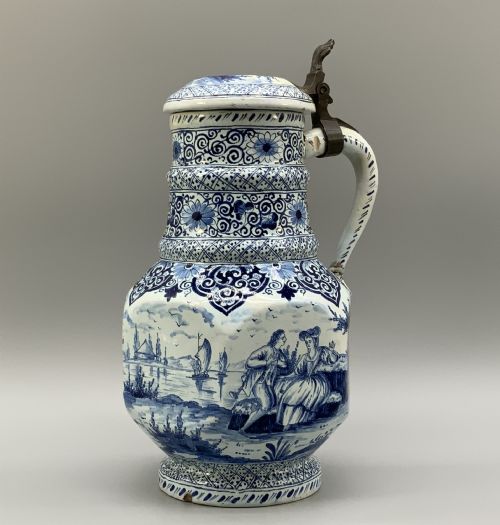
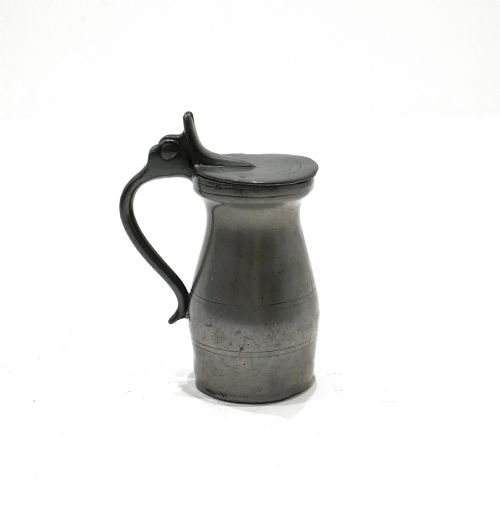
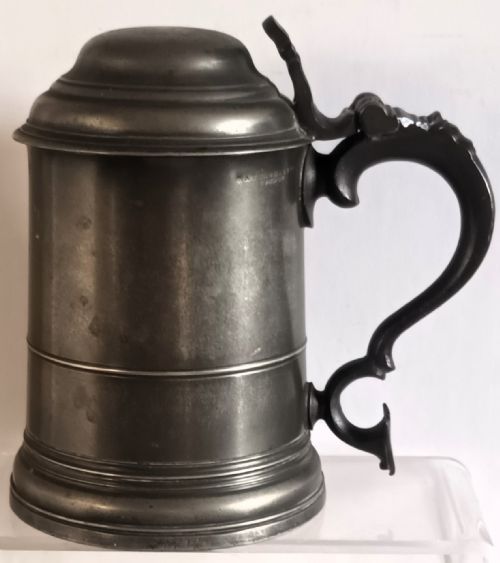
When you search for a pewter lidded tankard, you encounter robust drinking vessels, measures, and flagons originating primarily from the eighteenth and nineteenth centuries. These objects span English, Scottish, Irish, and continental European workshops, taking forms such as flat-lidded tankards, spirit measures, and tall spired flagons. Alongside traditional metalware, you find ceramic and glass bodies fitted with hinged metal lids, including Westerwald stonewares, Dutch delftware, and German faience.
The most common versions met on this page are standard English quart and pint measures in plain metal, alongside regional British capacity vessels and continental German beer steins. Pieces range from modest domestic drinking jugs to heavy church flagons and marked tavern measures bearing touchmarks or maker stamps. Whether rendered in plain polished metal or decorated with cobalt slips and Celtic motifs, each item serves as a survivor of communal drinking and hospitality traditions.
How they were made
The construction of these pieces relies on casting metal alloys, throwing ceramic clay, or blowing glass before attaching hinged lids with thumbpieces. Pewter vessels are cast in sections, often on a lathe, and soldered together with handles and thumb-operated lids securely pinned to the rim. Ceramic examples such as Westerwald and German delft utilise salt-glazed or tin-glazed earthenwares painted in cobalt blue or polychrome pigments before kiln firing.
Makers of metal variants utilise lead-tin or tin-copper alloys, hammering and turning the soft metal to achieve structural rigidity and smooth surfaces. Old Sheffield plate and silver-plated items combine a base metal core with a fused outer layer of precious metal, while glass bodies integrate applied handles and cast metal mounts.
Listings feature items ranging from eighteenth-century English church flagons and Scottish tappit hens to Edwardian Arts and Crafts pewter.
What varies in quality
Quality in these vessels rests upon the crispness of the casting, the original thickness of the metal walls, and the survival of clear touchmarks or maker stamps. Superior examples maintain their structural symmetry, tight lid hinges, and unblemished surfaces without excessive pitting or heavy denting from centuries of tavern use. The clarity of moulded decoration, whether Celtic interlace, heraldic crests, or cobalt painted scenes, distinguishes ordinary utility items from masterwork productions.
The integrity of the thumbpiece and the secure fit of the lid against the rim indicate superior workshop standards during production. Pieces retaining original touchmarks, verified capacity standards, and untouched aged surfaces command greater interest from collectors than heavily polished or later repaired equivalents.
Watts and Harton·John Heaney of Dublin·Archibald Knox for Liberty·Robert Iles of London·Burgum and Catcott of Bristol·John De St Croix·Allen Bright of Bristol
The Pewter Lidded Tankard Glossary
- Touchmark
- A small stamp impressed into metal by a maker or guild to certify the purity and origin of the alloy. These marks often include initials, symbols, or town names.
- Flagon
- A large drinking vessel or vessel for holding liquids, frequently featuring a lid and handle, often associated with church or domestic service.
- Tappit Hen
- A traditional Scottish capacity measure with a distinct tapering shape, bulbous body, and a lid topped by a knob resembling a nesting hen.
- Westerwald
- A German ceramic type produced in the Rhineland, characterised by grey stoneware decorated with cobalt blue incisions and salt glazing.
- Spirit Measure
- A small metal vessel designed to hold precise quantities of alcohol, such as half gills or pints, used commercially in taverns and inns.
Pewter Lidded Tankard: Frequently Asked Questions
Are these old tankards safe for drinking?
Many historic pewter vessels from earlier centuries contain varying amounts of lead in the alloy mix, which can leach into acidic or alcoholic beverages. It is generally advised to treat antique metal drinking vessels as display objects rather than for daily consumption.
Glass and glazed ceramic pieces are typically more chemically stable, though older glazes should still be evaluated carefully before use with food and drink.
What is a touchmark on pewter?
A touchmark is an official stamp pressed into the soft metal by the maker or a guild warden to guarantee the quality and composition of the alloy. These tiny marks act as signatures, allowing researchers to trace the maker, workshop, and town of origin.
Finding a clear touchmark significantly aids in dating a piece and often increases its historical and collector interest.
How can I tell the difference between 18th and 19th-century styles?
Eighteenth-century metal tankards frequently feature flat lids, multi-reeded handles, and thumbpieces cast in simple chair or sad-saddle forms. Nineteenth-century examples often adopt dome lids, imperial capacity verification stamps, and heavier, more utilitarian proportions.
Ceramic and glass counterparts shift similarly, moving from salt-glazed stoneware and tin-glazed delft toward mass-produced Victorian earthenware and moulded Art Nouveau motifs.