



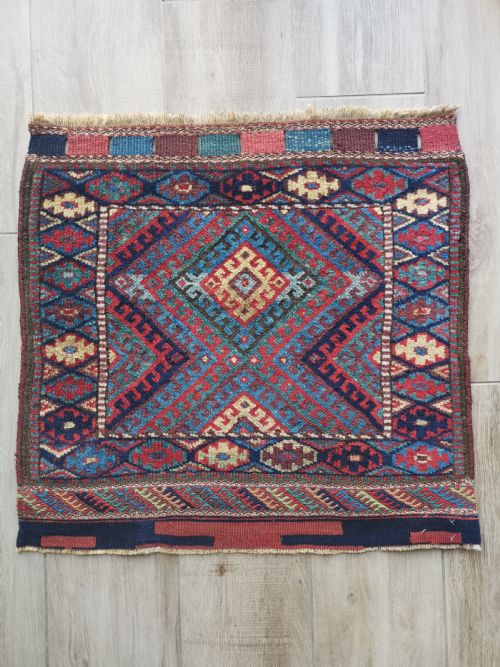
Persian Wool Wall Hanging
A genuine persian wool wall hanging brings the geometric brilliance and nomadic heritage of nineteenth-century weaving directly into a modern interior.
Persian Wool Wall Hanging
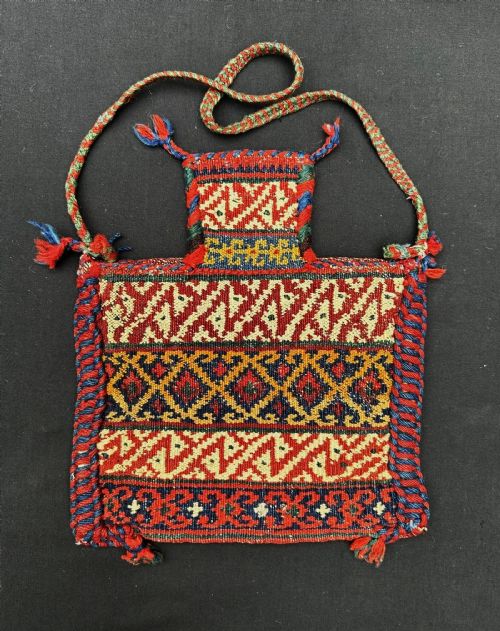
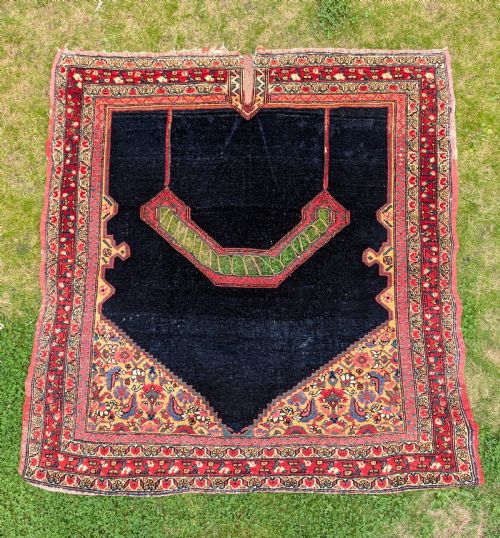
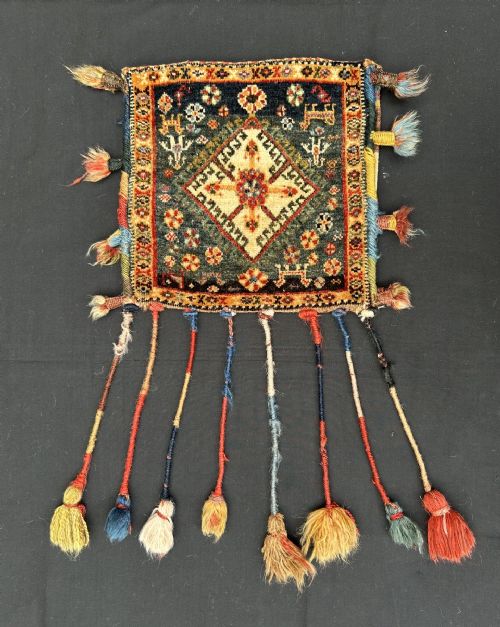
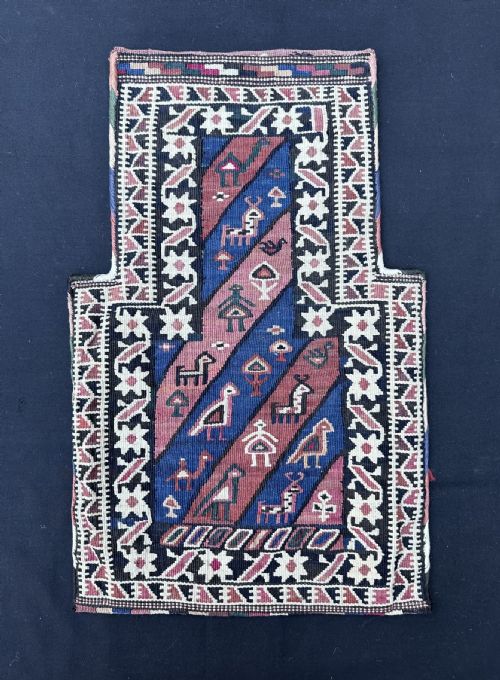
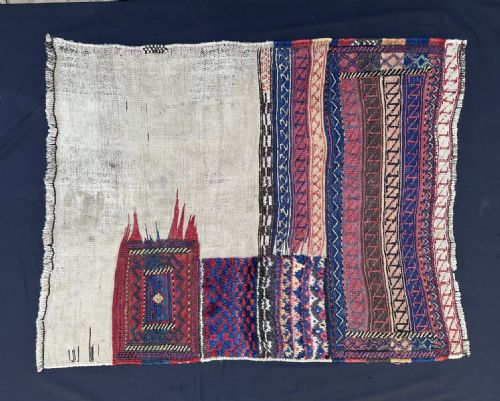
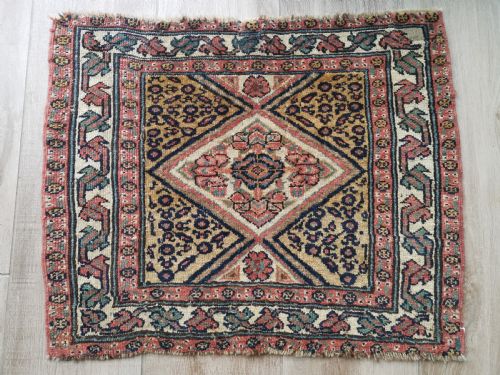
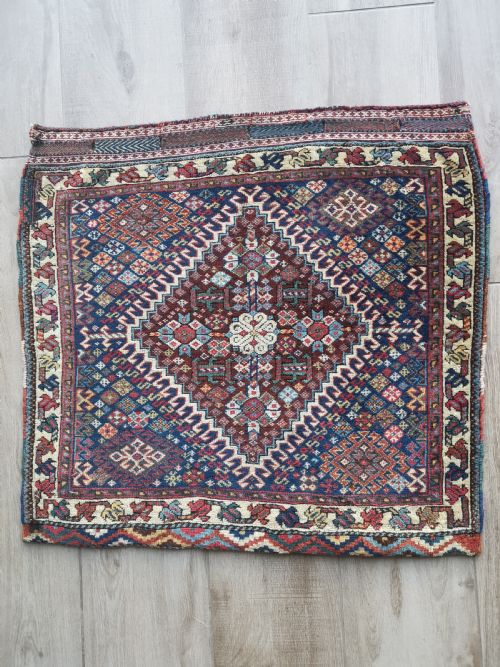
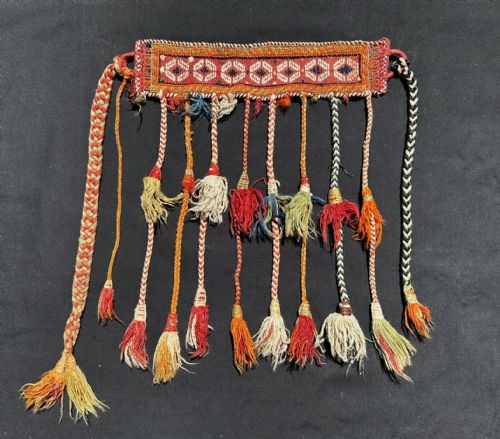
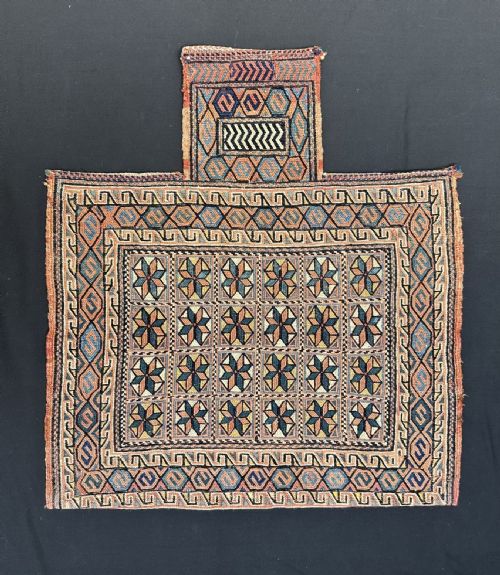
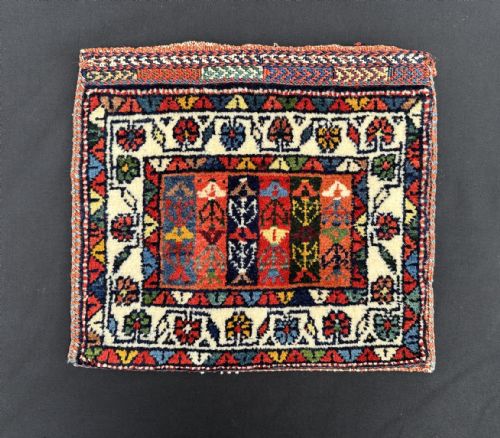
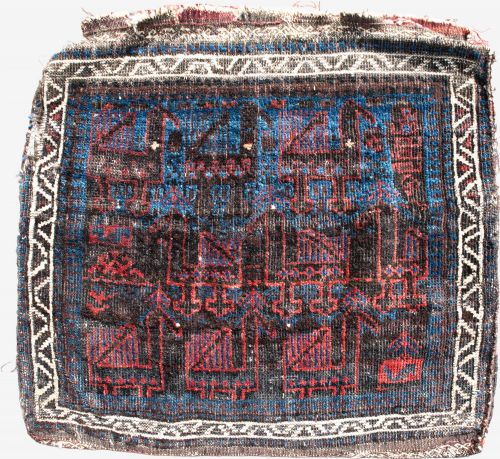
The versions most commonly met on this page are repurposed bagfaces, chantehs, and panels woven during the nineteenth and early twentieth centuries. Their rich iconography and regional patterns lend themselves naturally to display upon interior walls.
Materials and Construction
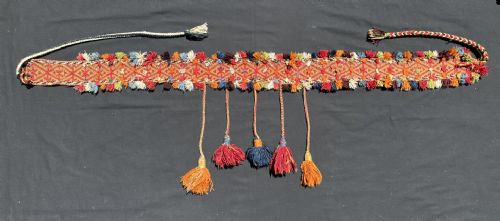
Weavers utilised hand-spun wool, often combined with cotton, silk, goat hair, and occasional cowrie shell embellishments. Natural dyes provided the deep indigos, madder reds, and earthy yellows that define the palette.
Techniques range from pile knotting to intricate flatweaves such as sumac work and Rasht embroidery featuring silk and felt applique. These resilient textile methods ensured the longevity of items intended for rigorous nomadic use.
Some antique salt-bags still carry the faint, earthy scent of ancient pathways and the desert wind from the Zagros mountains.
Determinants of Quality
Quality rests upon the fineness of the spin, the complexity of the tribal design, and the vibrancy of the natural dyes. Tightly woven knotting and precise geometric execution distinguish superior examples from simpler utilitarian pieces.
The preservation of original borders, structural integrity, and the purity of the wool further separate remarkable tribal textiles from standard survivals.
The Persian Wool Wall Hanging Glossary
- Chanteh
- A small woven bag used by nomads for carrying personal items or documents. These small pouches now function ideally as compact decorative wall pieces.
- Sofreh
- A flatwoven spread or cloth utilised for dining, kneading bread, or serving meals. Their striking field patterns translate effectively to vertical display.
- Sumac
- A supplementary warp-weft wrapping technique that creates a durable, ribbed surface texture. This method allows for sharp diagonal pattern lines.
- Khorjin
- A pair of saddlebags designed to be draped over pack animals during migration. Collectors frequently prize individual bagfaces separated from the original pairing.
- Rasht embroidery
- A traditional Persian textile art involving intricate wool or silk applique work on a wool felt backing. It produces dense, colourful floral and pictorial motifs.
Persian Wool Wall Hanging: Frequently Asked Questions
How do I hang a textile safely?
Mounting a textile requires spreading the weight evenly across the piece to prevent fibre distortion. Using a cotton sleeve hand-stitched to the reverse allows a slender wooden baton to support the hanging securely.
Direct contact with metal fixings should be avoided to prevent rust or snagging on the wool. Keeping the display away from direct sunlight protects natural dyes from fading over time.
What is the difference between pile and flatweave?
Pile textiles feature individual knots tied to the warp threads, creating a soft, plush surface with visible depth. Flatweaves, by contrast, rely on interlocking or wrapping weft threads without forming a raised pile.
Flatwoven examples often display crisper geometric motifs due to the structural nature of the weave. Both techniques served distinct utilitarian purposes within nomadic daily life.
How do I care for antique wool?
Routine maintenance involves gentle surface dusting using a soft brush or low-suction vacuum applied through a protective mesh screen. Professional textile conservators should handle any deep cleaning to avoid shrinkage or dye bleeding.
Maintaining a stable indoor humidity prevents insect damage and keeps natural animal fibres supple. Regular inspection ensures the wool remains healthy and secure in its environment.