

Nomadic Persian Weaving
Nomadic persian weaving comprises hand-woven rugs, saddle bags, and utilitarian textiles produced by tribal groups across nineteenth and early twentieth-century Persia.
Nomadic Persian Weaving
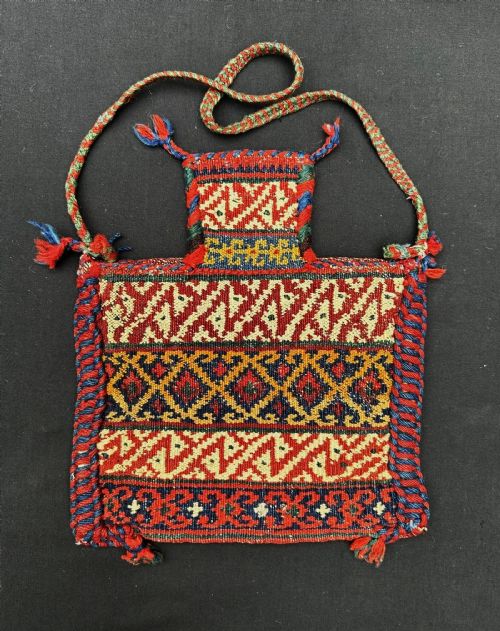
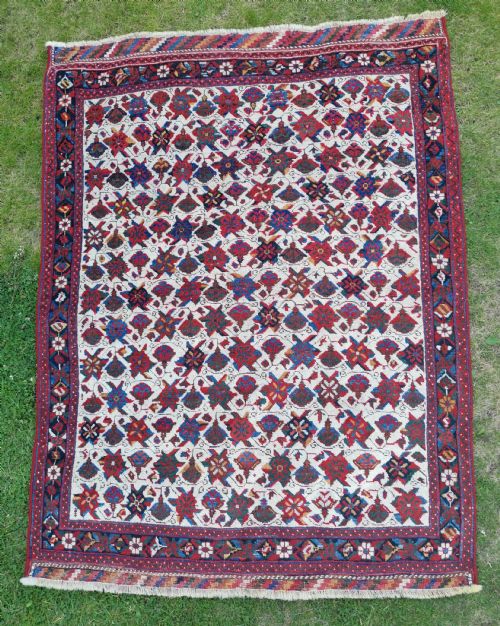
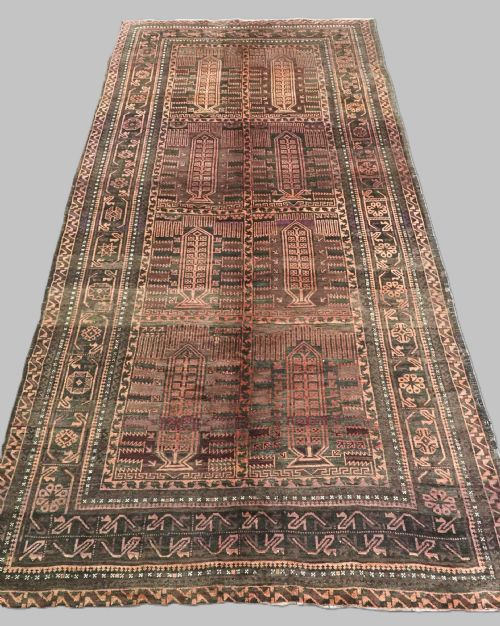
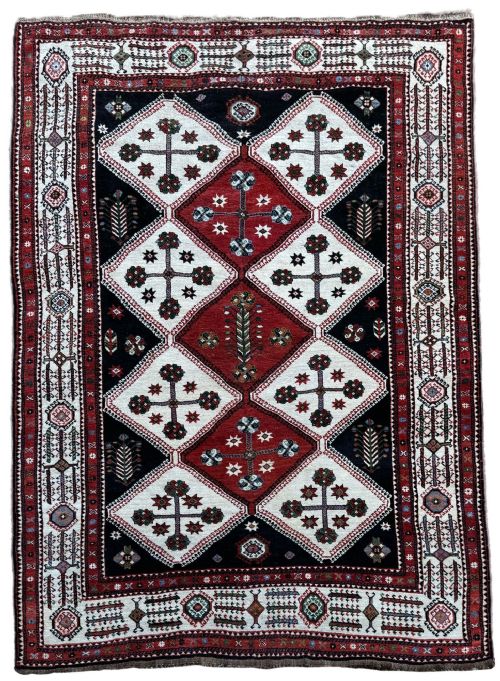
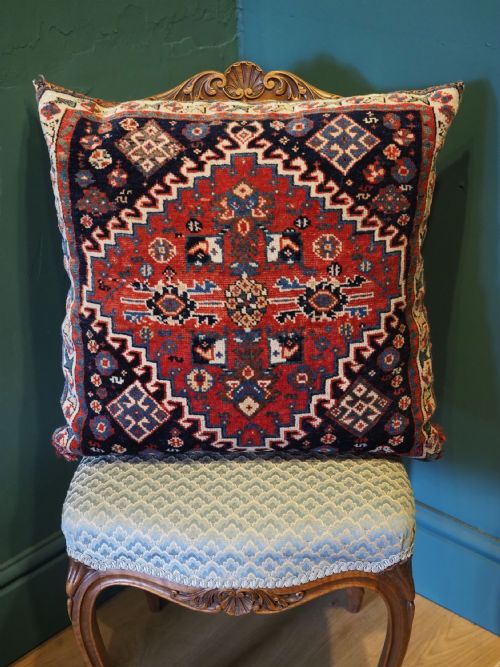
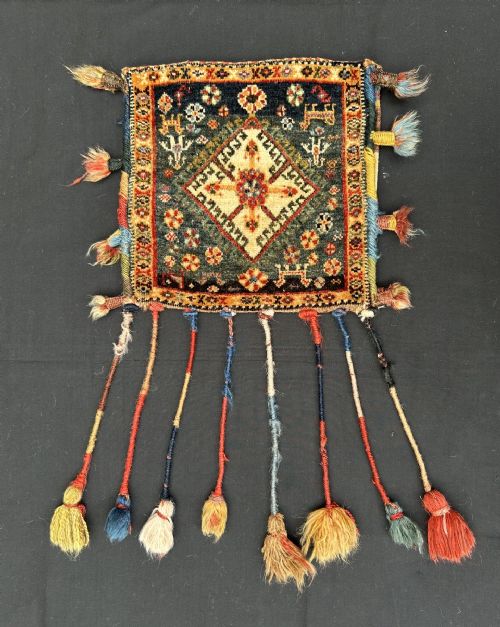
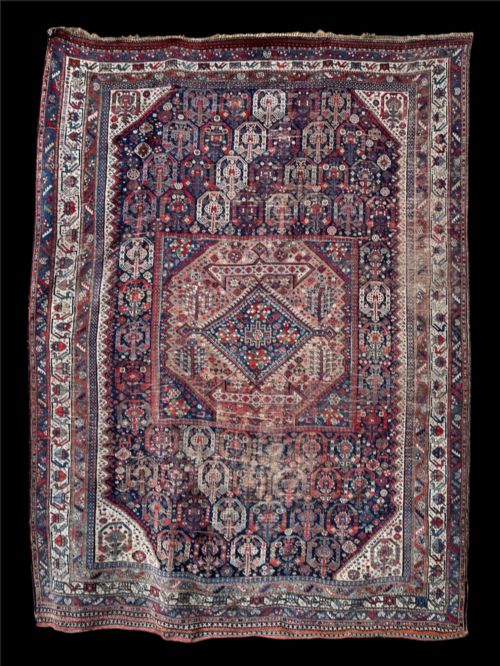
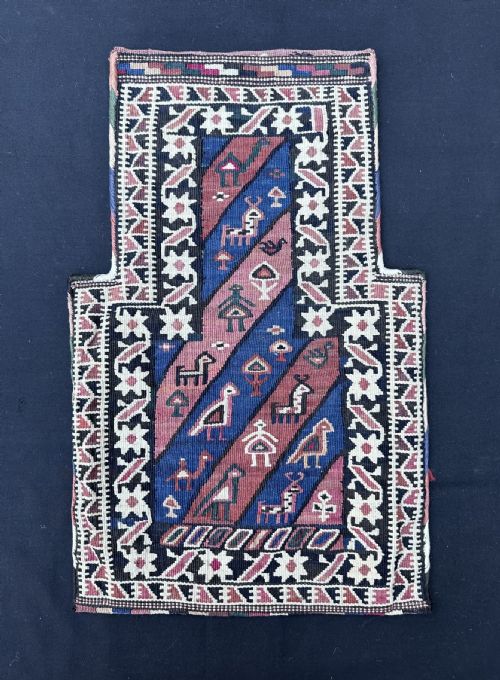
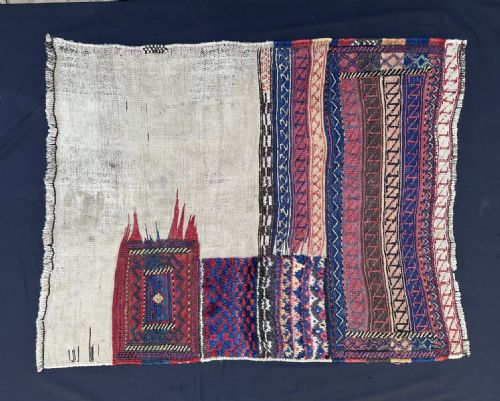
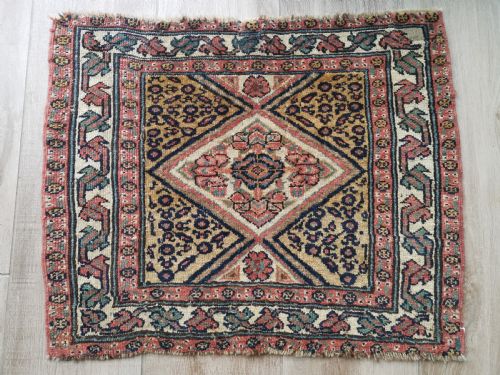
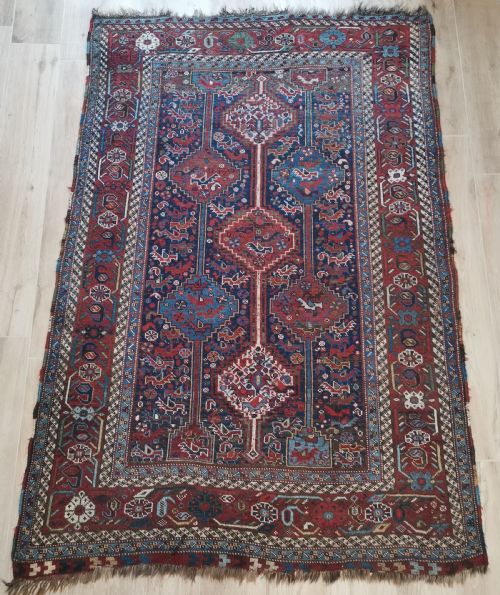
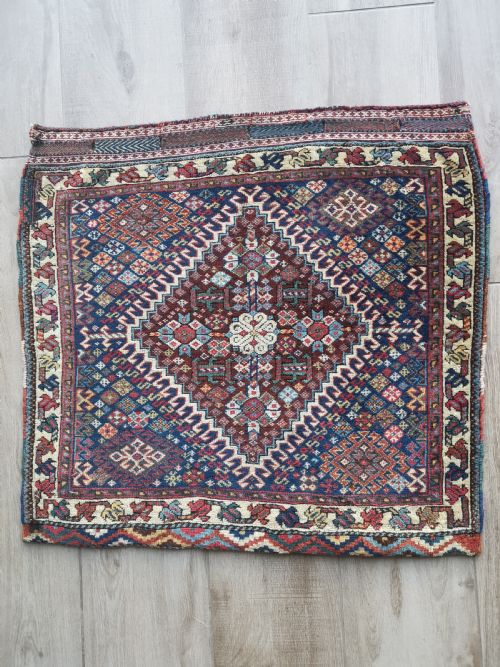
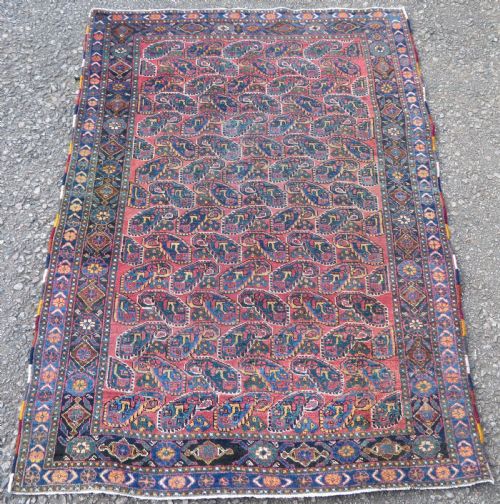
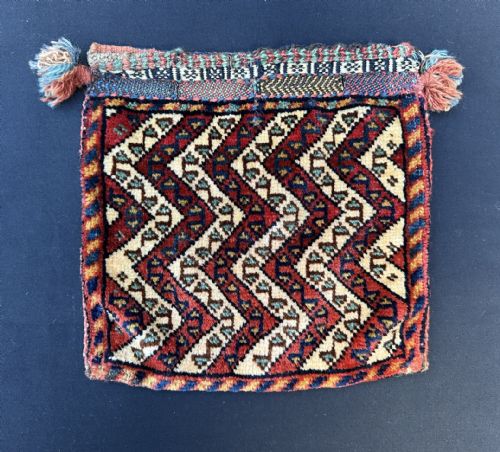
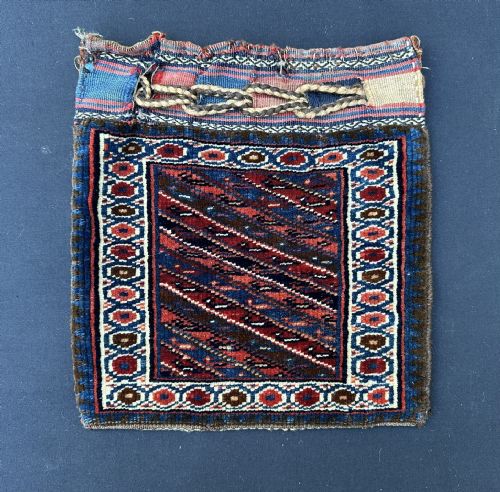
Nomadic persian weaving encompasses a distinct category of floor coverings, animal trappings, and utilitarian containers made by tribal confederacies and regional groups. Buyers encountering nomadic persian weaving on this page will primarily find smaller formats such as bagfaces, salt-bags, vanity-bags, and tribal rugs originating from southern, western, and north-eastern regions.
The material record demonstrates specific tribal attributions including Afshar, Qashqai, Khamseh, Baluch, Lori-Bakhtiari, and Kurdish groups. These communities produced textiles intended for daily nomadic life, ranging from horse decorations and baby cradles to larger main carpets and bread sofrehs.
Dating across the listed pieces spans the nineteenth and early twentieth centuries, with examples recorded from the eighteen-seventies through to nineteen-thirty. The geographical scope covers specific territories like Fars Province, Kerman Province, and Khorassan, linking specific weaving structures to distinct tribal homelands.
Evaluating the weaving
Quality within nomadic persian weaving relates directly to the handle of the wool, the precision of the tribal design execution, and the integrity of the pile or flatweave structure. Finer examples display meticulous knotting density and careful handling of natural dye variations across the field.
The preservation of original complete structures, such as surviving plain-weave backs on bags or intact side-cords, significantly distinguishes superior pieces. Tribal authenticity, expressed through uncompromised regional motifs and resilient hand-spun materials, defines the upper tier of the range.
Nomadic Persian Weaving Retail Price Guide 2026
Typical asking prices for nomadic persian weaving among the pieces listed under this phrase on Sellingantiques today, from the lower quarter to the upper quarter. They describe what is for sale here now, not the wider market.
Listed examples of nomadic persian weaving span the period from eighteen-seventy to nineteen-thirty, incorporating wool, cotton, leather, and natural dyes.
The Nomadic Persian Weaving Glossary
- Sofreh
- A flatwoven spread or cloth used primarily for dining, kneading bread, or ritual purposes within nomadic households. These textiles often feature geometric field patterns.
- Khorjin
- A double-sided saddle-bag designed for transporting belongings during tribal migrations. Surviving fragments are frequently designated as half-khorjin or bagfaces.
- Chanteh
- A small personal vanity bag or pouch woven by tribal makers for carrying small possessions. They frequently exhibit intricate pile or flatweave designs on the face.
- Balisht
- A pillow or bolster bag-face produced for domestic use within tribal tents. These pieces typically display compact nomadic motifs suited to their smaller scale.
- Tacheh
- A specific type of storage container or grain bag woven by tribal groups in western Persia. They combine structural durability with traditional regional patterns.
Nomadic Persian Weaving: Frequently Asked Questions
What is nomadic persian weaving?
Nomadic persian weaving consists of handmade rugs, bags, and utilitarian textiles produced by migrating tribal groups and confederacies across Persia. These items were created for practical domestic and nomadic use rather than urban commercial export.
Materials typically include hand-spun wool and cotton dyed with natural colourants, reflecting the immediate environment and resources of the weavers. The resulting objects range from large carpets to small personal containers like salt-bags and vanity-bags.
How were these tribal bags used?
Tribal bags served essential storage and transport functions during seasonal migrations across the Persian landscape. Larger double saddle-bags carried household goods on pack animals, while smaller pouches held salt, personal items, or pipes.
Many pieces were also incorporated into the interior decoration of tribal tents or used as bedding and seating components. Their construction combined decorative pile-weaving with durable flatwoven backs to withstand rigorous daily handling.
How do I identify different tribal origins?
Attributing pieces to specific groups relies on distinctive design vocabularies, structural characteristics, and regional colour palettes. Tribal confederacies such as the Qashqai, Afshar, and Baluch each maintained unique repertoires of geometric motifs and weaving habits.
Format and utility also offer clues, as certain tribes specialised in specific bag types or animal trappings. Examining the structural materials, such as the twist of the wool and the preparation of the foundation, helps confirm regional provenance.
How should I care for a textile?
Living with these textiles requires gentle maintenance, primarily consisting of careful, low-suction vacuuming without a rotating brush. Keeping them out of direct sunlight prevents the natural dyes from fading over time.
Rotating the piece periodically ensures even exposure to wear and light if placed in a high-traffic area. Professional cleaning by a specialist familiar with antique tribal wool is recommended when deeper maintenance becomes necessary.