


Persian Saddlebag Face
A persian saddlebag face is the surviving front panel of a nomadic container, prized for concentrated tribal artistry and rich colour.
Persian Saddlebag Face
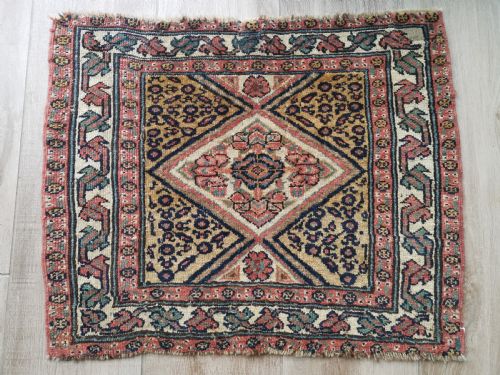
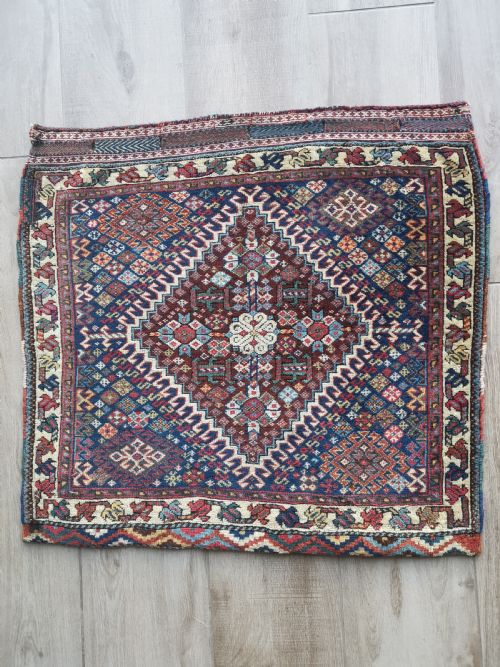
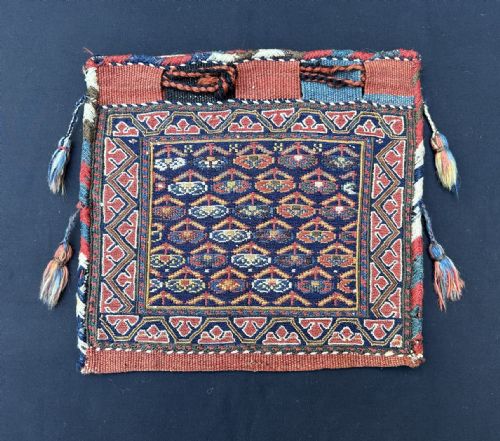
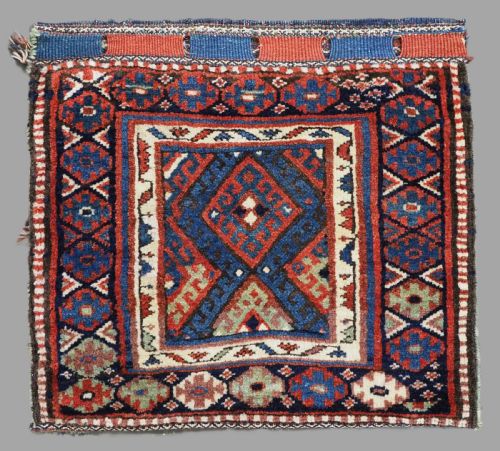
A persian saddlebag face represents the severed front panel of a larger utility container once loaded onto pack animals by tribal groups. These textile fragments originate from nineteenth-century nomadic and village weavers across Persia, including Qashqai, Shahsavan, Afshar, and Kurdish tribes. Buyers encounter various formats on this page, ranging from complete panels with their plain weave backs intact to isolated half-faces and rug fragments.
How they were made
Weavers utilised hand-spun wool for the pile and structure, combining it with cotton foundations in certain regional types. Natural dyes provide the enduring palette, yielding deep blues, madder reds, and earthy yellows that mellow gracefully over decades. Some pieces employ soumac wrapping techniques instead of a knotted pile, creating a flat-woven structure with distinct textural depth.
Nomadic workshops constructed these panels on portable horizontal looms set up in camps or settlements. The integration of hand-spun wool with natural dyes ensures the physical resilience that allowed these textile faces to survive long after the original bags deteriorated.
Persian Saddlebag Face Retail Price Guide 2026
Typical asking prices for persian saddlebag face among the pieces listed under this phrase on Sellingantiques today, from the lower quarter to the upper quarter. They describe what is for sale here now, not the wider market.
The listings on this page span the nineteenth and early twentieth centuries, featuring wool and natural dyes across tribal Persian forms.
What varies in quality
Quality rests in the fineness of the knotting or weaving and the clarity of the tribal design. Superior examples display lustrous wool, precise geometry, and an imaginative arrangement of motifs within a balanced format. The depth and saturation of natural dye usage further distinguish exceptional pieces from standard village work.
Structural integrity and the preservation of original borders or plain weave backs influence the desirability of a textile. Pieces retaining their full face geometry and crisp, unrubbed pile demonstrate superior survival through utilitarian use.
The Persian Saddlebag Face Glossary
- Khorjin
- The traditional Persian term for a double saddlebag used by nomadic tribes for transport and storage. These containers were typically split into two halves when taken out of service, leaving the individual bag faces collectors seek today.
- Soumac
- A flat-weave technique where coloured weft threads wrap around the warp threads in a continuous herringbone or braided pattern. This method produces a sturdier structure than standard kilim weaving without creating a cut pile.
- Boteh
- An ancient teardrop or almond-shaped motif with a curved upper tip, symbolising life and eternity. It appears frequently in tribal and village weaving across various Persian regions.
- Medallion
- A central ornamental design element anchoring the field of the textile. Tribal weavers often rendered these geometric shapes with symbolic regional variations.
- Plain weave
- A simple weave structure utilised for the backs of bags or flat-woven storage sections. It provides a lightweight, durable contrast to heavier piled front faces.
Persian Saddlebag Face: Frequently Asked Questions
What is a persian saddlebag face?
It is the decorative front panel of a nomadic double bag used for carrying possessions on animals.
Tribal weavers made these items to withstand the rigours of migratory life before separating them into individual panels.
How were these bags used?
Nomadic families slung paired containers across horses, camels, or donkeys to transport household goods during seasonal migrations.
When the side panels wore out, the decorative faces were often preserved for their artistic merit.
How do I care for a textile face?
Keep the piece away from direct sunlight to protect the natural dyes from fading over time.
Gentle vacuuming without a beater bar removes trapped dust without damaging the hand-spun wool pile.
How do I identify tribal origins?
Specific colour combinations, border patterns, and structural techniques point directly to particular tribal groups like the Qashqai or Shahsavan.
Examining the weave density and wool characteristics helps narrow down the regional workshop or nomadic confederation.