




Persian Saddle Rug
A persian saddle rug brings the rich handiwork of nomadic weavers directly into your home.
Persian Saddle Rug
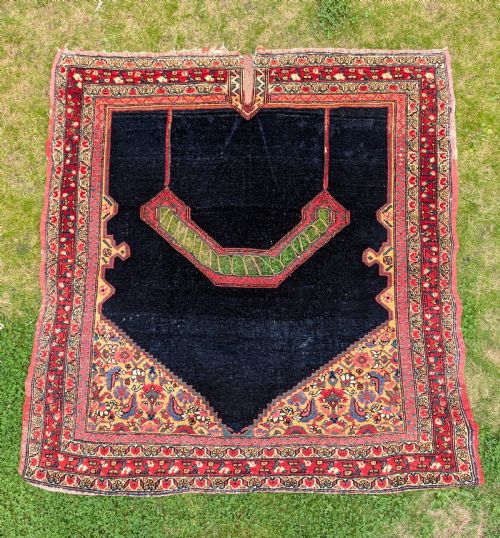
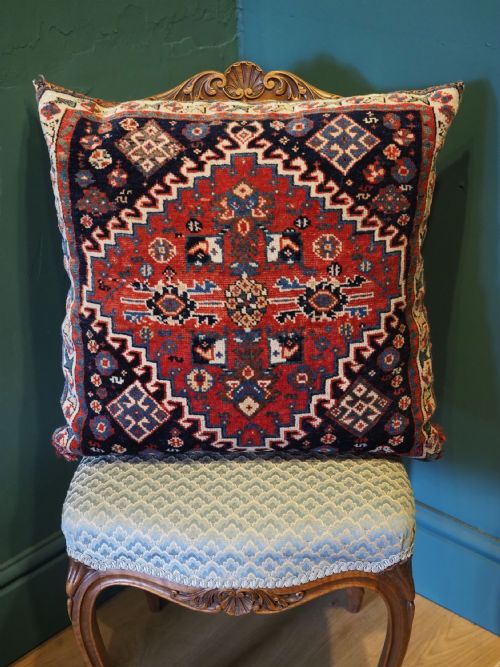
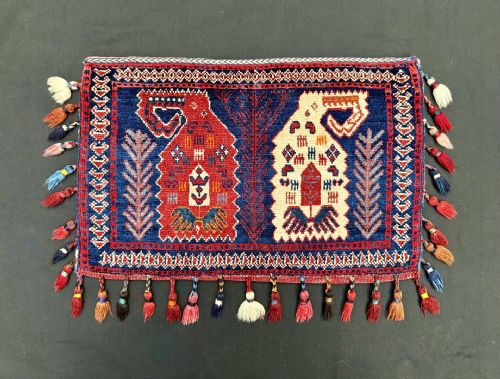
When you search for a persian saddle rug, you are looking at functional utility pieces woven by nomadic groups across the region. These items include bag faces, complete pairs, vanity bags, and cushion conversions produced by tribes such as the Qashqa'i, Afshar, Shahsavan, Khamseh, and Luri.
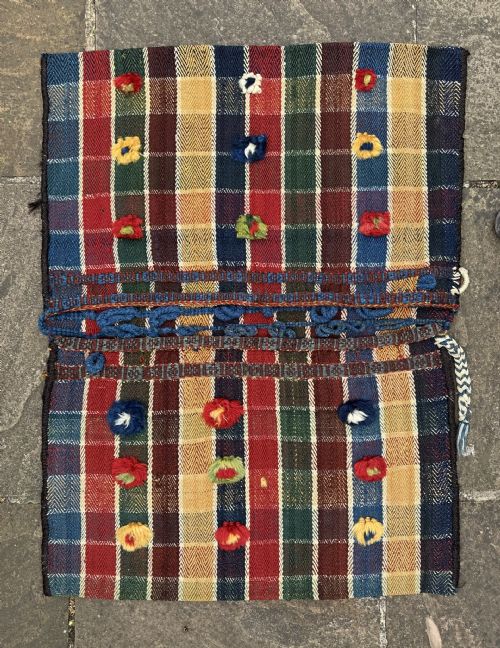
The most common versions met on this page are individual bag faces and complete double saddle bags, known locally as khorjin. They originate from diverse areas spanning Fars Province, Azerbaijan, Luristan, and Kerman, reflecting distinct regional patterns and weaving traditions.
Evaluating structural and visual merit
Quality separates through the handling of the wool and the vibrancy of the natural dyes. Superior examples display lustrous, luminous wool alongside tight, precise knotting or crisp soumak execution.
The integrity of the design layout and the survival of original plain weave backs or complete pairs elevate an individual weaving. Finer pieces demonstrate exceptional clarity in regional motifs such as boteh or tile patterns.
The inventory spans the nineteenth and early twentieth centuries, featuring wool, cotton, leather, and metal elements.
The Persian Saddle Rug Glossary
- Khorjin
- The traditional Persian term for a double saddle bag used by nomads for transport. These items were designed to carry belongings across rugged terrain.
- Soumak
- A flatweave technique utilising wrapping threads over warp strings to produce a durable surface. This method creates a textured finish distinct from pile knots.
- Boteh
- A recurring teardrop or almond-shaped motif found across tribal textiles. It symbolises life and eternity in traditional weaving.
- Bag Face
- The decorative front portion of a nomadic saddle bag surviving independently. These are frequently mounted or displayed as small wall rugs.
- Plain Weave
- A simple interlacing of warp and weft threads without pile. It typically forms the reverse side or structural backing of a bag.
Persian Saddle Rug: Frequently Asked Questions
How were saddle bags used originally?
Nomadic tribes utilised these double pouches draped across pack animals to transport personal possessions, grain, and household goods during seasonal migrations.
Once pitched at camp, the bags served as storage containers or floor cushions inside tents.
How do I clean a textile?
Gentle surface vacuuming with low suction protects the delicate wool pile and structural integrity of older nomadic weavings.
Professional specialist cleaning remains necessary for deeper maintenance to protect natural dyes.
Can I hang them on walls?
Many collectors mount individual bag faces as compact decorative panels or textile art. Using a non-damaging sleeve or conservation-grade display method distributes the weight evenly.
Complete paired sets are often displayed flat or draped over furniture.
What defines tribal attribution?
Specific wool qualities, dye palettes, and structural characteristics point directly to particular groups like the Shahsavan or Afshar. Distinct geometric motifs and border arrangements serve as reliable markers for regional origin.
Structure and weave technique further clarify whether a piece emerged from western, southern, or northwestern regions.