
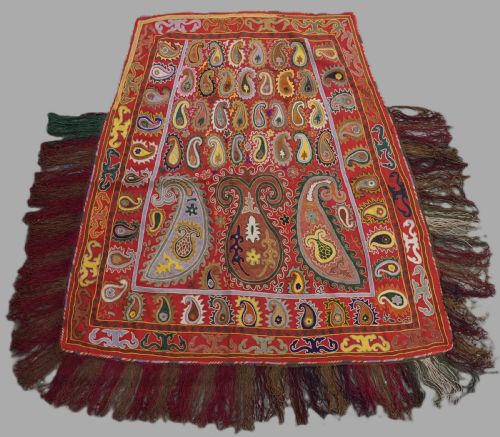
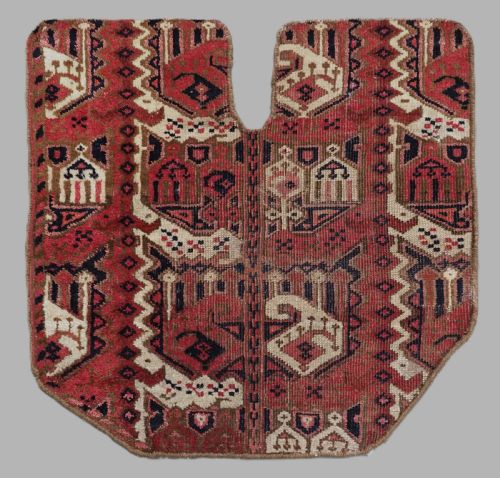
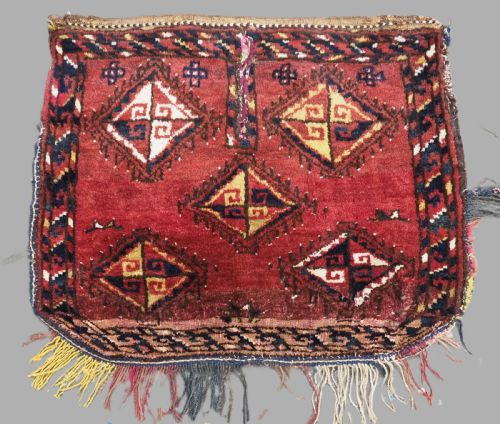
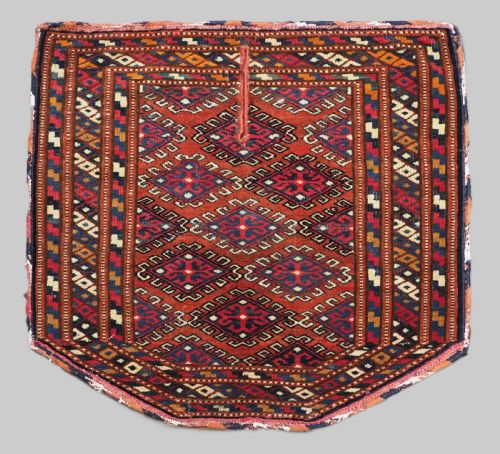


Antique Saddle Cover
These tribal pieces are woven or embroidered textiles designed for equestrian use, offering buyers a tactile connection to nomadic heritage.
Antique Saddle Cover
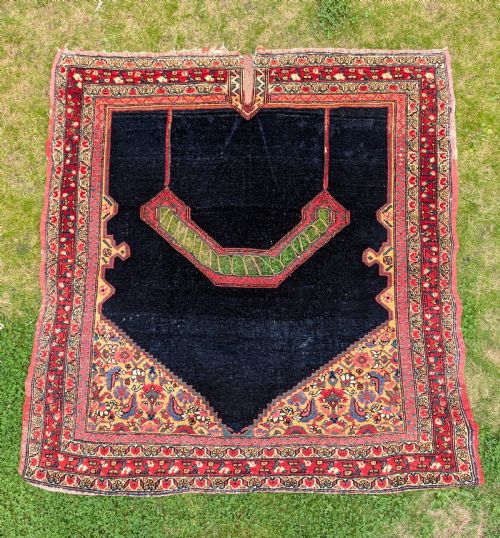
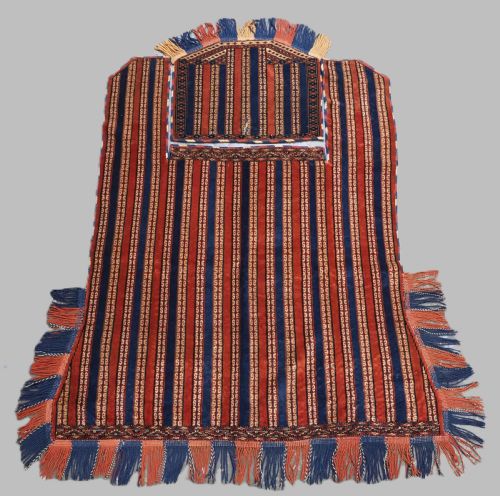
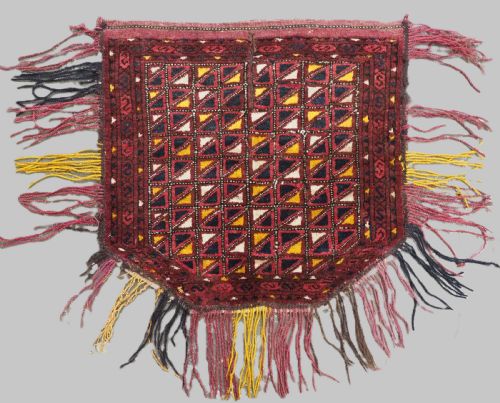
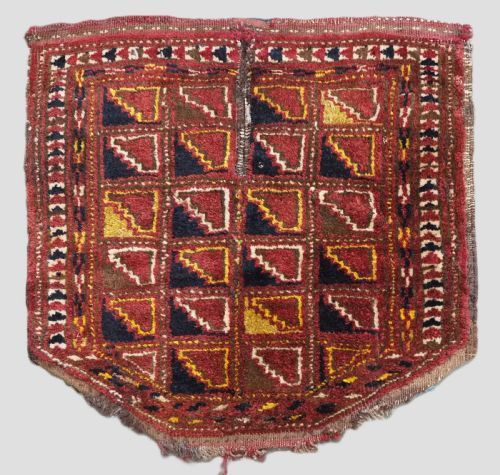
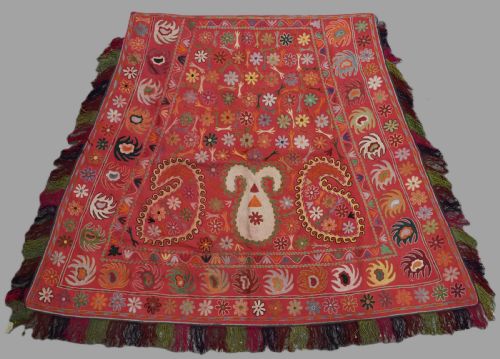
When searching for an antique saddle cover, collectors encounter functional textiles created by tribal weavers across Persia, Central Asia, Anatolia, and Tibet. These items include ceremonial horse blankets, piled rugs shaped for mounts, and storage bags originally hung across animal flanks.
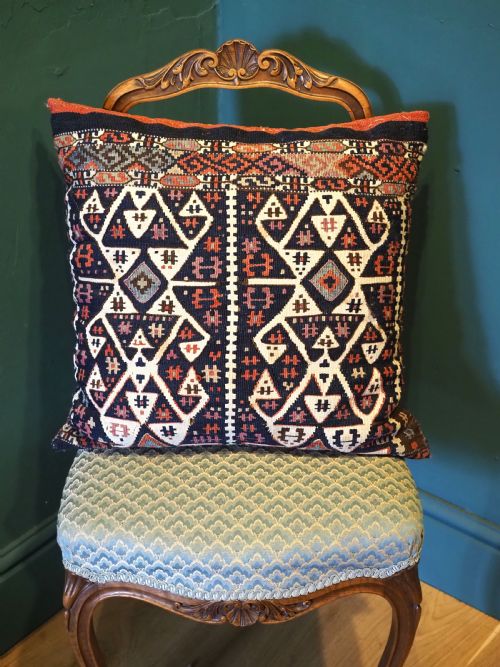
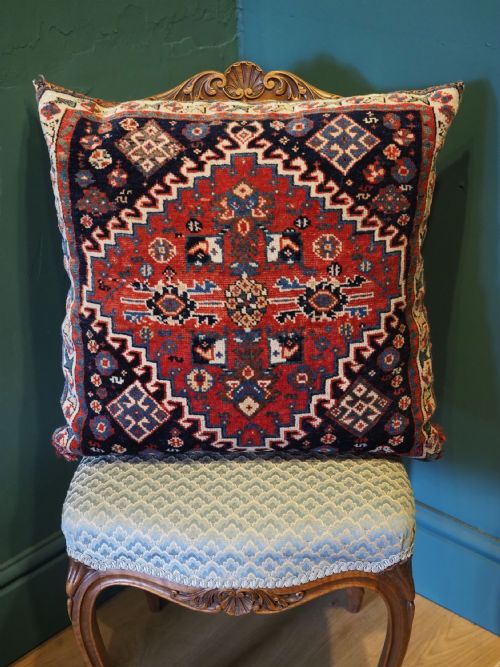
The pieces on this page span the late nineteenth century and the early twentieth century, reflecting the handiwork of distinct regional groups such as the Yomut, Ersari, Lakai, and Qashqa'i tribes. Examples range from complete double saddlebags with original plain-weave backs to individual bag faces and rigid piled covers.
Originating from utilitarian daily life or ceremonial gatherings, these textiles served both practical equestrian functions and decorative tribal displays. Their forms adapt directly to the contours of saddles, resulting in distinct cut-outs, square dimensions, or elongated rug formats.
Materials and construction
Weavers relied principally on sheep wool, cotton, and occasionally silk, utilising hand-spun fibres that yielded variable textures and resilience. Natural dyes provided the palette, producing deep tones across piled carpets and flat-woven kilims alike.
Construction techniques divide into pile weaving and supplementary-weft embroidery, depending on the tribal group and intended purpose. Nomadic makers combined structural cotton warps with woollen wefts, finishing edges with original tassels or braided cord.
Several horse covers still carry the faint scent of lanolin and smoke from nineteenth-century nomadic campfires.
Assessing quality and retention
Quality rests upon the handle of the wool, the clarity of the natural dye palette, and the tightness of the knotting or embroidery. Lustrous, luminous wool distinguishes the superior weaving from coarser commercial equivalents produced later.
Survival of original elements such as tassels, complete bag backs, and structural selvedges elevates a piece's integrity. The precision of tribal geometric or figurative motifs indicates the weaver's skill within traditional idioms.
The Antique Saddle Cover Glossary
- Khorjin
- A traditional double saddlebag used by nomadic groups for transport and storage. These pieces feature two face panels joined by a central slit.
- Kilim
- A flat-woven textile produced without a pile, utilising interlocking weft techniques to create crisp geometric patterns. These form the backs or main faces of various bags.
- Ru-Zini
- A specific Persian term designating an equestrian saddle cover. These textiles rested directly on the animal beneath the rider.
- Boteh
- A stylised almond or paisley motif frequently employed in Persian tribal weaving. It appears in numerous configurations across bag faces.
- Pile
- The vertical tufts of wool knotted onto the warp and weft foundations to create a plush surface. Knot density varies significantly between regions.
Antique Saddle Cover: Frequently Asked Questions
How were antique saddle covers used?
Nomadic tribes utilised these textiles on working animals for transport, ceremonial processions, and daily riding. They functioned as protective layers under saddles or as storage panniers during migrations.
Over time, many pieces transitioned from working objects into items of domestic display and trade. Their structure directly accommodated the gear of horses and camels in mountainous and desert regions.
Where do these tribal pieces originate?
The inventory reflects production across Persia, Central Asia, Anatolia, and Tibet by distinct nomadic confederations. Specific groups include Yomut and Ersari Turkmen, Afshar and Qashqa'i nomads, and Lakai embroiderers from Uzbekistan.
Each region developed specific weaving structures, dye recipes, and iconography that identify the maker's heritage. Geography dictated the availability of materials like mountain wool and specific dye plants.
How should I care for a textile?
Display these pieces away from direct sunlight to prevent natural dyes from fading over time. Gentle vacuuming through a mesh screen helps remove dust without disturbing fragile wool piles or embroidery.
Professional textile conservation is recommended for washing or major structural stabilization. Allowing the wool to breathe prevents moisture accumulation in storage environments.
How do I distinguish tribal groups?
Different tribal traditions are identified through specific colour palettes, border arrangements, and structural motifs. Turkmen weavers favoured deep madder reds and distinct göl octagons, while Persian groups utilised varied geometric layouts.
Embroidery styles also separate Central Asian Lakai work from Anatolian or Caucasian flat-weaves. Examining the back and edge finishes provides further clues to tribal origin.