




Blue Wool Saddle Rug
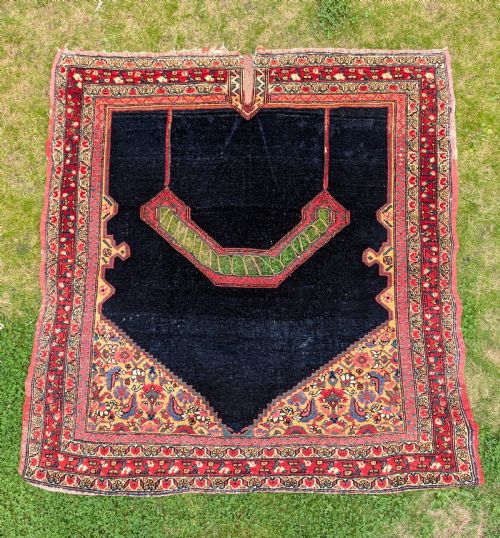
A blue wool saddle rug brings nomadic tribal artistry into the home through practical hand-woven textiles made for animal transport.
Blue Wool Saddle Rug
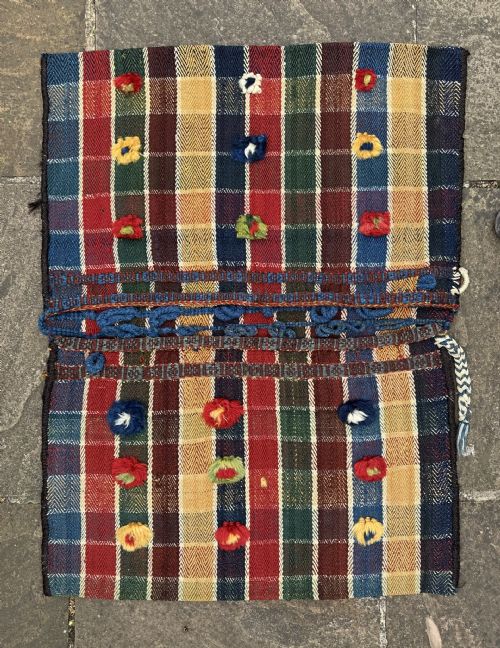
A blue wool saddle rug encompasses tribal textiles, saddle covers, and saddlebag faces created by nomadic groups across Persia, the Caucasus, and Tibet. The pieces available here include complete pairs of kilim bags, single bag faces, and saddle covers originating from the nineteenth and early twentieth centuries.
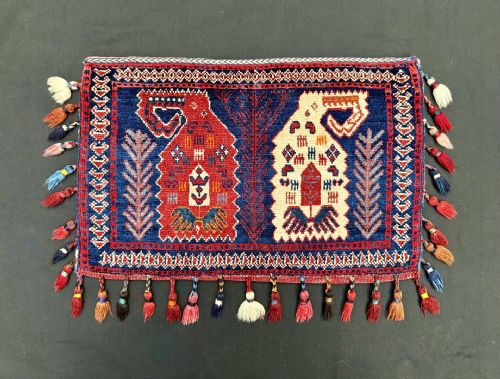
Buyers will encounter regional variations such as Shahsavan sumac work, Afshar and Qashqa'i bag faces, and Tibetan saddle covers. These items reflect the utilitarian weaving traditions of pastoral communities who utilised local sheep wool for everyday transport and storage.
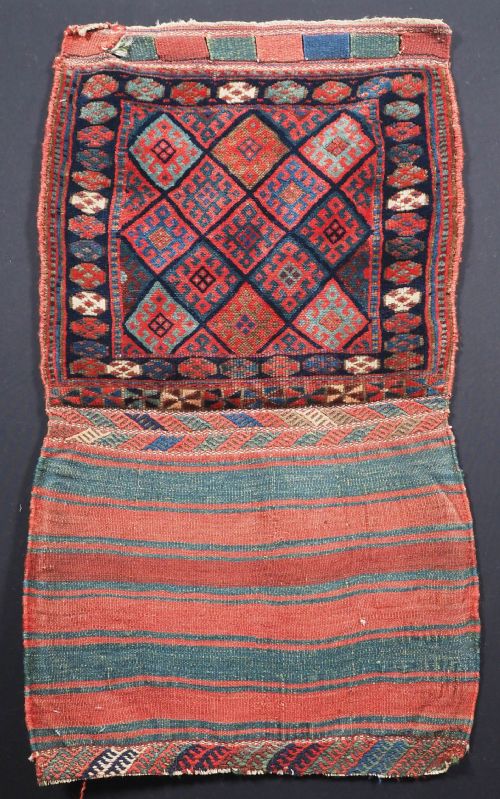
Most examples function as decorative panels today, though many retain structural elements like plain weave backs or leather attachments. The forms span from complete Khorjin saddlebags to half faces and vanity bags.
Materials and construction
Weavers utilised hand-spun wool and natural dyes to create durable pile and flatweave structures. Cotton often appears in the foundational warps and wefts, while leather sometimes reinforces edges and openings.
Techniques range from intricate sumac brocading and kilim flatweaving to dense knotting. Natural dye sources provide the characteristic blue hues alongside contrasting pigments found across tribal workshops.
Nomadic weavers designed these sturdy bags to endure the dust of transport, only for them to finish their journeys lounging quietly on living room walls.
Assessing quality in tribal weaving
Quality rests upon the lustre of the wool and the crispness of the tribal motifs, such as boteh designs or geometric medallions. Lustrous, luminous wool indicates superior fibre selection and preparation.
Condition and completeness also define the piece, distinguishing intact pairs or complete saddlebags with plain weave backs from fragmented half faces. The precision of the sumac or flatweave structure demonstrates the weaver's skill.
The Blue Wool Saddle Rug Glossary
- Khorjin
- A traditional double-sided saddlebag used by nomadic tribes for transport. These items were slung across pack animals to carry personal belongings.
- Sumac
- A warp-wrapping flatweave technique that creates a durable, ribbed surface texture. This method allows weavers to produce crisp geometric patterns without a pile.
- Boteh
- A floral motif resembling a stylised almond or paisley shape. The pattern appears frequently in Afshar and Persian tribal designs.
- Kilim
- A tapestry-woven flat textile made without pile. These pieces form the structural backs and sides of many nomadic bags.
- Warp
- The stationary vertical threads stretched on the loom. Wefts are passed horizontally through these threads to build the fabric.
Blue Wool Saddle Rug: Frequently Asked Questions
What is a blue wool saddle rug used for today?
These textiles serve as decorative wall hangings, table runners, or small floor accents in modern interiors. Their robust construction allows them to withstand gentle placement in low-traffic areas.
Collectors often display bag faces mounted on frames or exhibit complete pairs to showcase traditional tribal techniques.
How do I care for an antique wool saddle bag?
Gentle vacuuming with a suction-only attachment removes surface dust without damaging the hand-spun wool fibres. Professional textile conservation cleaning is recommended for deeper maintenance.
Keep the textile out of direct sunlight to prevent natural dyes from fading over time.
How can I tell different tribal designs apart?
Regional weaving groups employed distinct structural methods and colour palettes, such as Shahsavan sumac work or Afshar boteh motifs. Examining the weave density and back construction provides clues to the specific origin.
Many pieces reflect the stylistic traditions of groups like the Qashqa'i, Luri, and Kurdish tribes.
Are these pieces complete or cut from larger bags?
The inventory includes both complete pairs with plain weave backs and individual bag faces that were separated from their original companion pouches over time. Listings specify whether a piece is a full bag, a face, or a half face.
Backings of plain weave cotton or wool frequently accompany the intact examples.